

Photo Story
Edition:
2024
Archive
The article you are reading is part of the Chai Khana archive. From 2015 to 2025, Chai Khana covered the South Caucasus, sharing stories from Georgia, Armenia, and Azerbaijan.
The last time Davit Davtyan’s family saw him, he was in a car with Gevorg Sujyan, heading to help the Armenian population and soldiers during the Second Nagorno-Karabakh War. It was 2020.
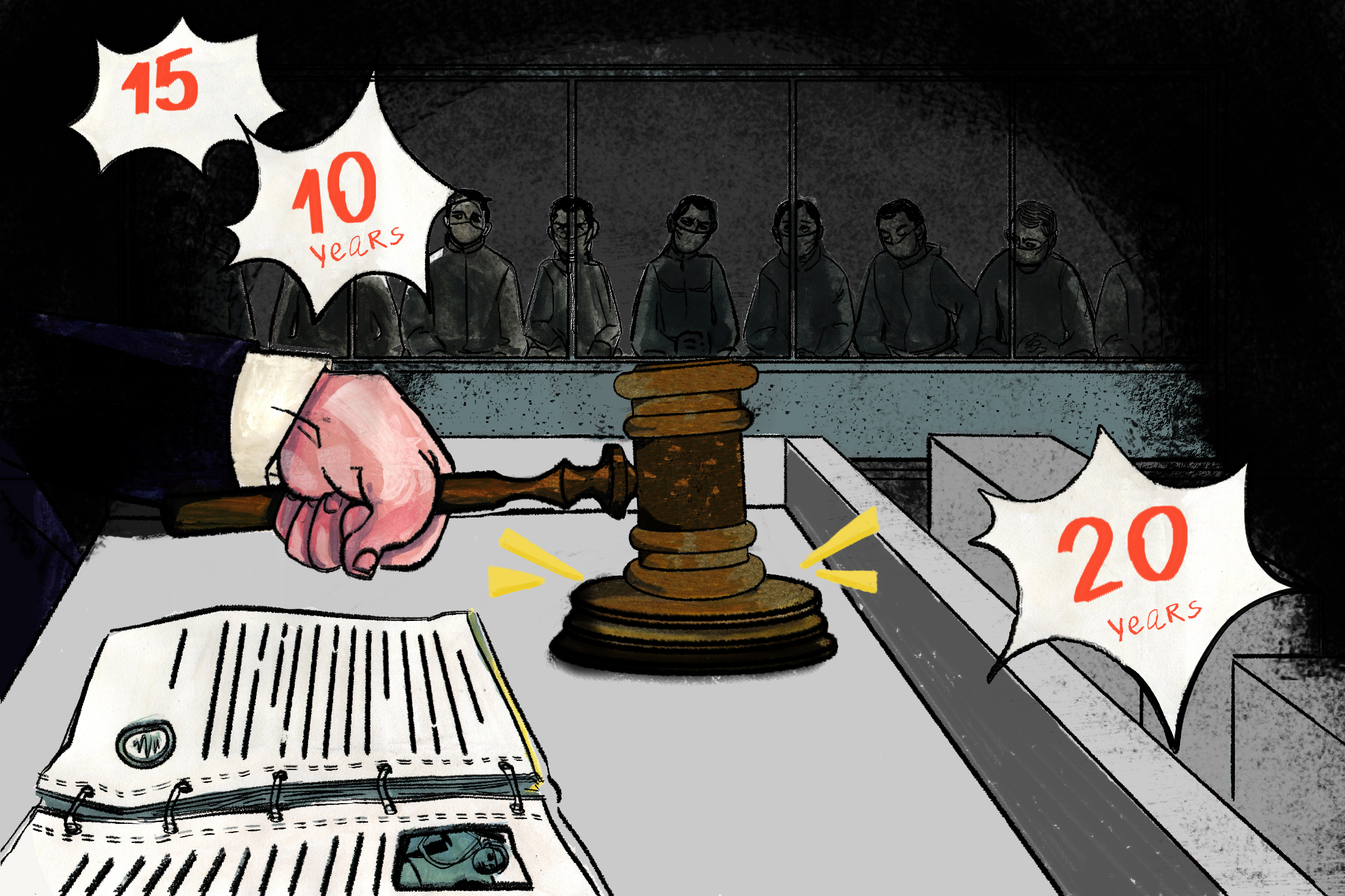
When he lost contact with his son, Tigran Davtyan, began scouring lists of the deceased in the hope of finding any trace of his missing loved one. One week into his search, Tigran learned a video of Davit was online: he and Gevorg had been captured by Azerbaijani soldiers. They were detained after the Russian-mediated ceasefire for “espionage and illegal border crossing” and sentenced to 15 years each in prison.
“After the war, there was no word from him. We desperately searched for him, even in the morgue. But God didn’t allow us to continue because soon the Red Cross approved that Davit is a captive,” Tigran Davtyan recalled.
Davit, 31 and Gevorg, 35, the founder of the New Armenia Homeland-Diaspora Charitable NGO, were on a humanitarian mission, their families told Chai Khana when they traveled to Karabakh.
Lilit Sujyan, Gevorg’s wife, also learned about her husband’s arrest from the video. It was three more months before she could speak with him. Despite the situation, the conversation was mostly about their 12-year-old son and Gevorg’s well-being. “I simply need to hear Gevorg’s voice to make sure he is alright,” she said.
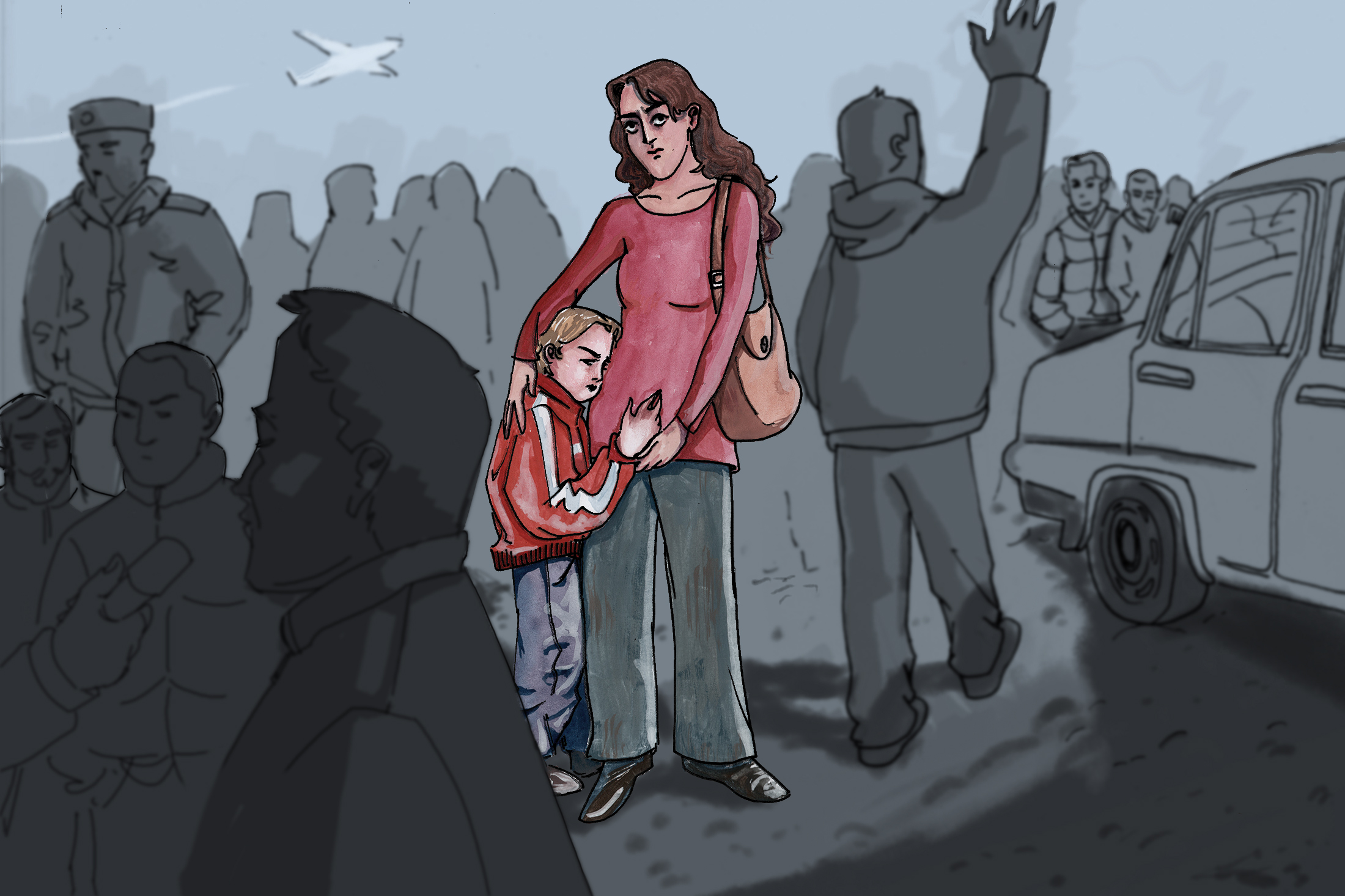
There was a glimmer of hope after the war, when the release of Armenian captives was announced. Lilit raced to Erebuni military airport in Yerevan, Armenia’s capital, in the hopes of seeing her husband. But there was no sign of him.
“It’s hard to deal with emotionally for my son. Every day he asked ‘When will my dad come back home?’,” she told Chai Khana.
Following the full-scale conflict between Armenia and Azerbaijan over the disputed Nagorno-Karabakh enclave— which Baku fully took control of, displacing almost all ethnic Armenians, last September — captives, including high-ranking Karabakh officials, are still being held in detention in Baku jails. The November 9, 2020, agreement after the Second Nagorno-Karabakh War provided, among other things, for “an exchange of prisoners of war and other detained persons and bodies of the dead,” but only a handful of Armenian detainees have been released so far. To date, it is even unclear how many Armenians remain in custody in Azerbaijan: the Head of the Investigative Committee of Armenia reports 55 Armenians are currently held captive in Azerbaijan, but Baku has so far acknowledged only 23 of them.
Ilaha Huseynova, Head of the Public Relations Department of the International Committee of the Red Cross (ICRC) office in Baku, told APA news agency that from 1990 to 2020, nearly 700 captives returned from both sides. The last prisoner exchange was in 2023 when Baku and Yerevan agreed to free 32 Armenians and two Azerbaijanis. The prisoner swap was announced in a joint statement by the two countries’ leaders after Armenia dropped its veto of Azerbaijan hosting COP29 UN Climate Change Conference. Armenia also handed over an Azerbaijani soldier as a “gesture of goodwill” after he accidentally crossed its border on February 28, 2024.
Even though nearly four years have passed, Lilit has not given up hope that Gevorg will also be released.
“Gevorg’s only purpose in going to Artsakh [the Armenian name for Karabakh] was to provide humanitarian aid and help people,” she explained. “I just want them to follow the dictates of conscience. Gevorg didn’t do anything bad. He didn’t even have a gun during the war. They [Azerbaijan] sentenced him on trumped-up criminal charges.”
In an open letter to Pope Francis, Gevorg Sujyan wrote that he is not a “murderer but condemned as a criminal.” “I have a family, a son who awaits my return, shedding endless tears. My pleas are filled with anguish, and they resonate from the very depths of my soul,” he wrote.
According to the United States Human Rights report, Armenian captives’ public trials lacked elements of due process, such as failing to provide them with independent legal counsel of their own choosing and forcing confessions “under apparent duress.”
“Several stated that they had not seen the attorney representing them before meeting them in the courtroom during the trial and were not provided with relevant documents,” the statement read.
Sirnaush Sahakyan, an international law specialist and representative of the Armenian captives’ rights in the European Court of Human Rights believes that three and a half years after the war, political issues are the main obstacles that still hold up the process of freeing Armenians.
“When the conflict has stalled, two sides must inevitably lead to the repatriation of captives. But we saw that the factor of prisoners is used as a lever to extract various demands from the Armenian authority,” Sahakyan pointed out and gave examples of last year’s UN Climate Change Conference deal and Yerevan handing over mine maps that were laid in Nagorno-Karabakh.
Human Rights Watch in early 2021 reported that Azerbaijani servicemen are subjecting Armenians to “cruel and degrading treatment and torture” which was criticized by Azerbaijani authorities saying that it was “one-sided and falls short of providing an objective situation”.
The report was based on relies testimonies and recollections of repatriated individuals and videos that widely circulated on social media that Azerbaijani captors according to Human Rights Watch slapping, kicking, and prodding Armenians and compelling them, “under obvious duress” and with the apparent intent to humiliate.
“There can be no justification for the violent and humiliating treatment of prisoners of war,” announced Hugh Williamson, Europe and Central Asia director at Human Rights Watch in late 2020.
In late 2021 the Council of Europe’s Commissioner for Human Rights highlighted the situation of the captives, calling on the Azerbaijani authorities to release Armenian captives “without delay” under the Geneva Convention.
The Azerbaijani government has claimed that the demand to release is interference by the Council of Europe’s Commissioner for Human Rights. Baku argues that Armenian captives that remain in its custody are not “prisoners of war” but rather have been “convicted of crimes including war crimes.”
The Azerbaijani Foreign Ministry did not respond to Chai Khana’s request for comments about allegations about the men’s treatment or the motivations for their arrest.
For some families, even the promise of release has not been enough to secure their loved one’s freedom.
44-year-old Lebanese-Armenian Vicken Euljeckjian has been in jail in Azerbaijan since 2020, when he was detained in Shushi, a town in Nagorno-Karabakh. Vicken settled in Shushi prior to the war, and once fighting started, he voluntarily joined the Armenian army. He returned to Yerevan after a few days, however.
When a Russian-brokered ceasefire was signed, Vicken Euljeckjian along with Maral Najarian—another Lebanese-Armenian—went to Shushi to pick up their belongings. But Azerbaijani soldiers detained them. A few months later, they released Maral Najarian. An Azerbaijani court sentenced Vicken to 20 years in prison as a “terrorist and as mercenary fighting for $2,500.”
Vicken’s son said it took the family three months to learn of his fate. “Before that we thought that Vicken was dead because we hadn’t had any news from him,” Serge Euljeckjian told Chai Khana.
Last year, the family had a glimmer of hope when Vicken was included on a list of prisoners to be exchanged on December 13, 2023. But his name was removed at the last minute. Serge says to this day they do not know why.
The family’s biggest concern now is Vicken’s health.
“My father has a health issue [valvular heart disease]. He told both Azerbaijanis and the Red Cross that he needed medicine but until now, we don’t know accurately if the drugs were given to him or not,” Serge said.
The International Committee of the Red Cross is the only independent humanitarian organization that has access to visit the Armenian captives in Baku. Zara Amatuni, ICRC communications and prevention manager in Armenia, told Chai Khana that for confidentiality they are not able to publicly discuss issues regarding captives but always inform the Azerbaijani government about their monitoring and concerns.
“Since the first visits when we register individuals’ names continuously at certain intervals following their prison accommodation, we help to keep in touch with the family through different means of communication, and of course, we also follow their health and other needs,” Amatuni stressed.
Serge worries about his father’s condition, especially after Maral Najarian told the family that Vicken had been mistreated in jail. Today, their focus is on the future however. “We want to help bring Vicken and other captives back home.”
This feature story was prepared with support from the Friedrich-Ebert-Stiftung (FES) South Caucasus Regional Office. All opinions expressed are the author’s alone, and do not necessarily reflect the views of FES .
This article was produced in the framework of Chai Khana Fellowship program - Spring/Summer 2024