Photo Story
Archive
Architectural Heritage of the '90s
Author: Mariam Nikuradze
Edition:
Generation of the 1990s
Archive
The article you are reading is part of the Chai Khana archive. From 2015 to 2025, Chai Khana covered the South Caucasus, sharing stories from Georgia, Armenia, and Azerbaijan.
Datiko from Abkhazia
It’s been approximately 20 years since Datiko Ugrekhelidze, 76, has been living in Tbilisi, far from his home in Sukhumi, Georgia’s breakaway region Abkhazia, which he left in the wake of the 1992-1993 war.
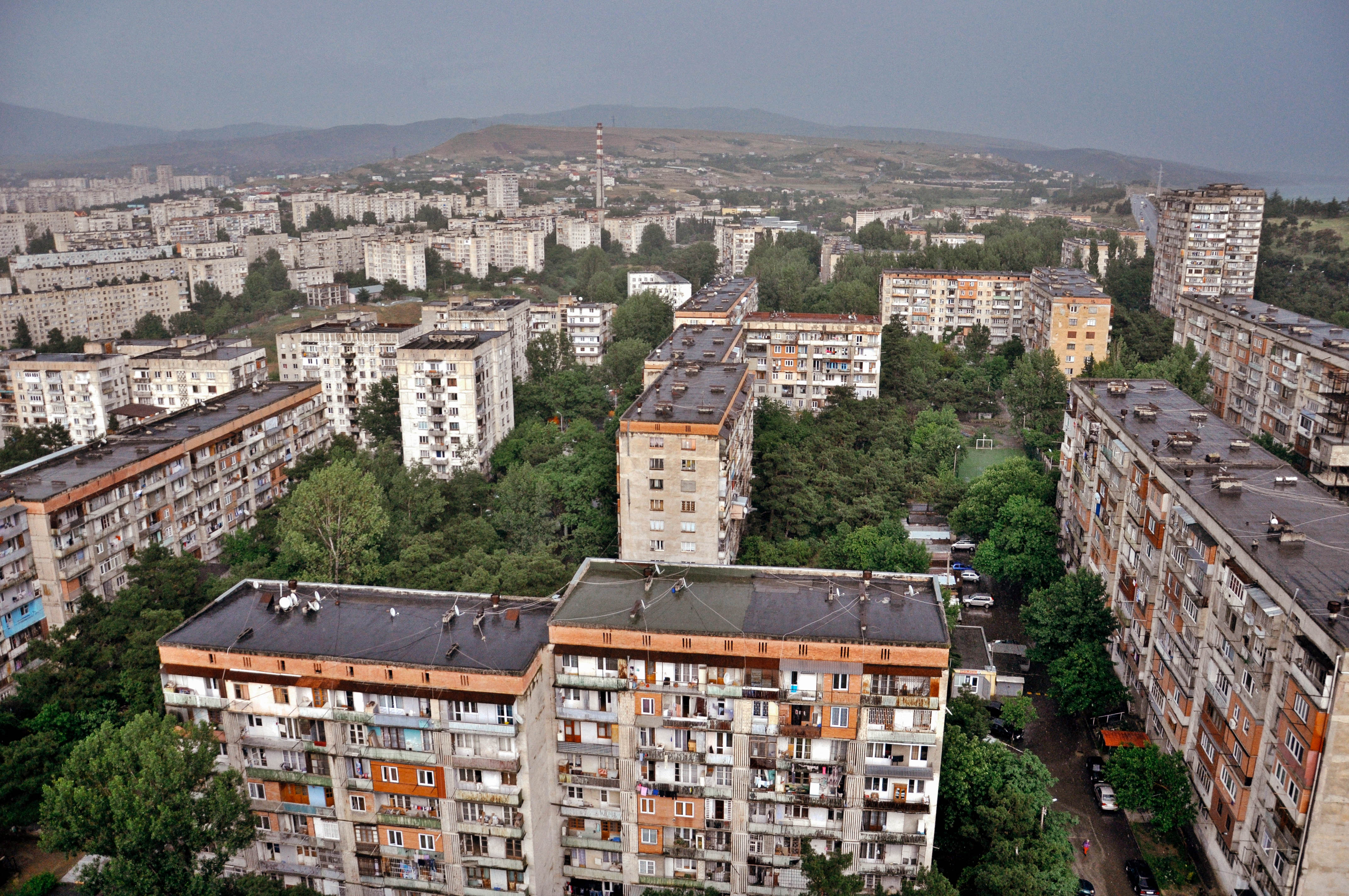
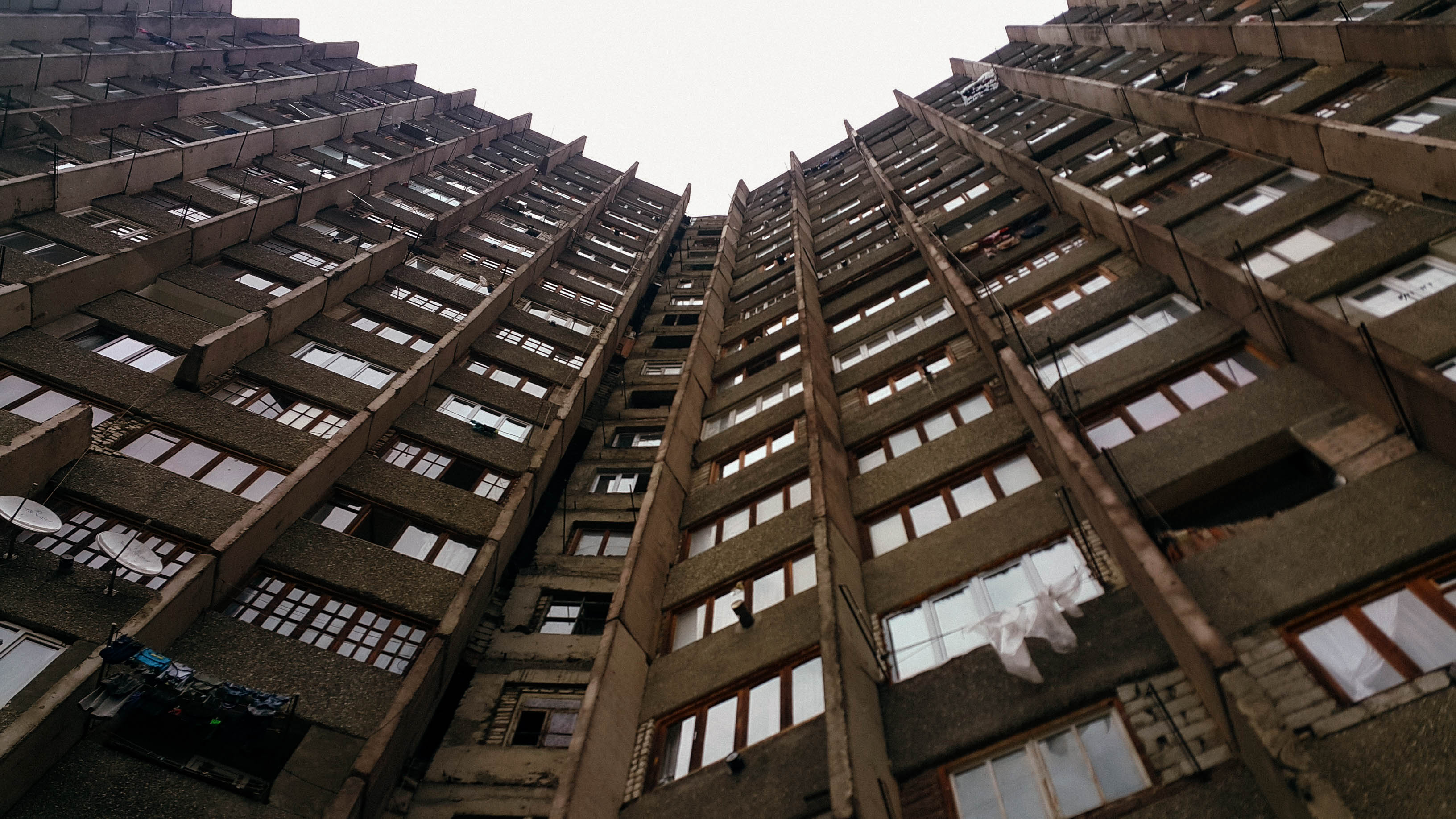
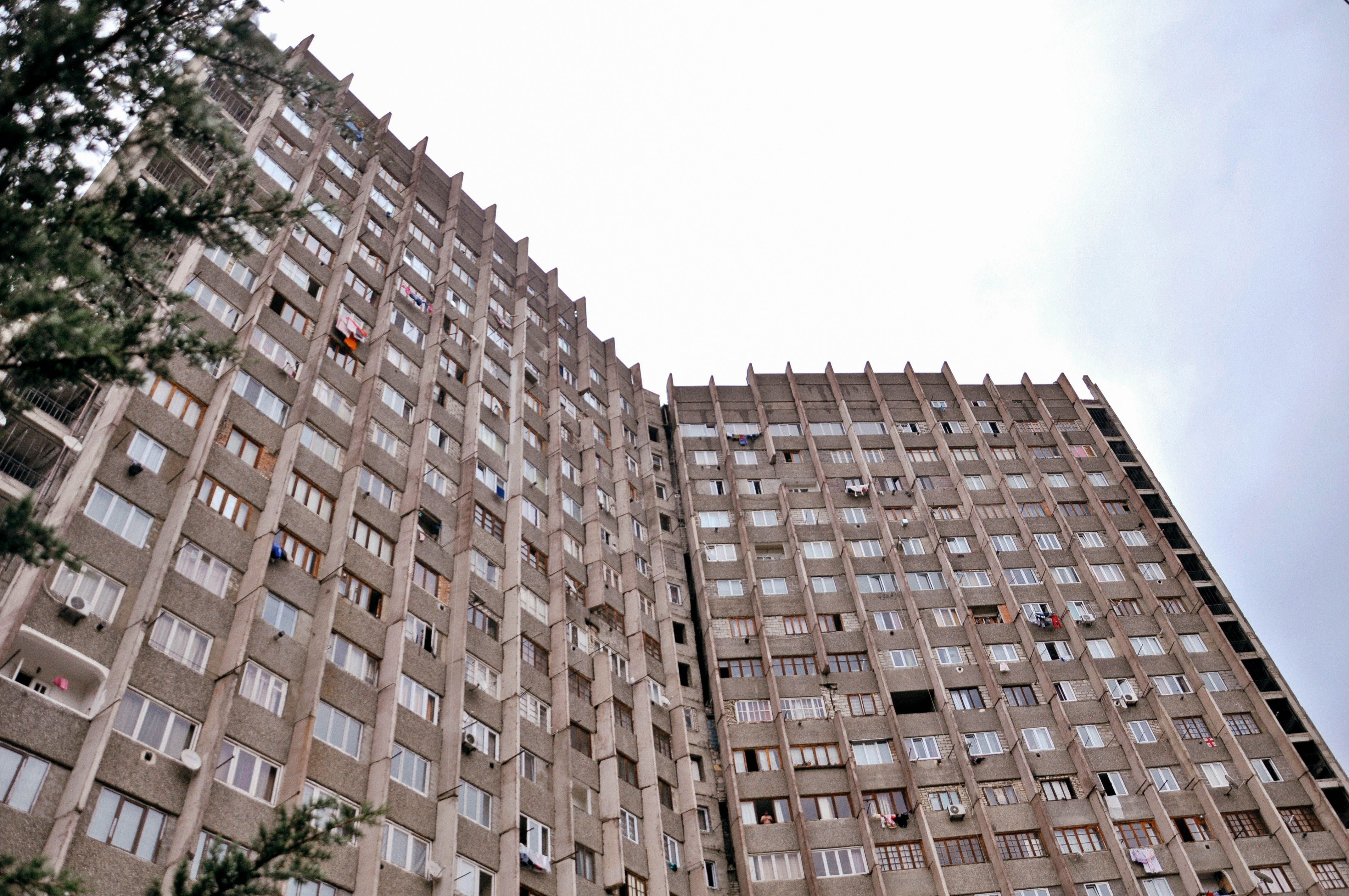
Datiko lived for three years in Kutaisi but then arrived in the capital, like many other IDP families, and settled in a nine-story building in the outskirts of Tbilisi with 17 other families from Abkhazia.
The building has ten entrances, however the entrance where Datiko lives, is different, as there is a large painting on the second floor with a note on it - ‘Sukhumi.’
“I remember my home when I look at this picture, however it is still missing the river, it is unfinished,” he says.
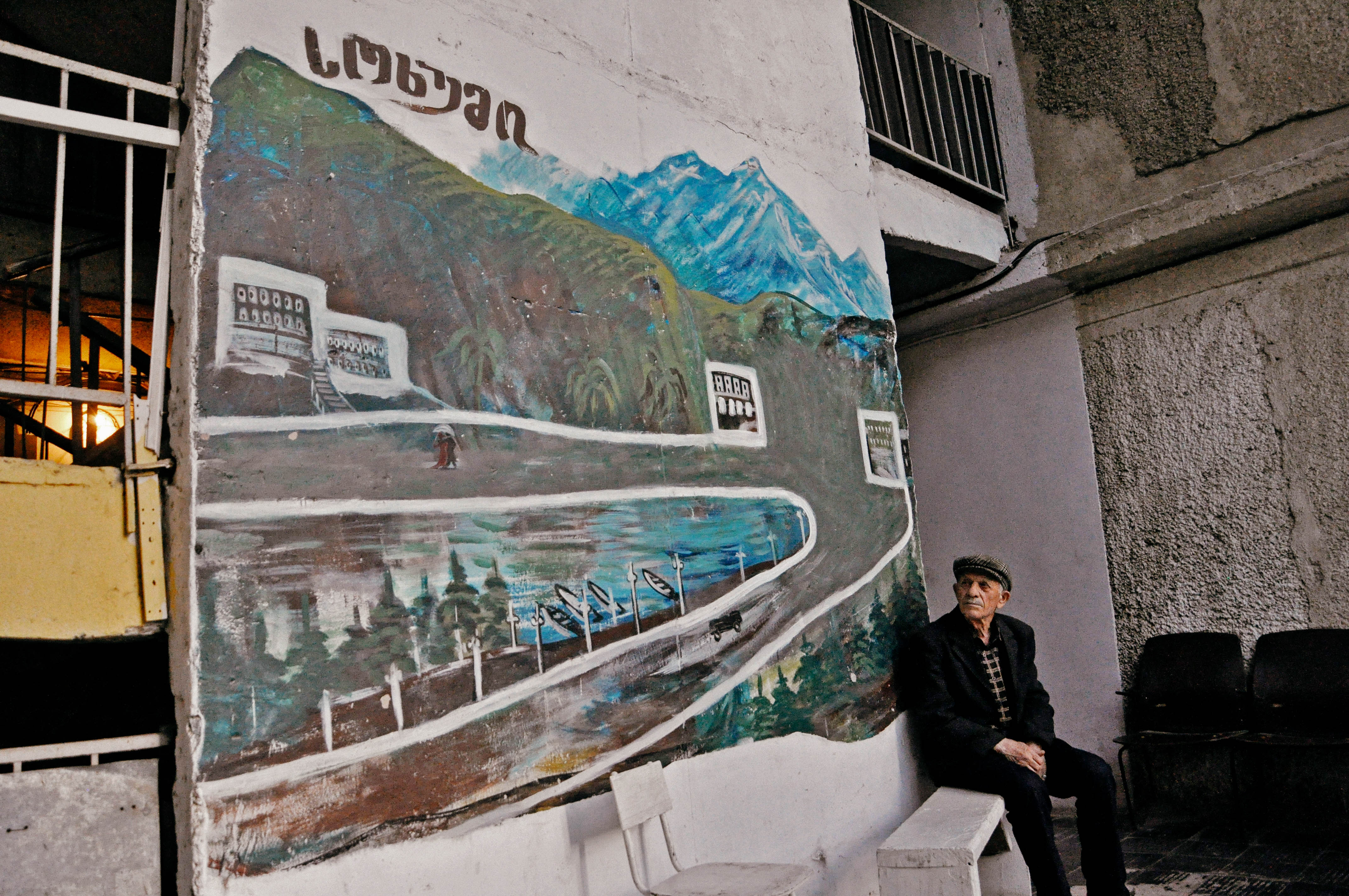
A few years after he settled in Tbilisi, he found a painter who offered him a small amount of money to paint his hometown – Sukhumi – the way he viewed and remembered it.
“But first, he drew old Tbilisi, that funny man,” he remembers laughing, “why the hell would I need Tbilisi, I was here, I wanted my Sukhumi and told him exactly what I wanted him to paint.”
The painter, who according to Datiko, was an alcoholic, spent a day on the picture and disappeared without finishing it.
“It still needs a river, then a small street and the building of an Institute, also several houses,” he said, adding that the painter died and today it is too expensive to ask another artist to finish the painting.
When he arrived, life in the 1990s in Tbilisi was tough; there was no electricity, gas, or food.
“And god, I was making so much money in Abkhazia. I was an accountant. I was in charge of the joint industries of tea and citrus, also at Geology Institute as a major accountant along with private business, as well. Then they forced us out of our homes. We left everything there. My family lived in Abkhazia for 200 years, but what could I do, I am an Ugrekhelidze.”
‘Butkas’ from the 1990s
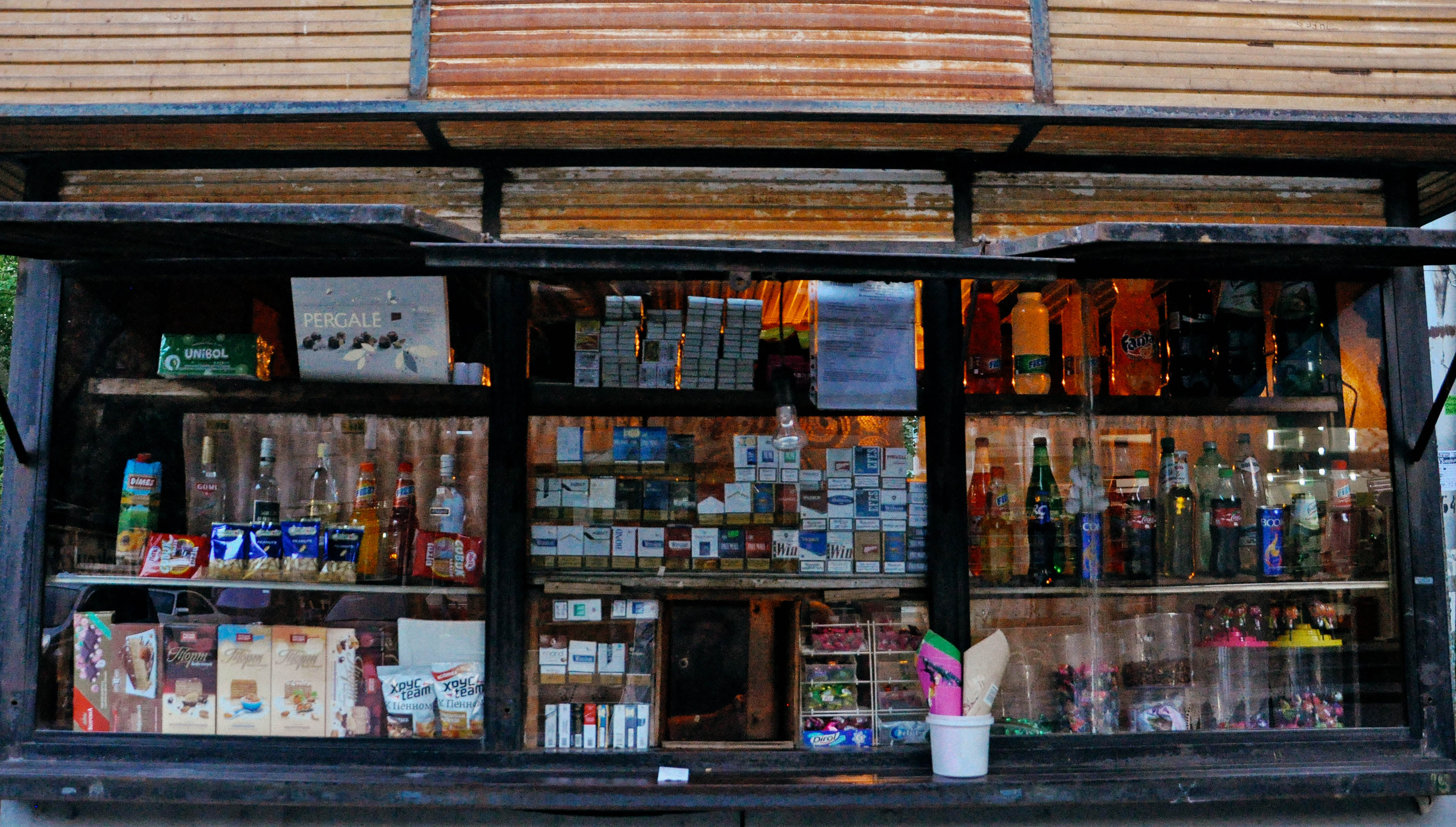
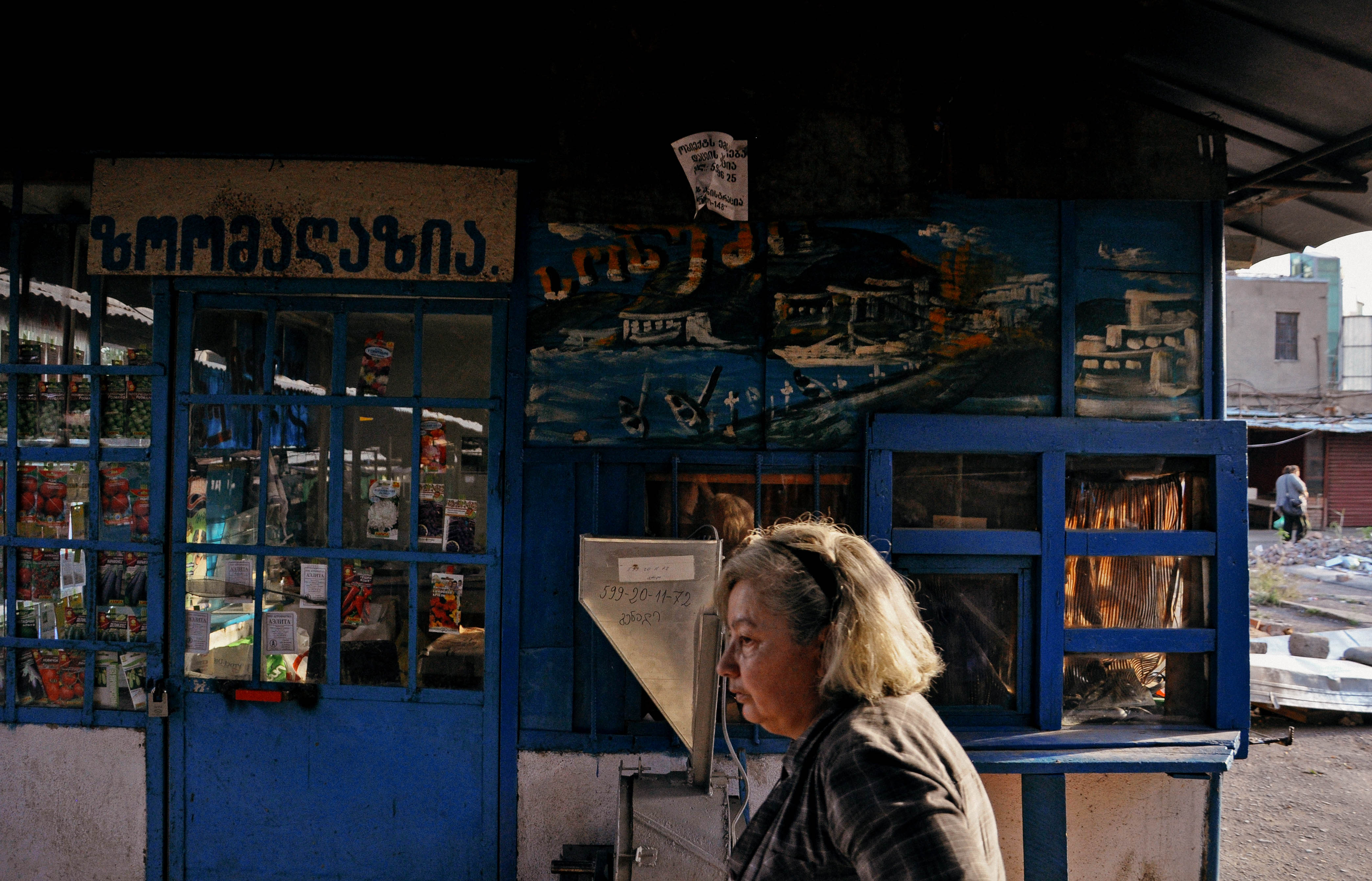
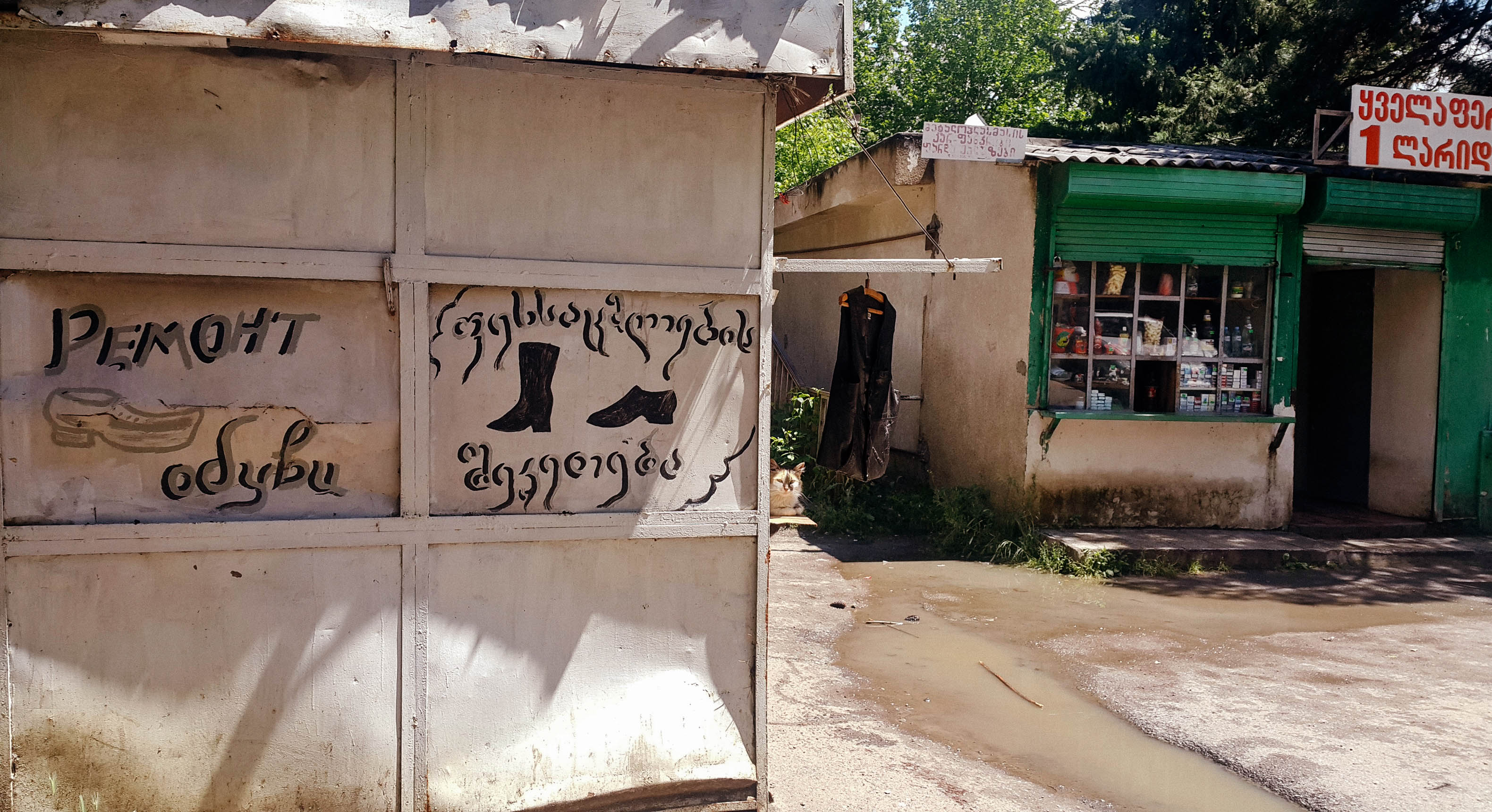
There were no shops, no supermarkets, and little choice for daily shopping needs – back in the ‘dark 1990s’ some of the small entrepreneurs were blooming, like Leila’s. Leila lived in Gldani district for over 35 years and in 1995 she purchased a booth, commonly known as a Butka, a small iron box with a smaller window painted in different colors.
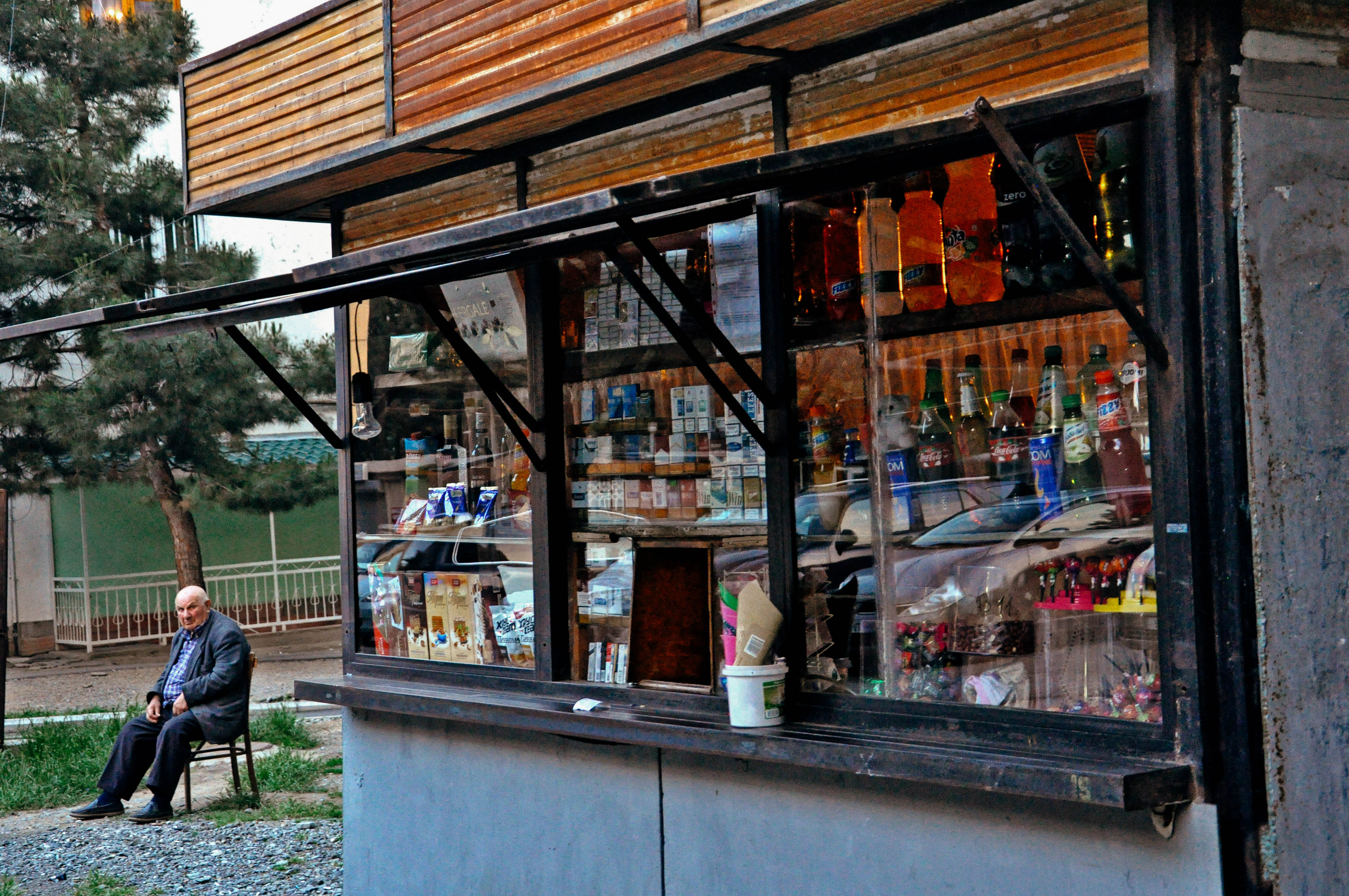
“I remember in the evening, I was pouring out a package of coins on this very same table,” she said while refusing to have her picture taken, as she was scared that the government may take away her booth.
She was selling all kinds of things, such as juice, sweets, chewing gum, matches and her famous sunflower seeds.
“Today I only sell sunflower seeds and this is my only income.”
Her Butka is on the same spot, but surrounded with little shops and a supermarket in front. Her neighbor has another booth next to Lia’s, but uses it to cut the hair of elderly men. The owner of the booth didn’t want to have a picture of his booth taken, as some hooligans wrote on it “long-live the thieves-in-law” in Russian and he couldn’t afford to repaint the note.
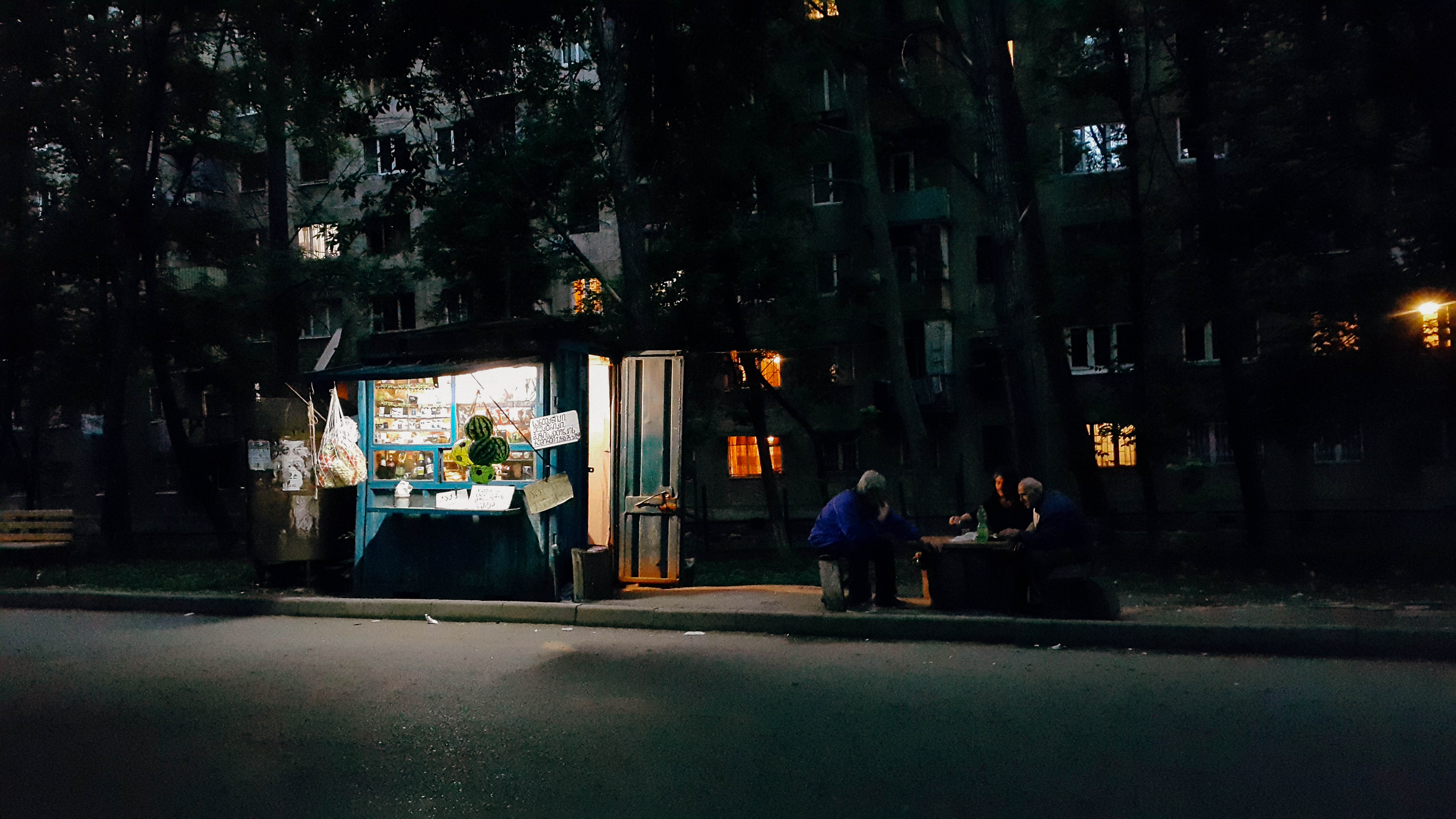
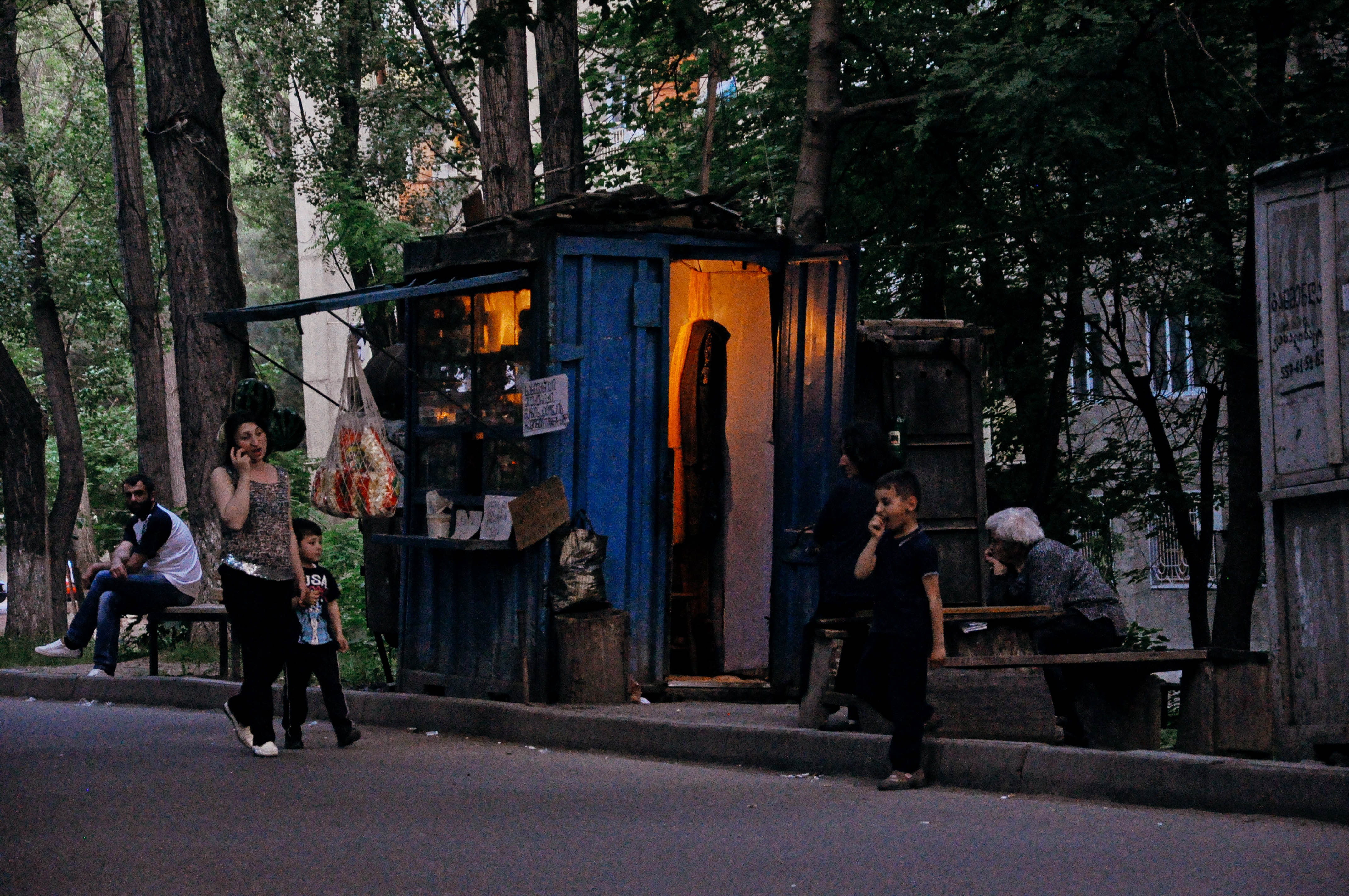
Edika, a 75-year-old photographer, has another story of his booth. Coming out, he is a celebrity in Sanzona, a suburb of Tbilisi. His photo booth proudly has remained in the same spot since 1985, when he was already known for his work. He used to take pictures, mostly photos for documents, but he had orders from the government.
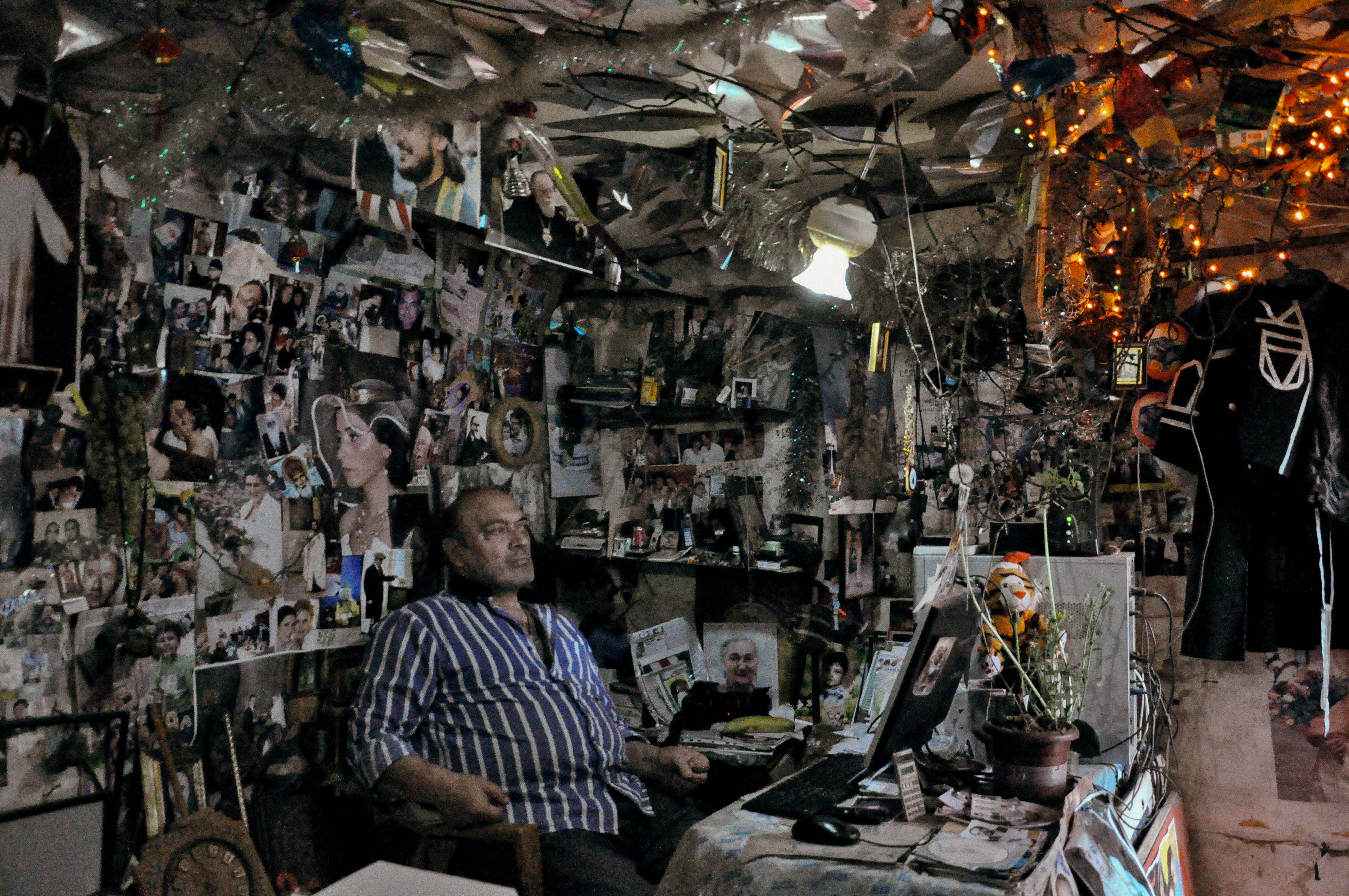
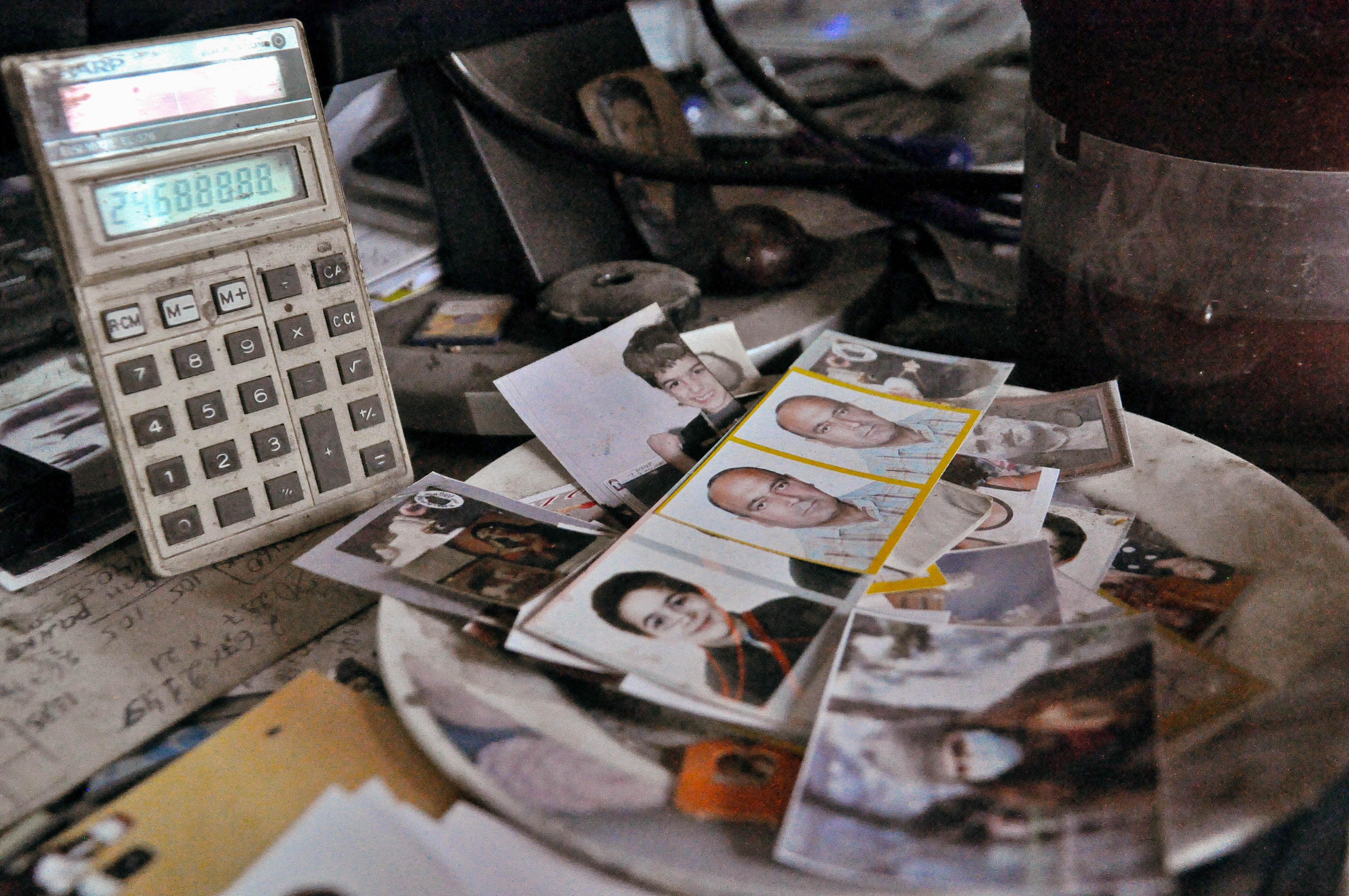
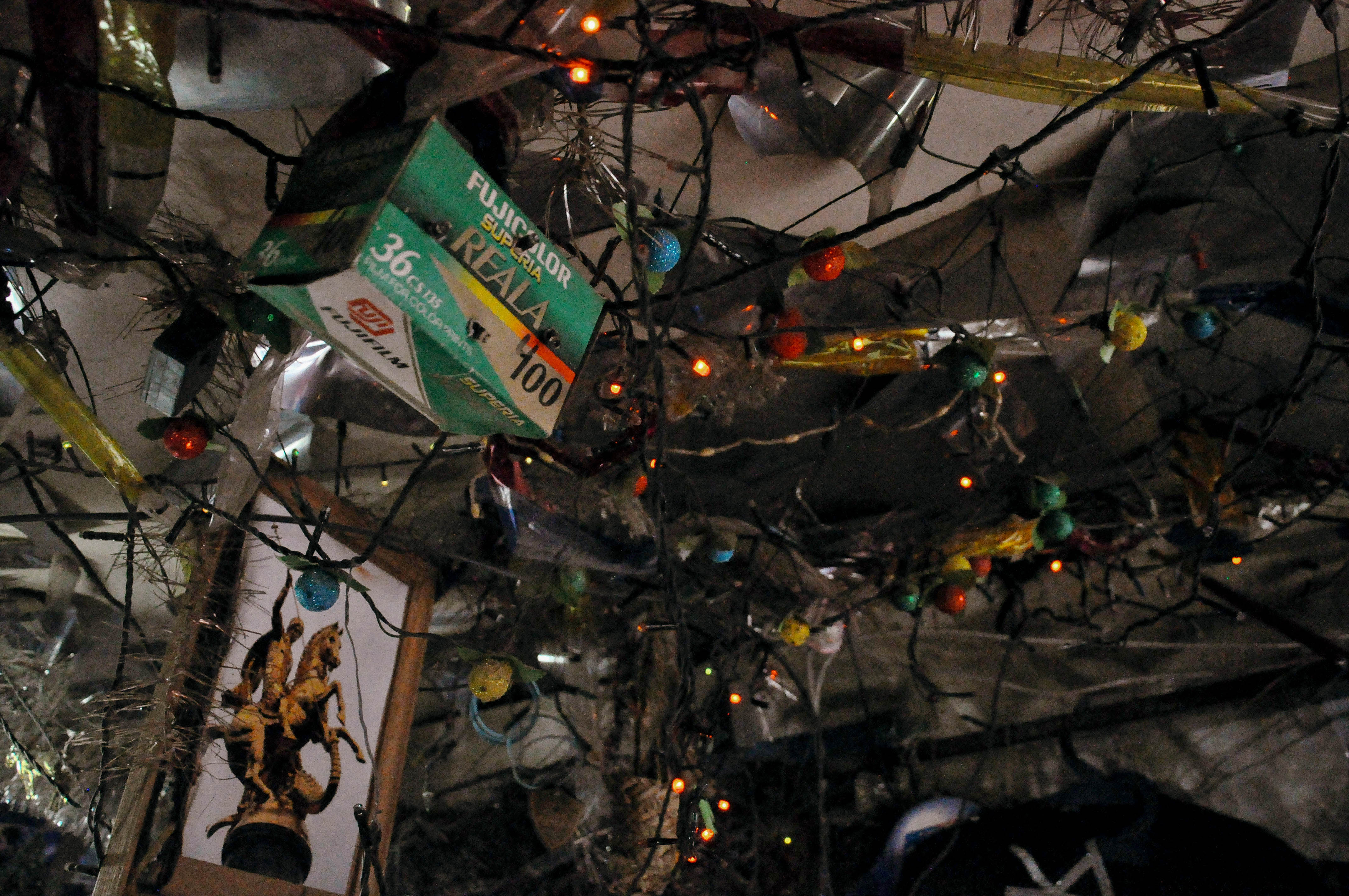
“I remember I printed 36 giant posters for commercials a couple of years before I had this shop. My children and I printed the images at home, in the darkness of course, and all of them were perfect,” he says.
But in the 1990s, his business thrived, as he earned the exact amount of money in 3-4 hours a day that he earns now, for two weeks of labour.

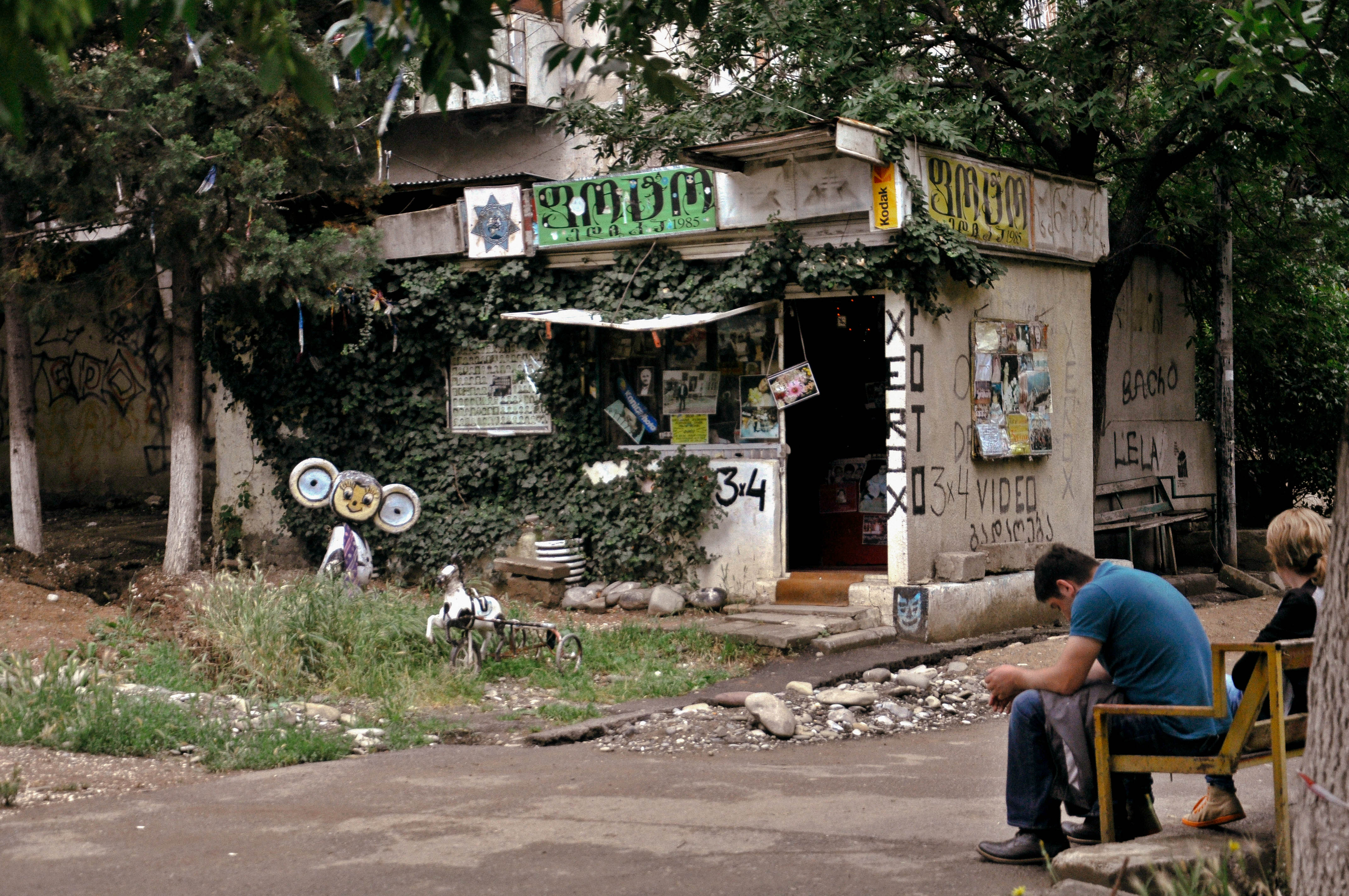
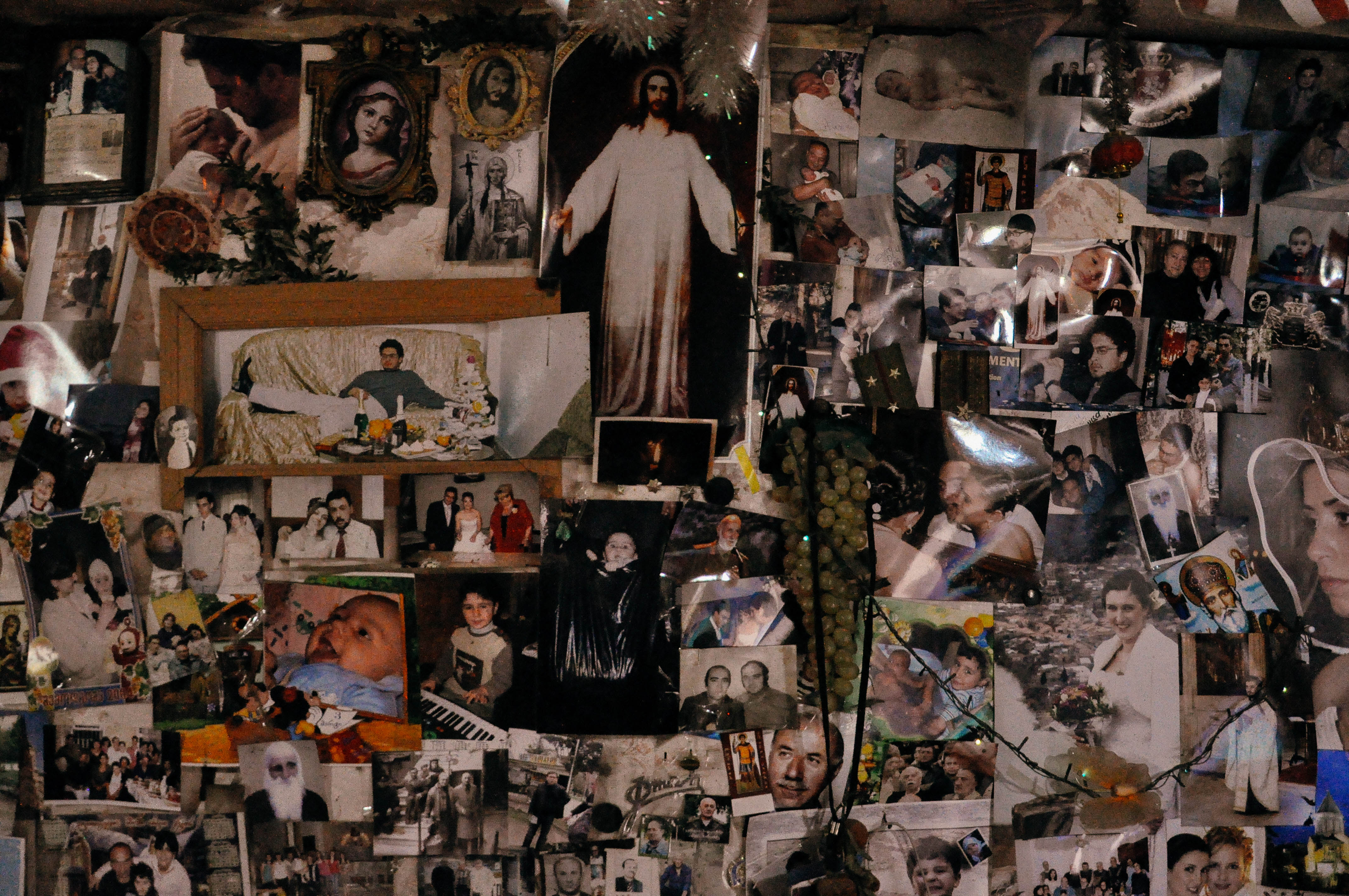
“Those men from the neighborhood used to come, asking me to take picture for their passport. They would put ten Manats on my table without asking for change. But today, the same men come here and they tell me they do not have money anymore. What can I do? How can I reject them?”
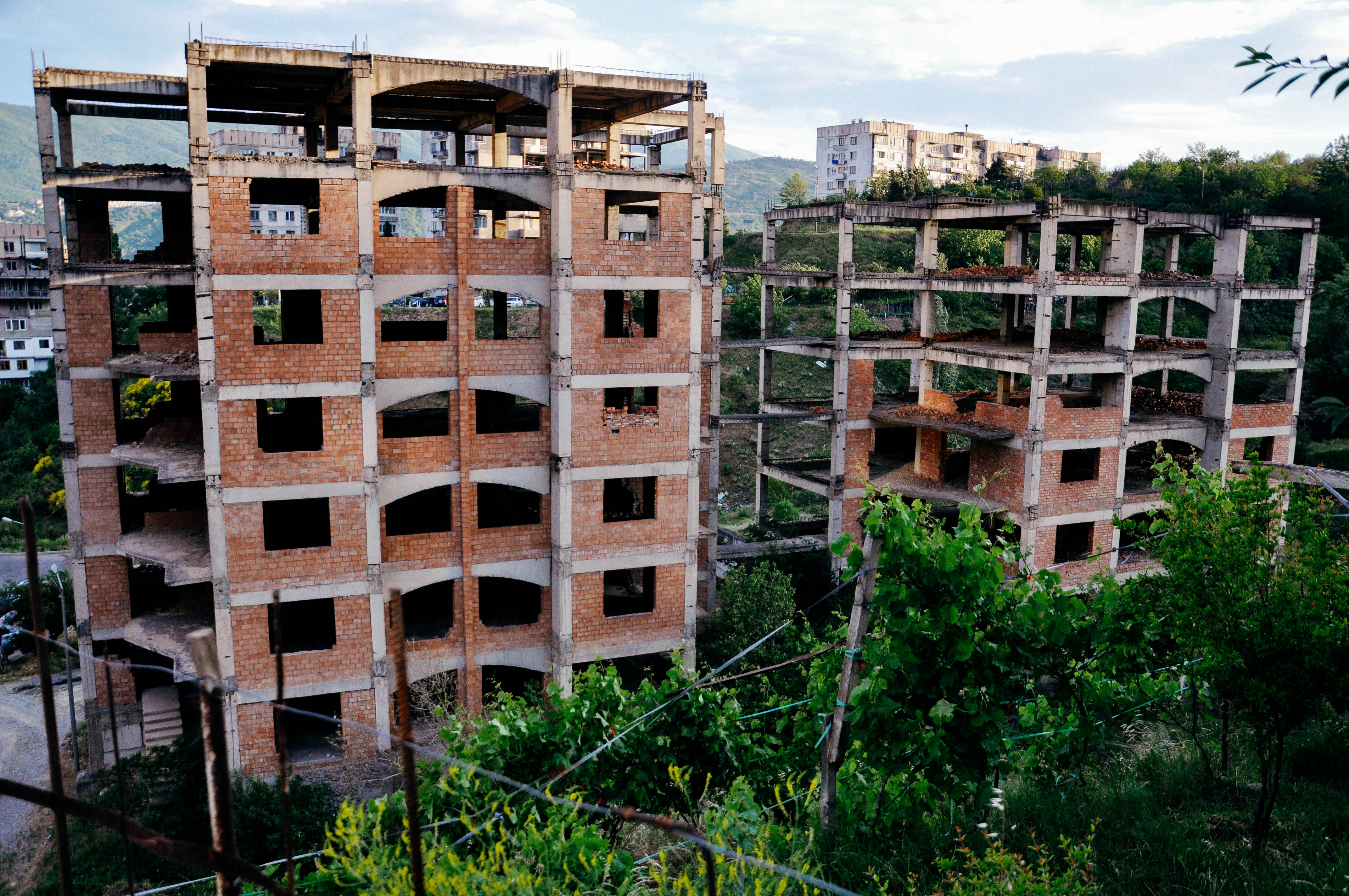
Edika is a veteran of war in Abkhazia. He has changed places to live, several times. At first, he lived quite close to his shop, then he wanted to settle in an old unfinished hotel construction in Temka district, but was afraid that when the authorities would find out that he wasn’t an IDP like the others, who settled in the hotel, he would be forced out. Now he lives in the other end of the capital, but never fails to come to his small office every day.
“What else I would be doing at home? You can come here any time you want, I will always be happy,” he smiles.
Illegal Construction and Garages
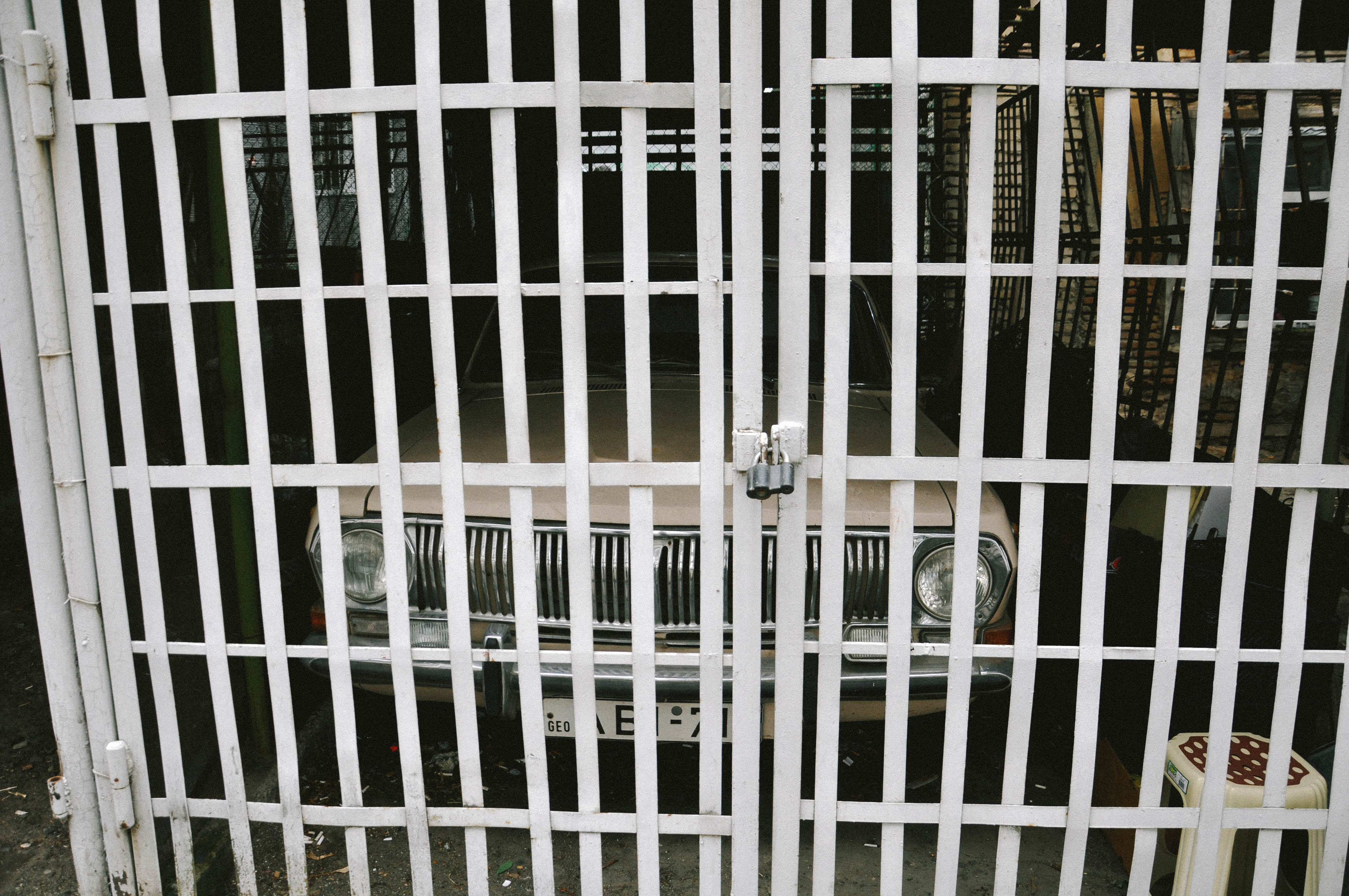
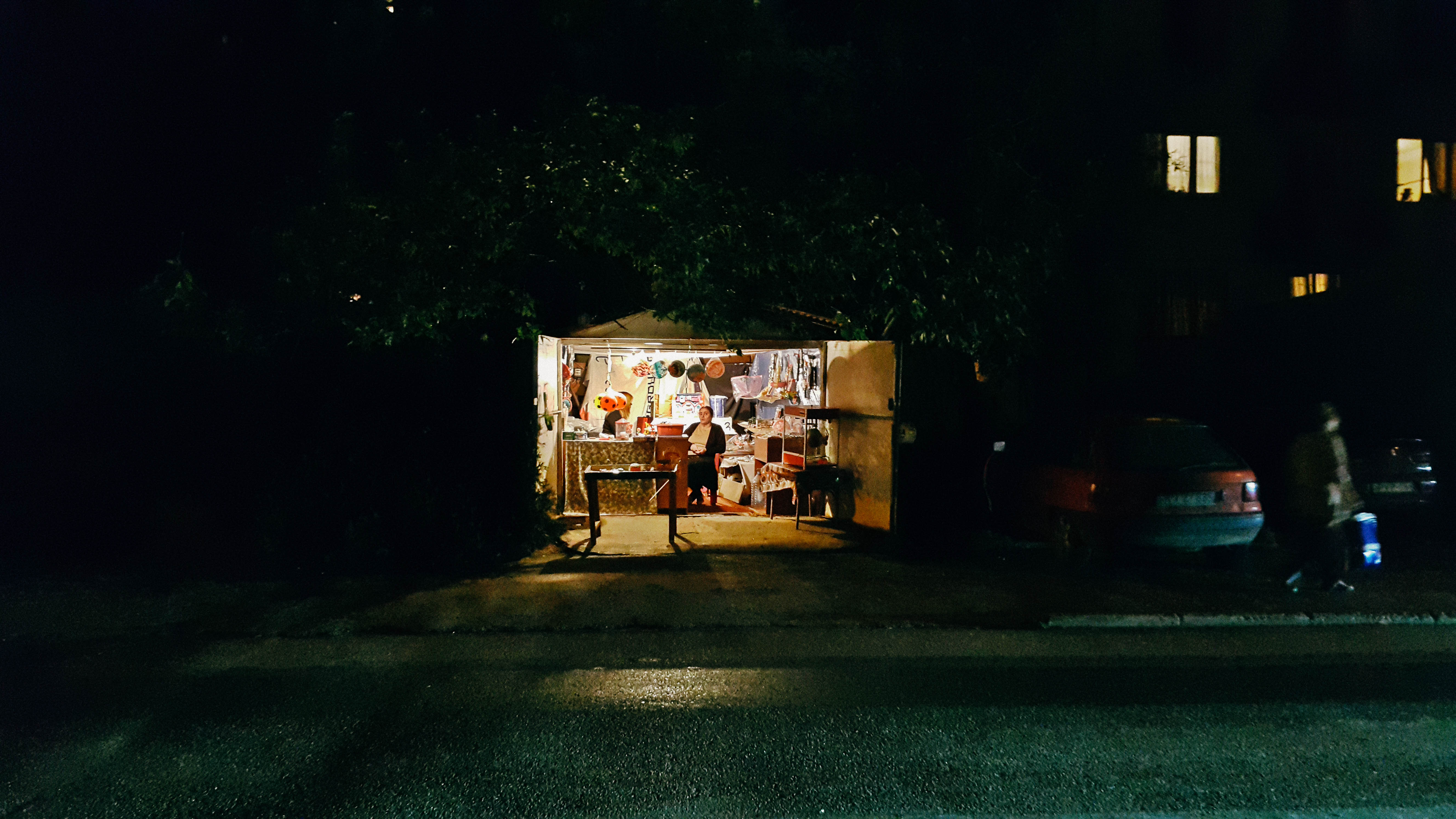
After the collapse of the Soviet Union, there were numerous robberies in Georgia, especially in Tbilisi. Many people were afraid to leave their cars outside, as people even stole petrol from them. Some, who didn’t have a place to lock their cars, removed the accumulator (the battery) from the car at night. Others decided to construct garages and lock their cars safely there.
Garages multiplied like mushrooms in the 1990s. They were constructed without consulting with architects, without proper projects, and people used whatever material they could find, with different colors, heights and forms. None of the multi-story buildings, constructed by the soviet government, had foreseen locations for garages and they were built mostly in recreation zones. Many people decided not to cut the trees, so they built their garages around the tree.
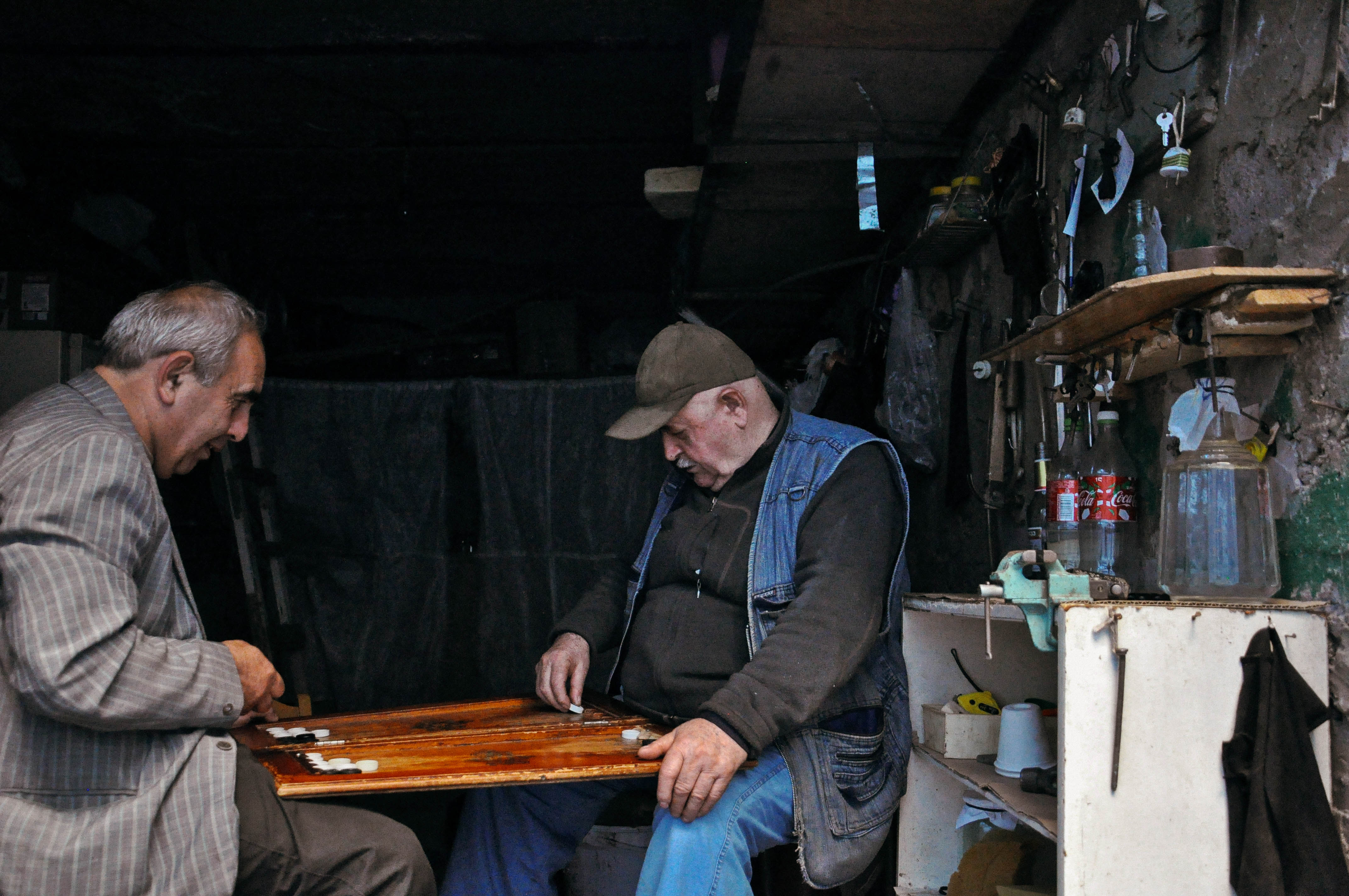
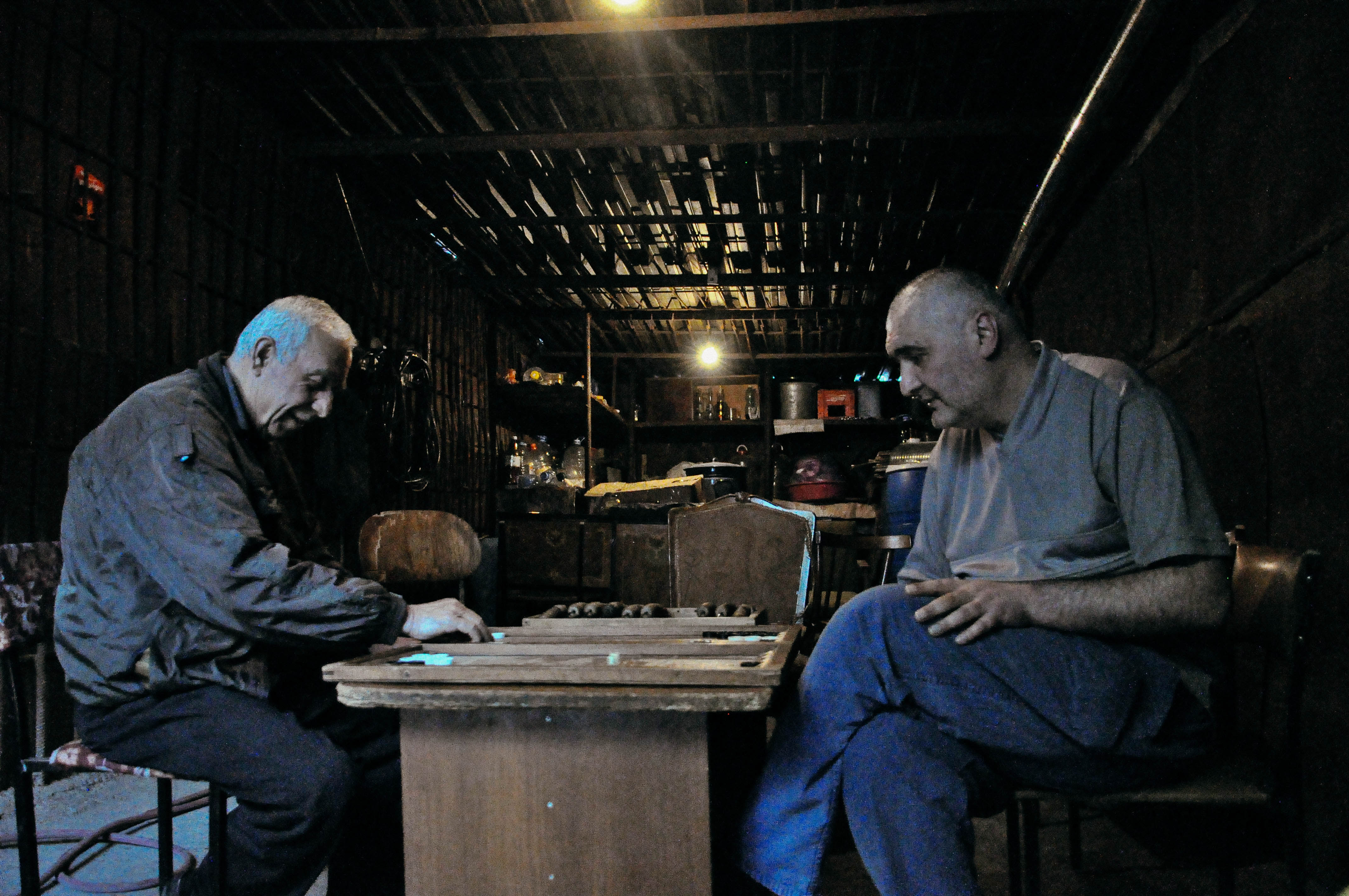
Today, most of the garages lost their function and transformed into shops, storages or a place to just sit down with their pals to play domino or backgammon.
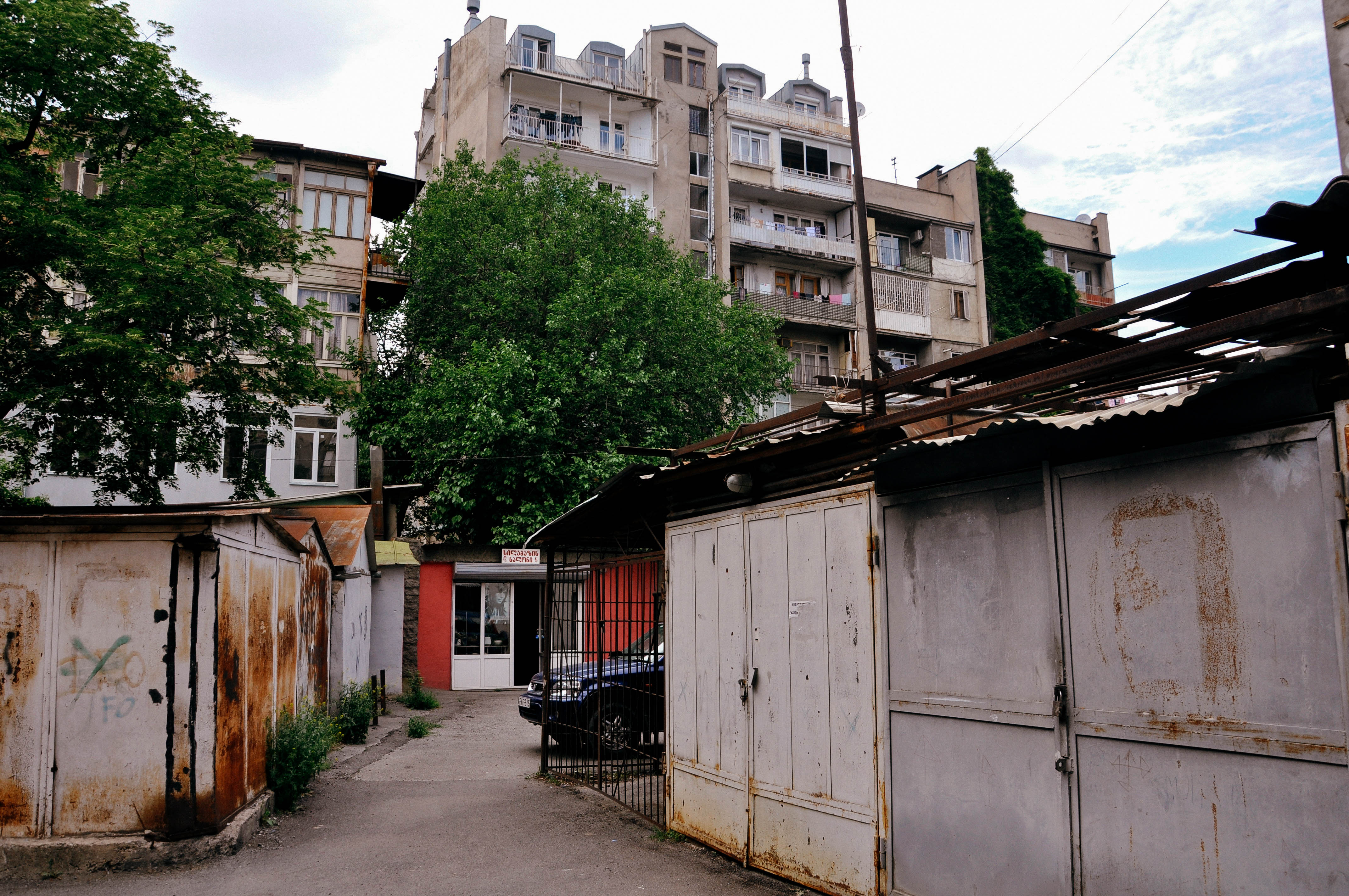
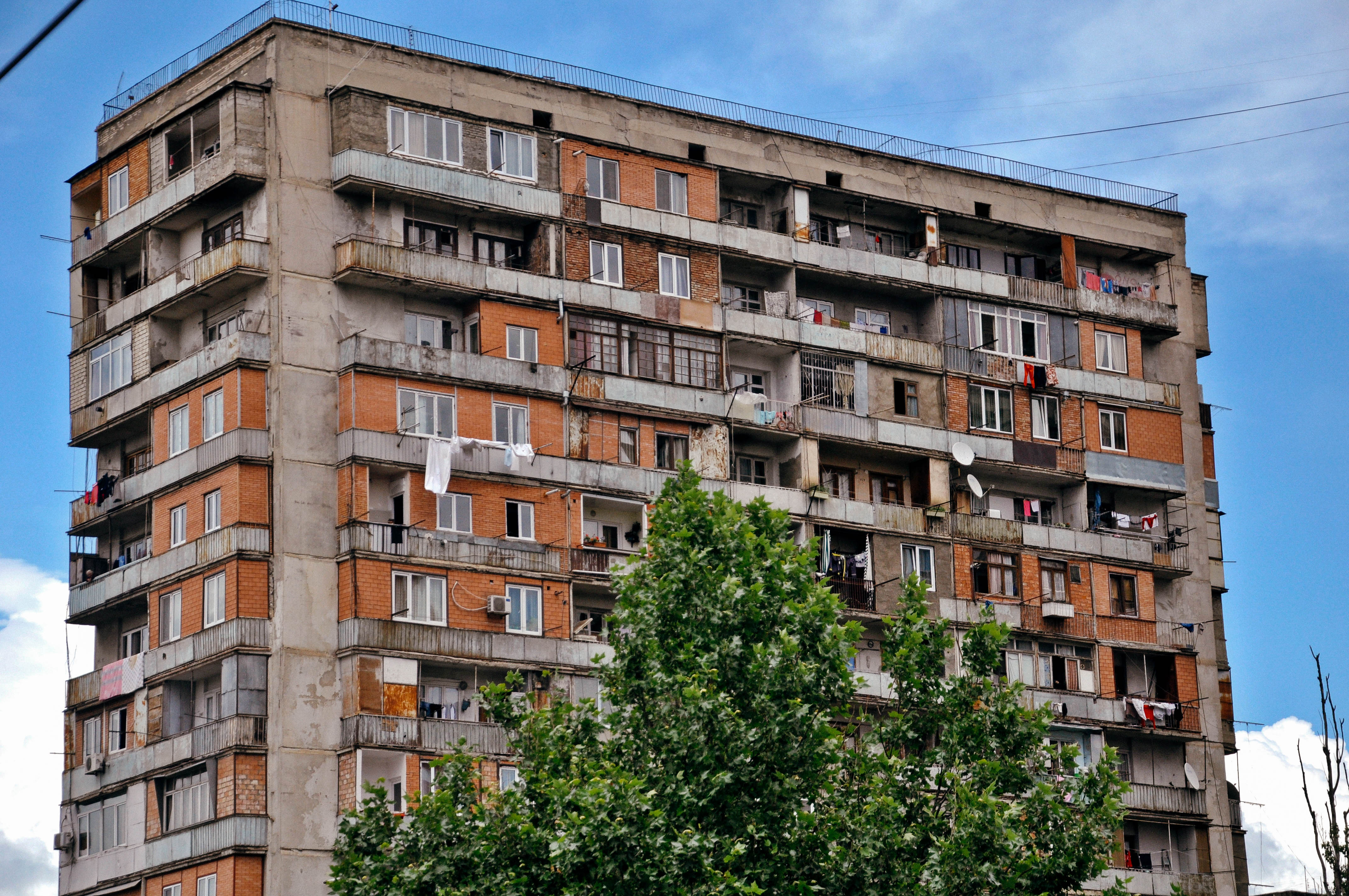
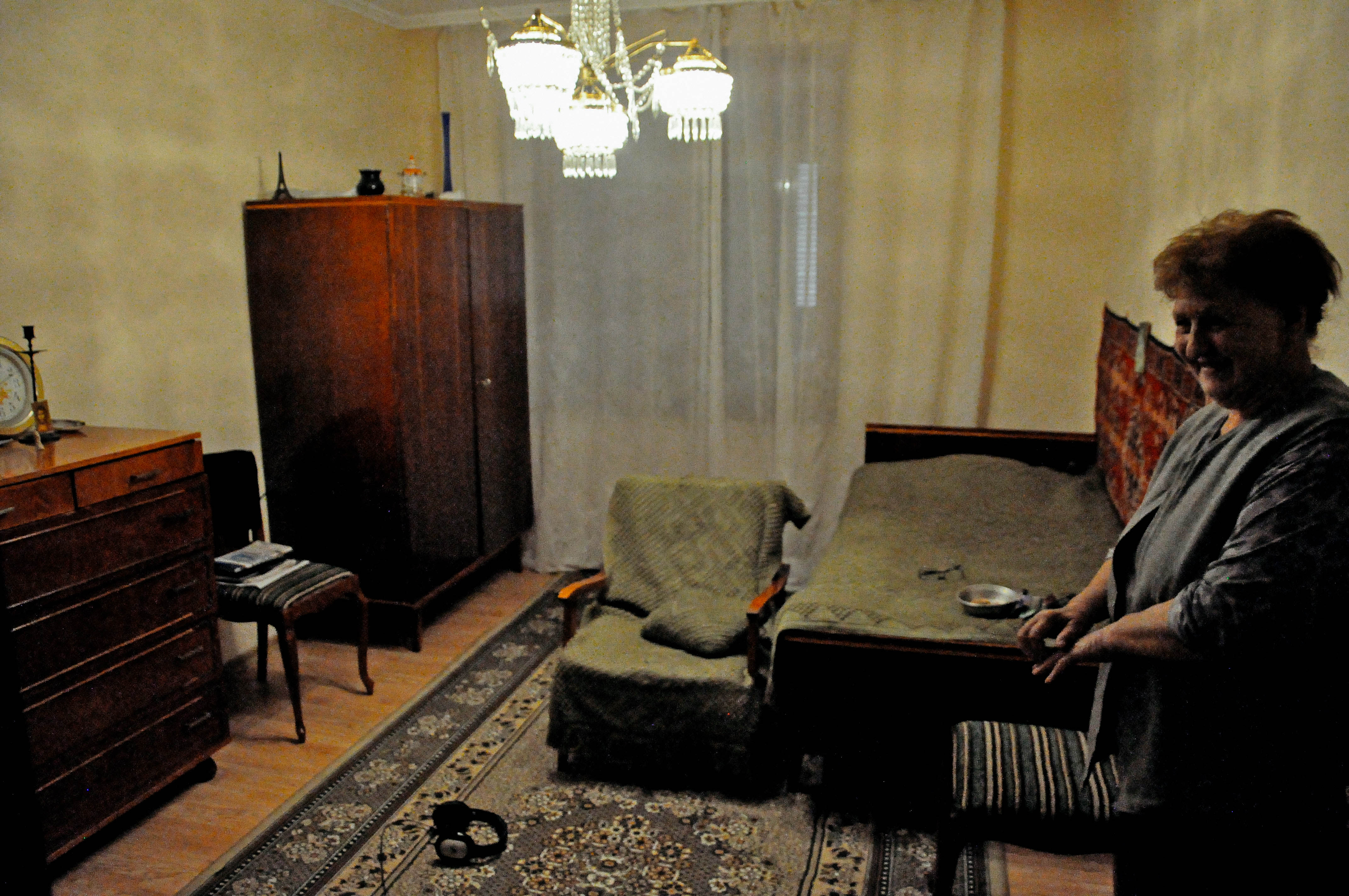
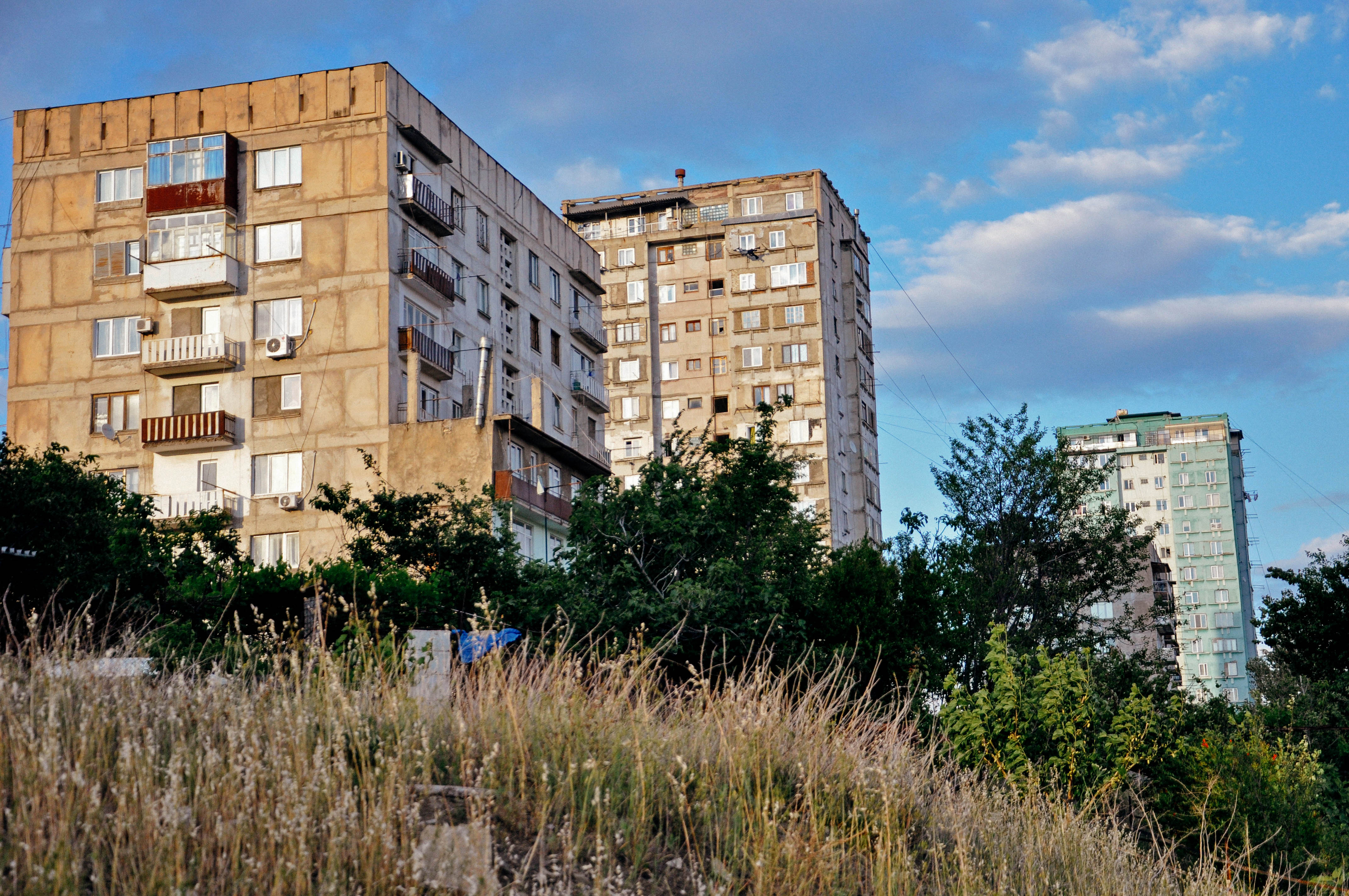
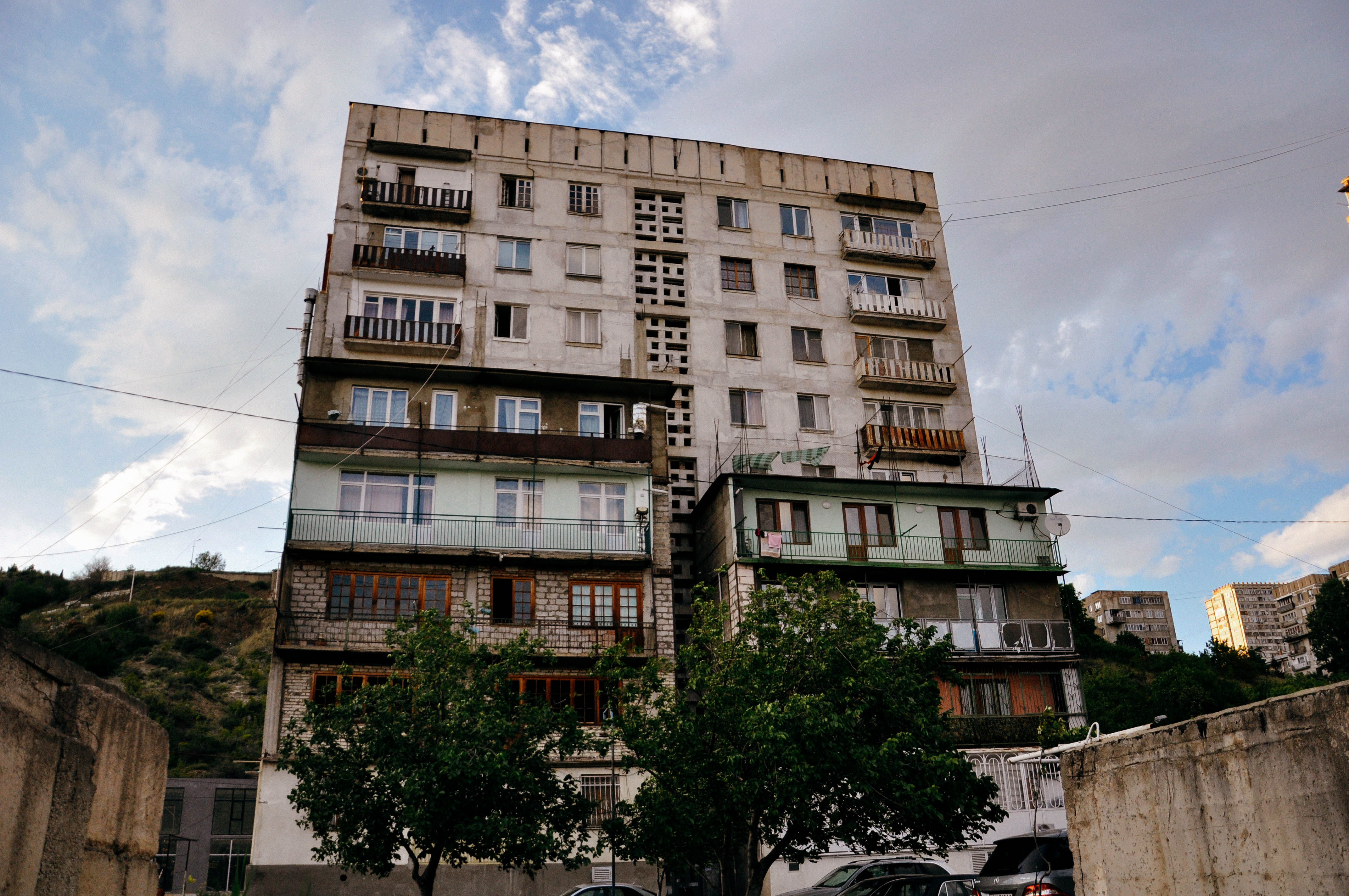
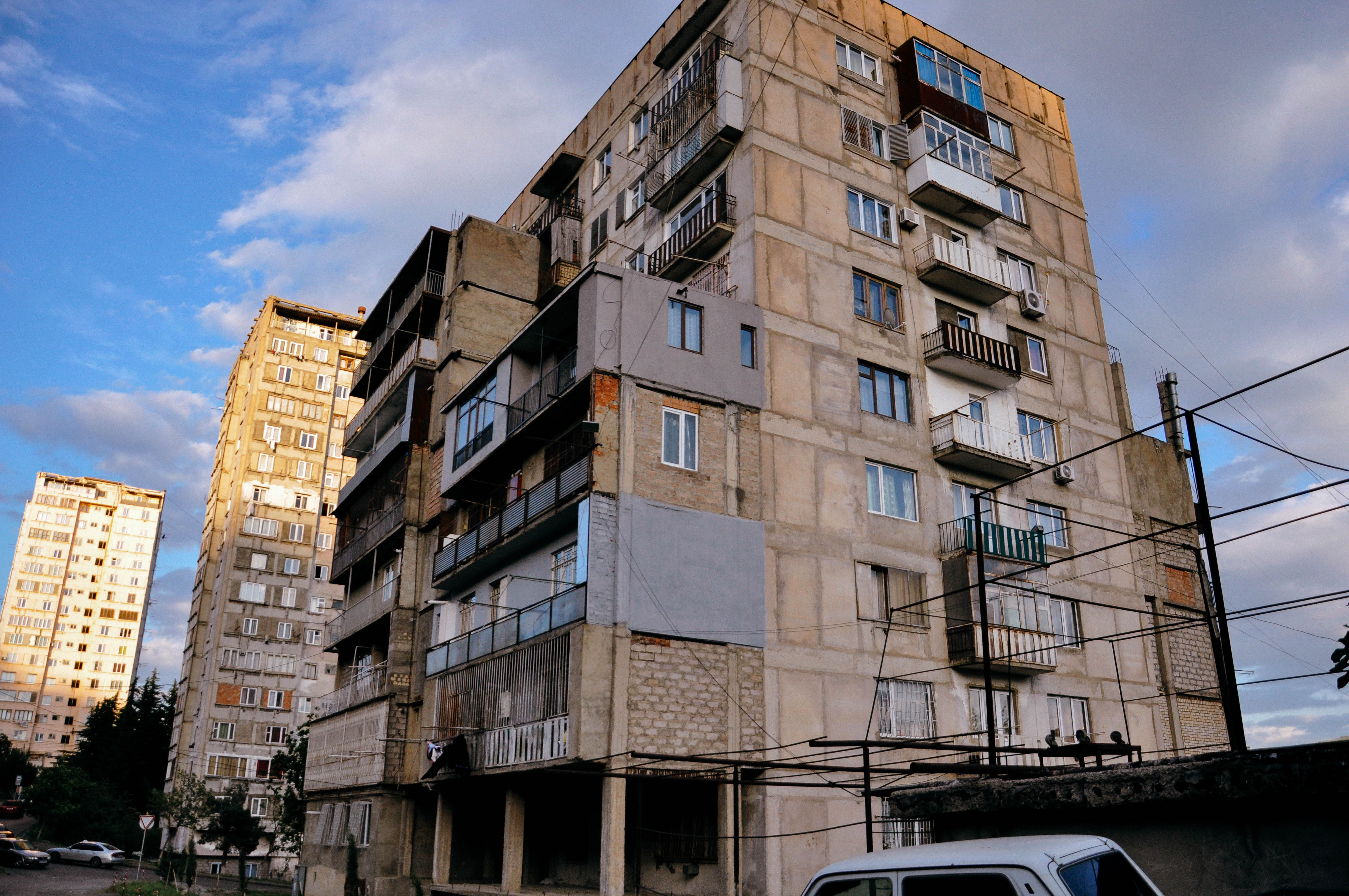
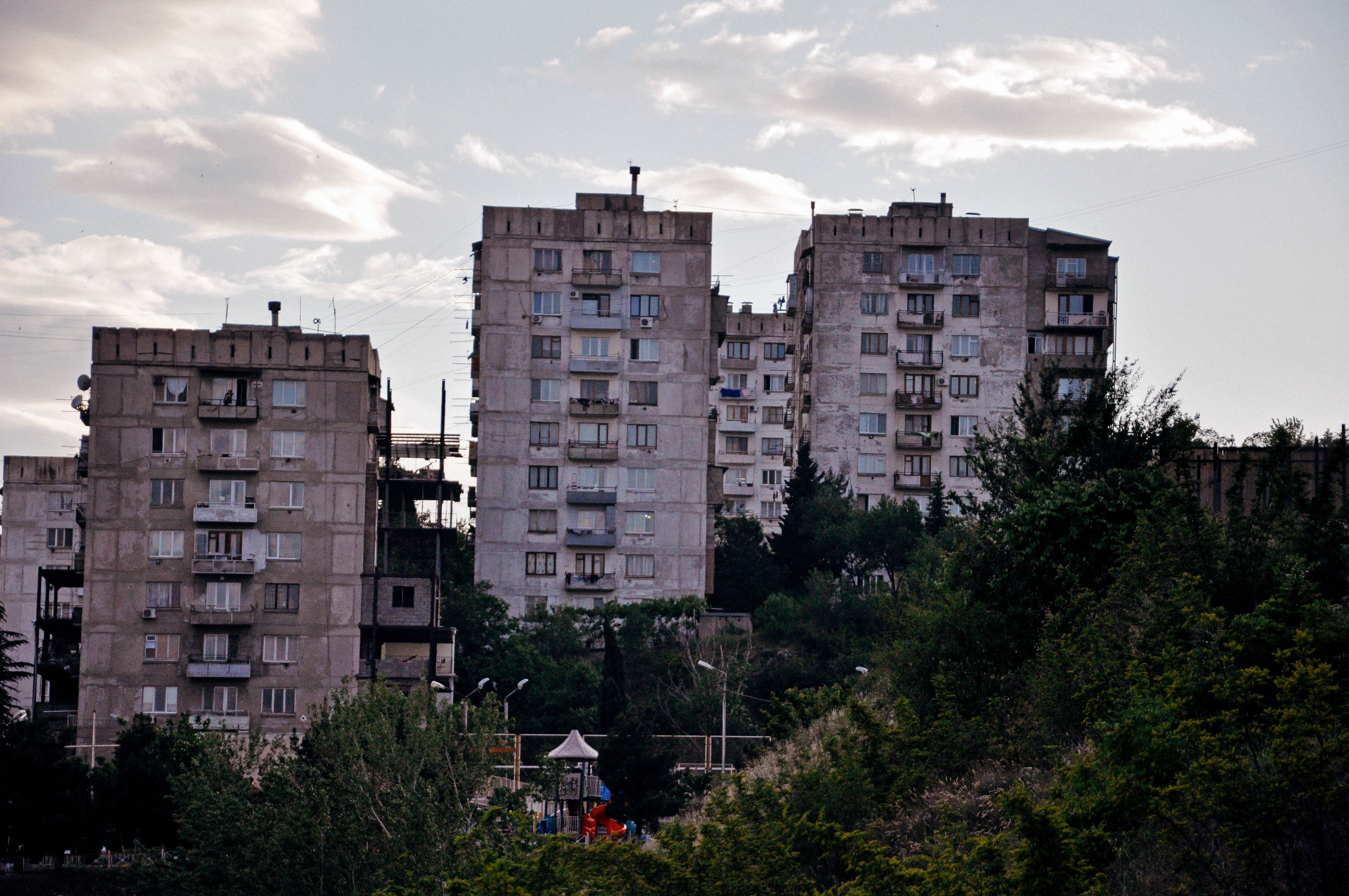
Ira, 74, lives alone in an apartment on Nutsubidze Plateau. There are nine stores in the building and only one entrance. The building has constructions from two sides, where Ira lives and on the opposite.
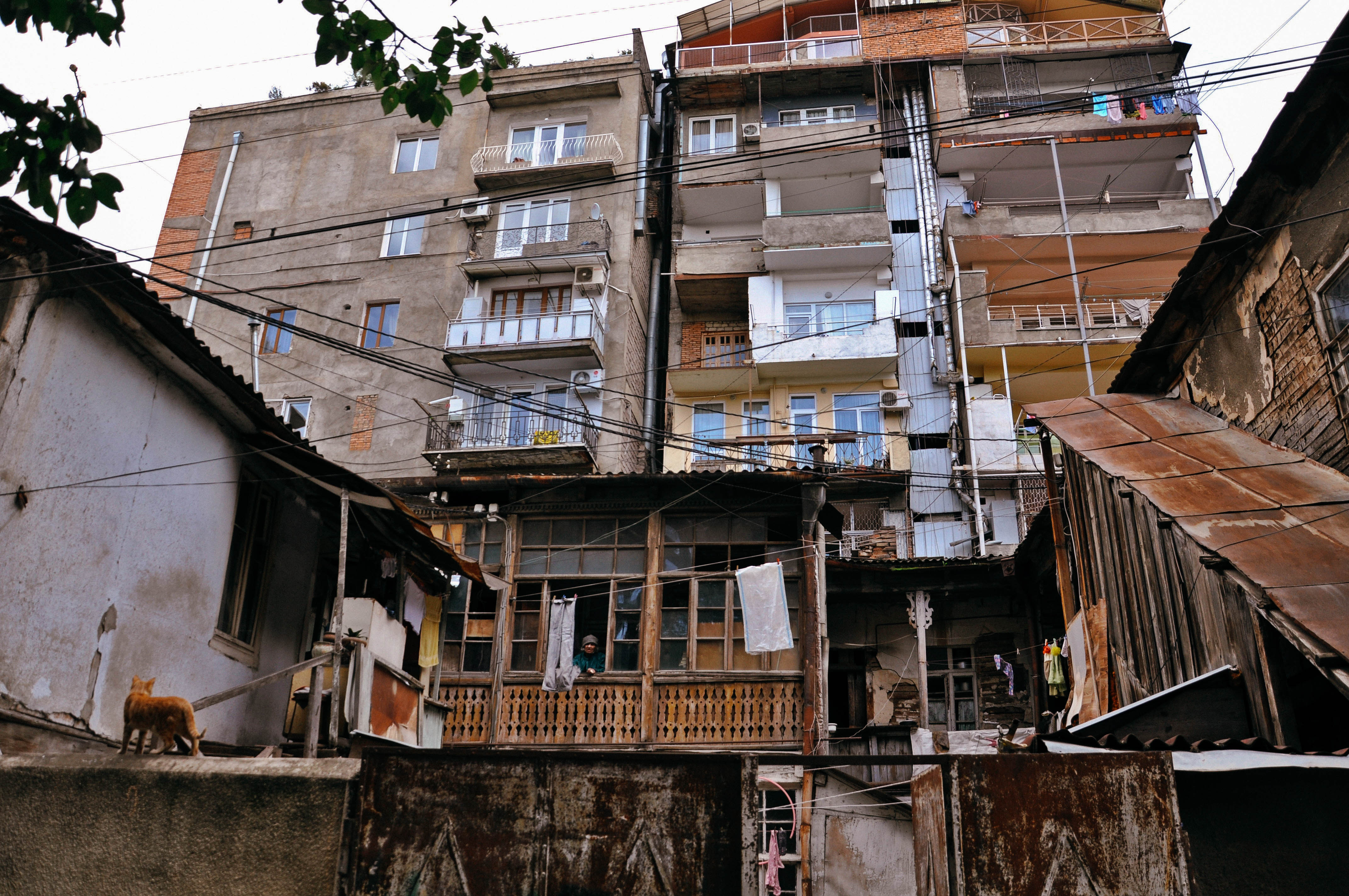
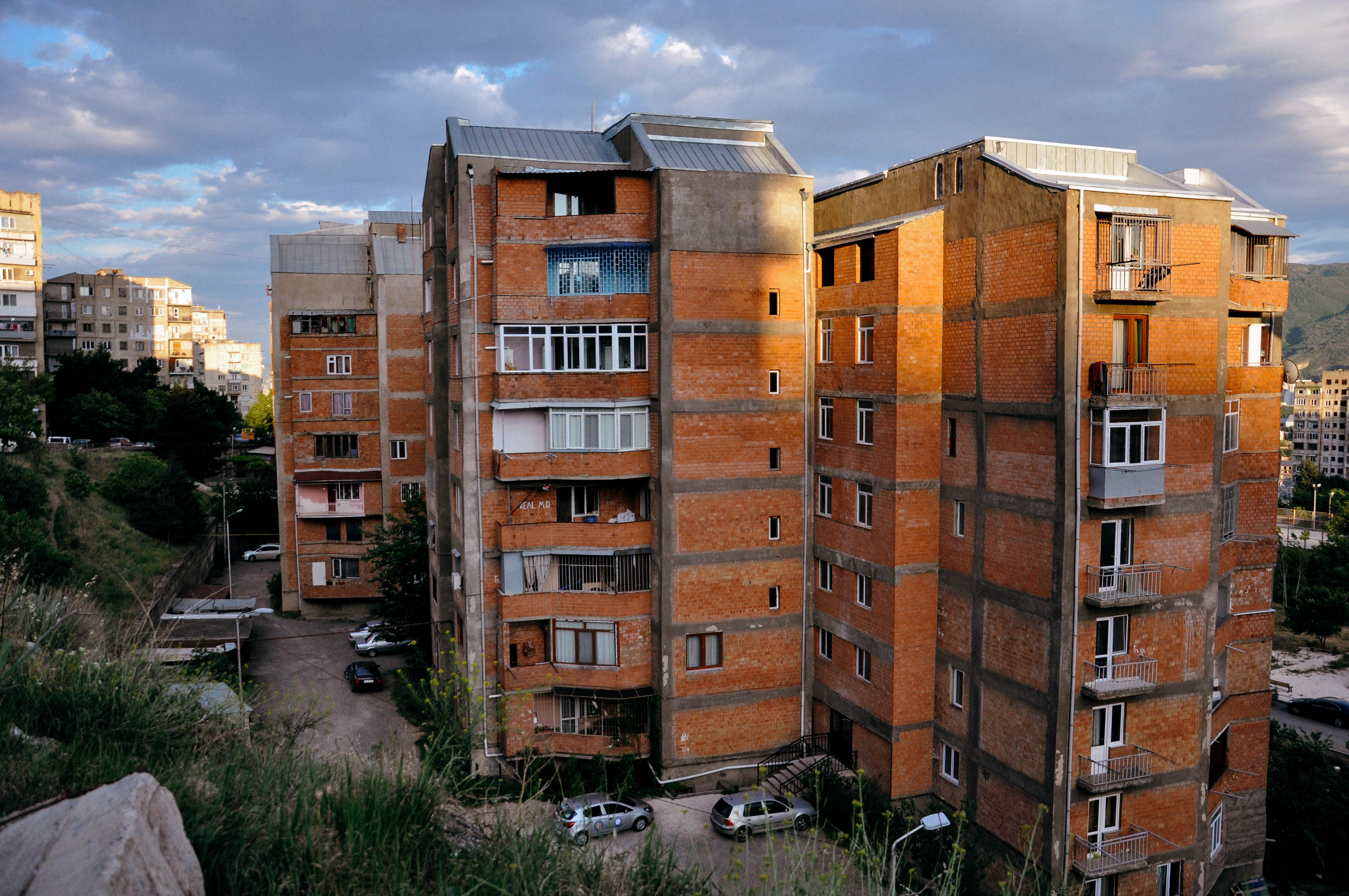
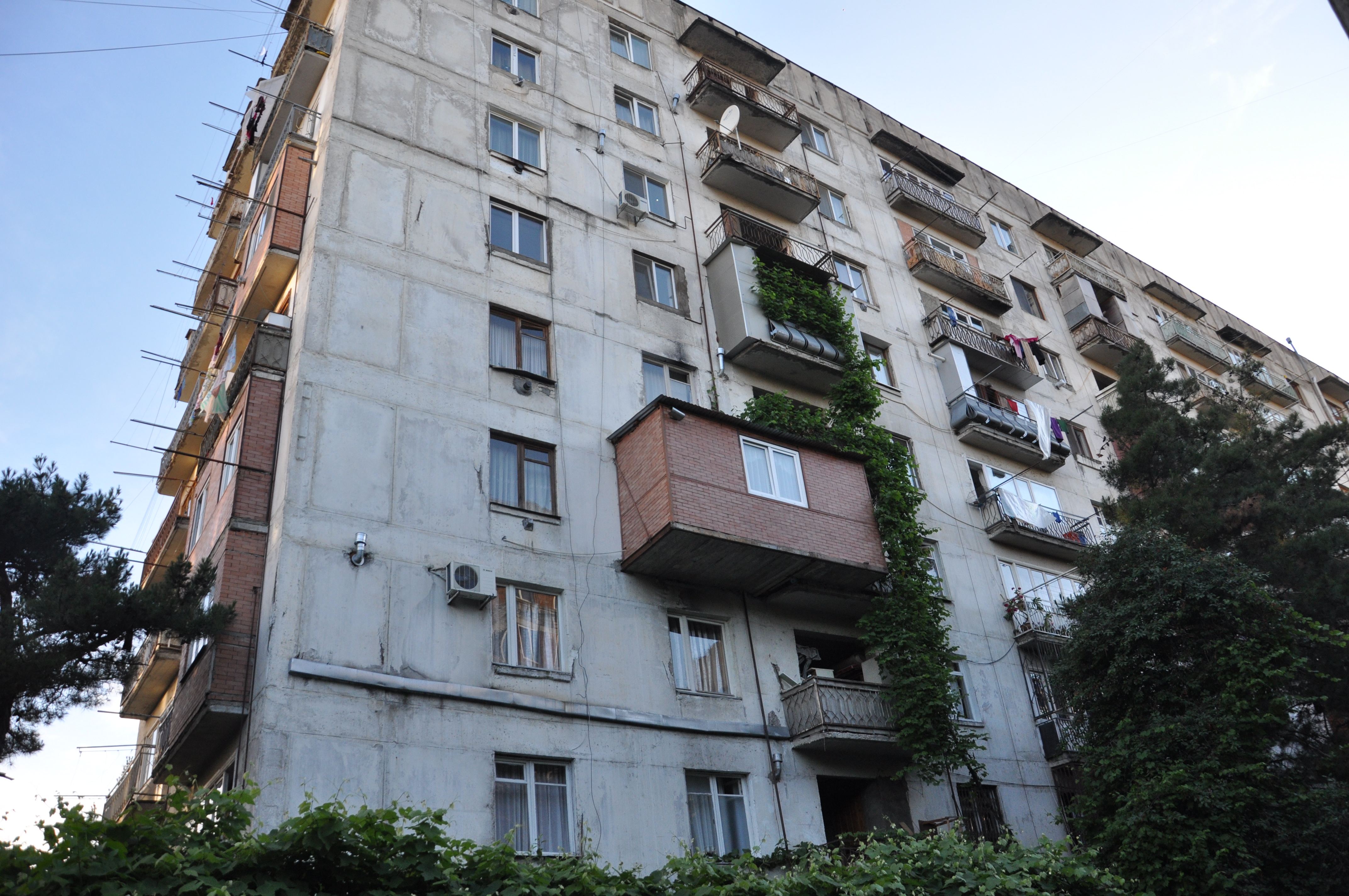
Irakli Zhvania, an architect and urban planner, said that in the last years of soviet rule, local governments tried to please people giving them permissions to carry out different kinds of constructions. People living in those buildings built during the Soviet Union, wanted to expand their flats. It was like a disease all over the city, just like garages, people used to add constructions to their flats – with different forms, building material, no proper planning and in rare cases, the end result was fatal. Over the last twenty years, there have been at least three reports on how those constructions collapsed in different districts of Tbilisi.
Ira’s husband died in the early 1990s. She was living with her son. She remembers that the soviet government gave permission to her and her neighbors to expand their flats, but they only began to construct them in the beginning of the 1990s. Neighbors met Shota Kavlashvili, an architect who was the author of their house project, to plan the construction for them. It started slowly and continued slowly. Workers, who built those rooms sometimes, stole the money.
By the time it finally reached the seventh floor, where Ira lives, she didn’t have money any longer and could only afford to construct a frame, without a grinding or balcony.
“I don’t care now, I don’t need it. I live alone. My son is married. I would have finished it when my son was a boy, it was cheaper back then.”
Again, in the middle of the 1990s, the neighbors of Ira started making garages, but unlike other places in Tbilisi, they put fences on pieces of land above their garages to organize gardens.
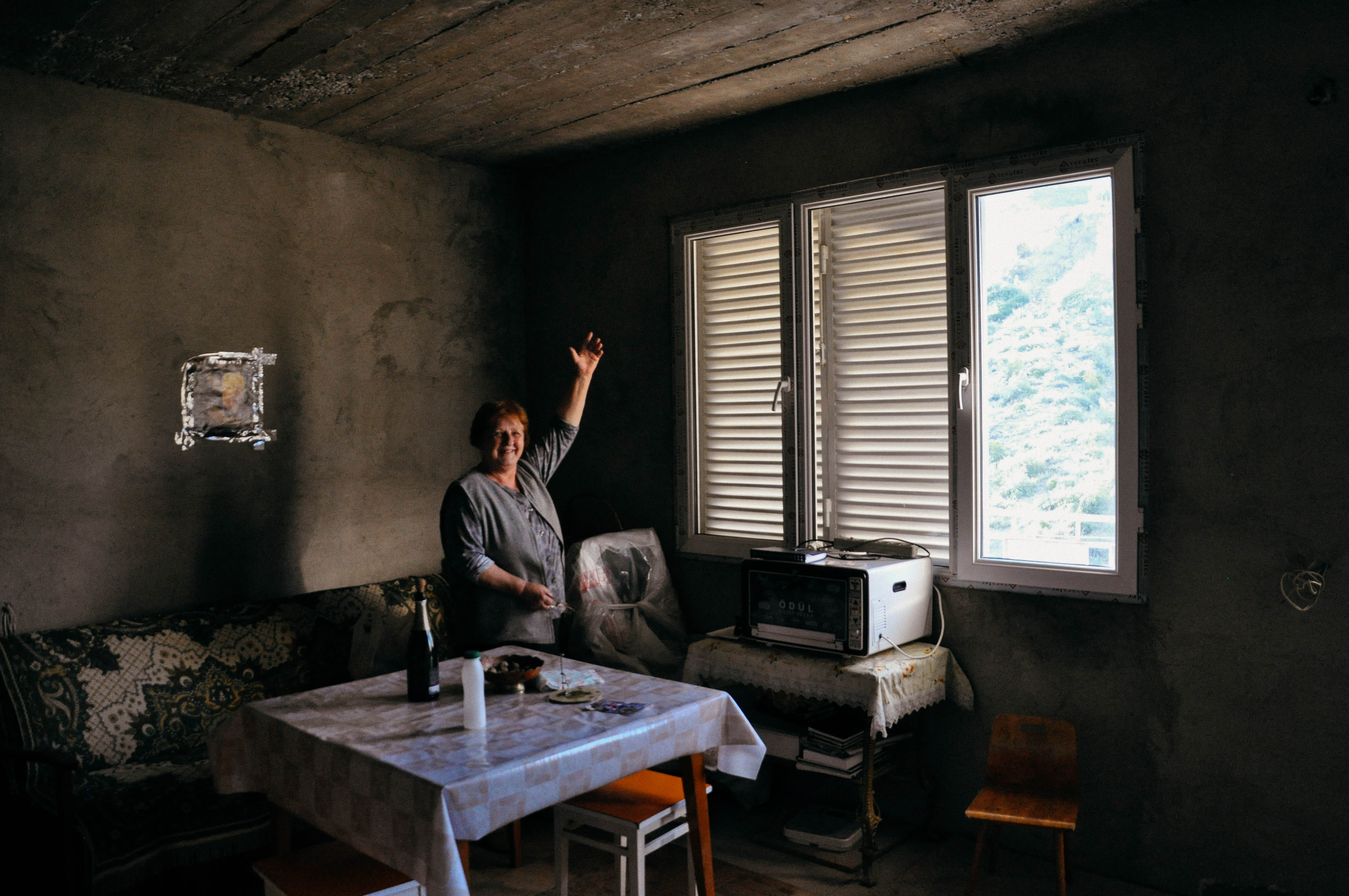
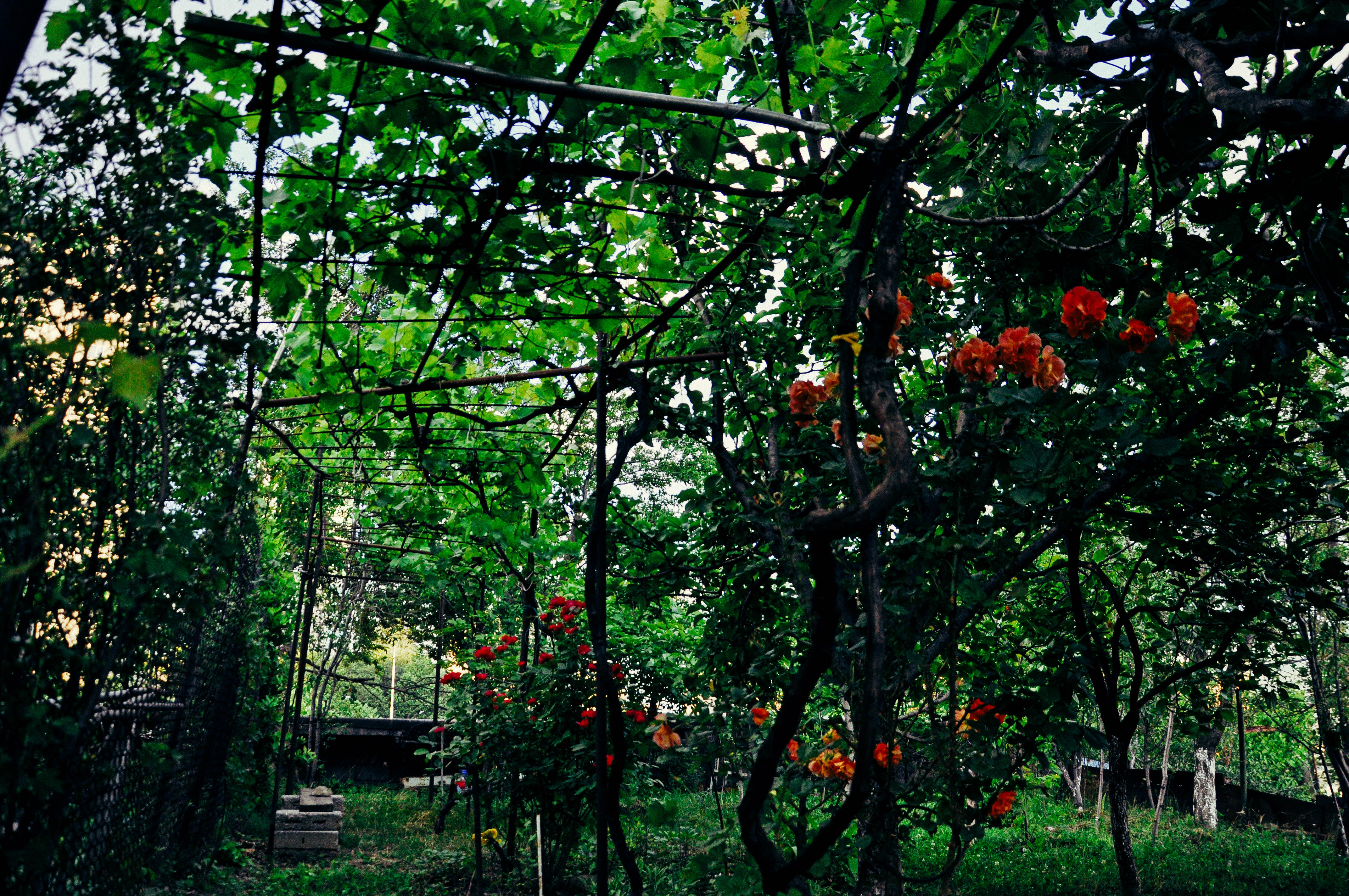
Ira, who was a biologist, liked the idea and she hurried in the yard the day when the tractor came to grade the land for the gardens.
“When I said that I wanted to have a garden too, the men were against it – what the hell could a woman do in a garden – they told me, but I didn’t listen to them, gave some money to the tractor and organized my own garden over my garage,” she said.
“I remember planting two types of apples and later a fig tree, now I have the best garden, even though I was the only woman taking care of it.”
Common Constructions in the 1990s
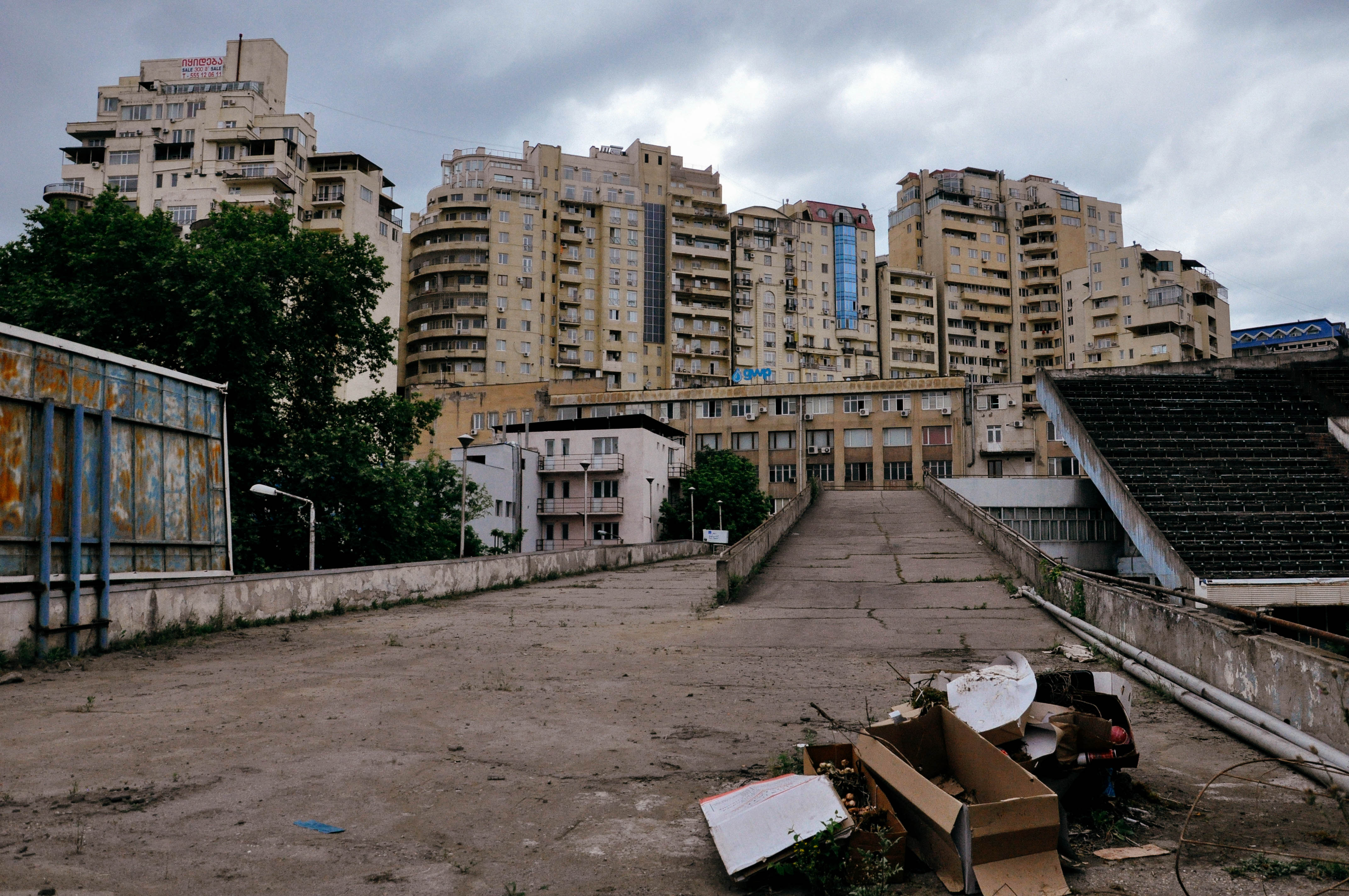
Irakli Zhvania, an architect, who had an experience working at New York’s City Hall, remembers that in 1990s, when corruption flourished at every level, major architects of the city were employed in the municipalities.
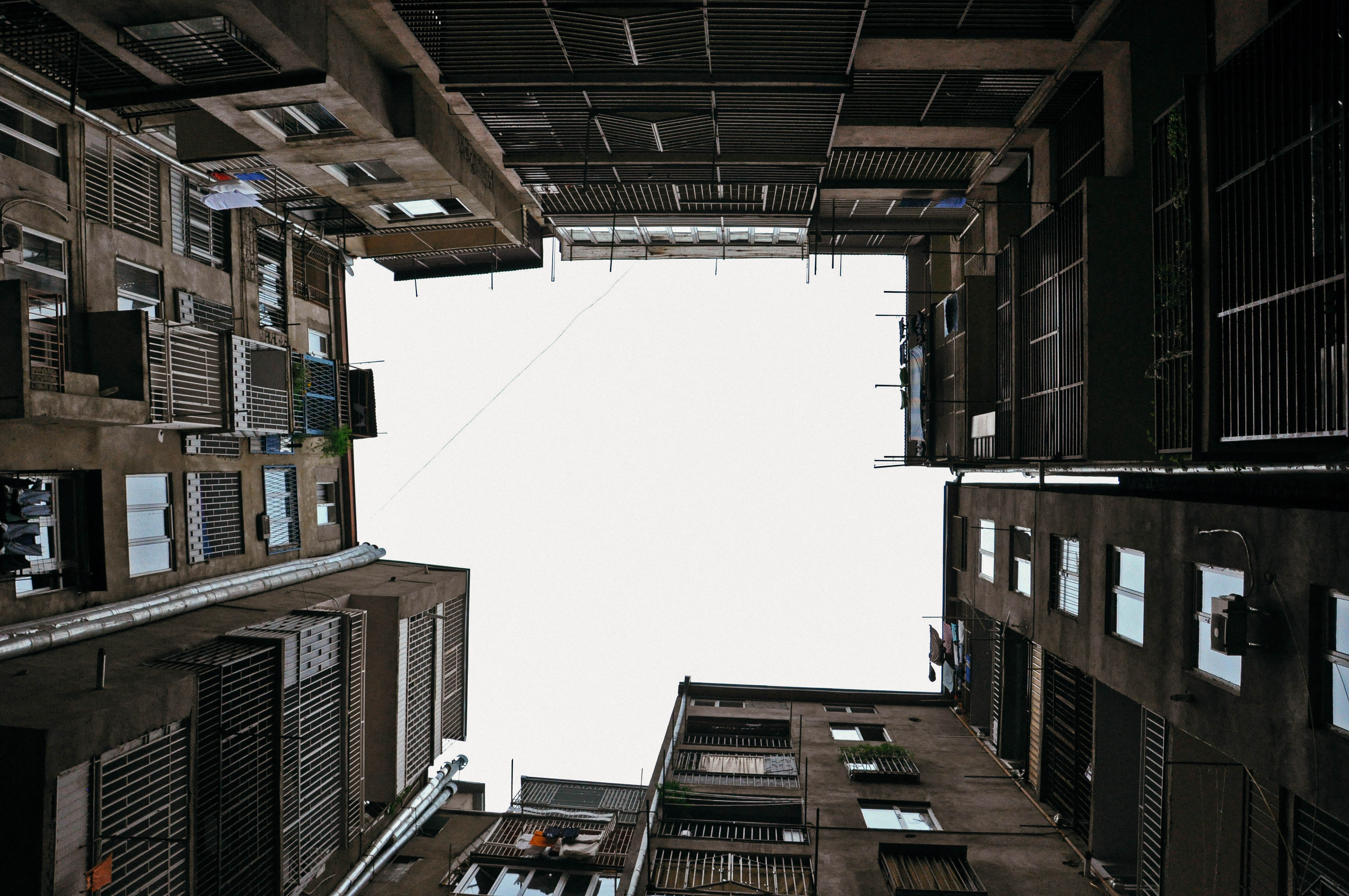
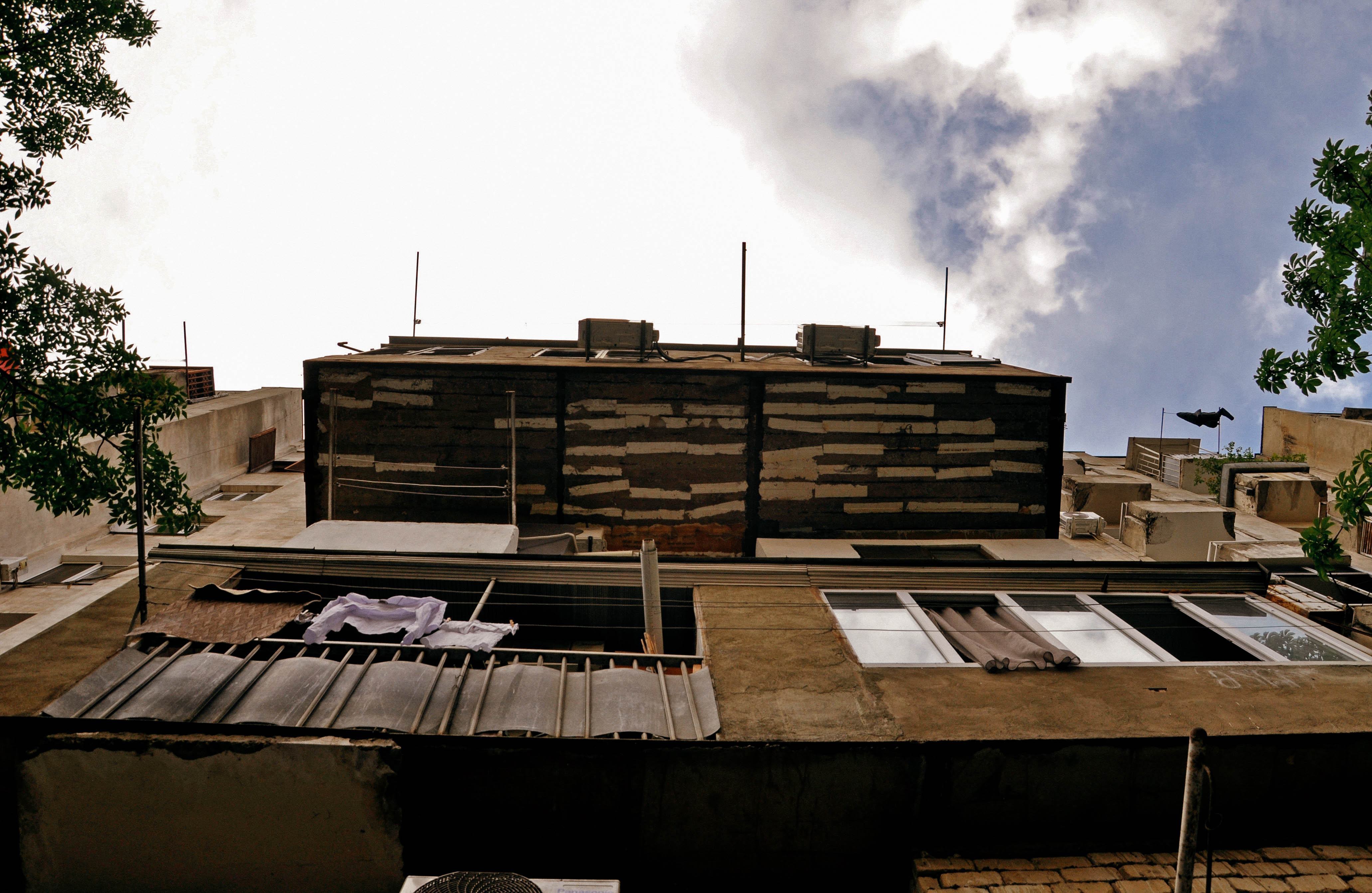
“They prepared projects, they approved those projects, and carried out those projects. You see the results. There is no sign of true architecture here, I can barely call this architecture.”
Zhvania explains that back then, buildings were built only for commercial goals and apart from that, there was no law, no monitoring body to control it.
“Workers didn’t even grind the walls and very often, construction material was left right in front of those new buildings for many years.”