

Photo Story
Archive
Of Bread and Barter: Surviving Georgia’s Food Crisis
Author: Nana Takvarelia
Edition:
Memory
Archive
The article you are reading is part of the Chai Khana archive. From 2015 to 2025, Chai Khana covered the South Caucasus, sharing stories from Georgia, Armenia, and Azerbaijan.
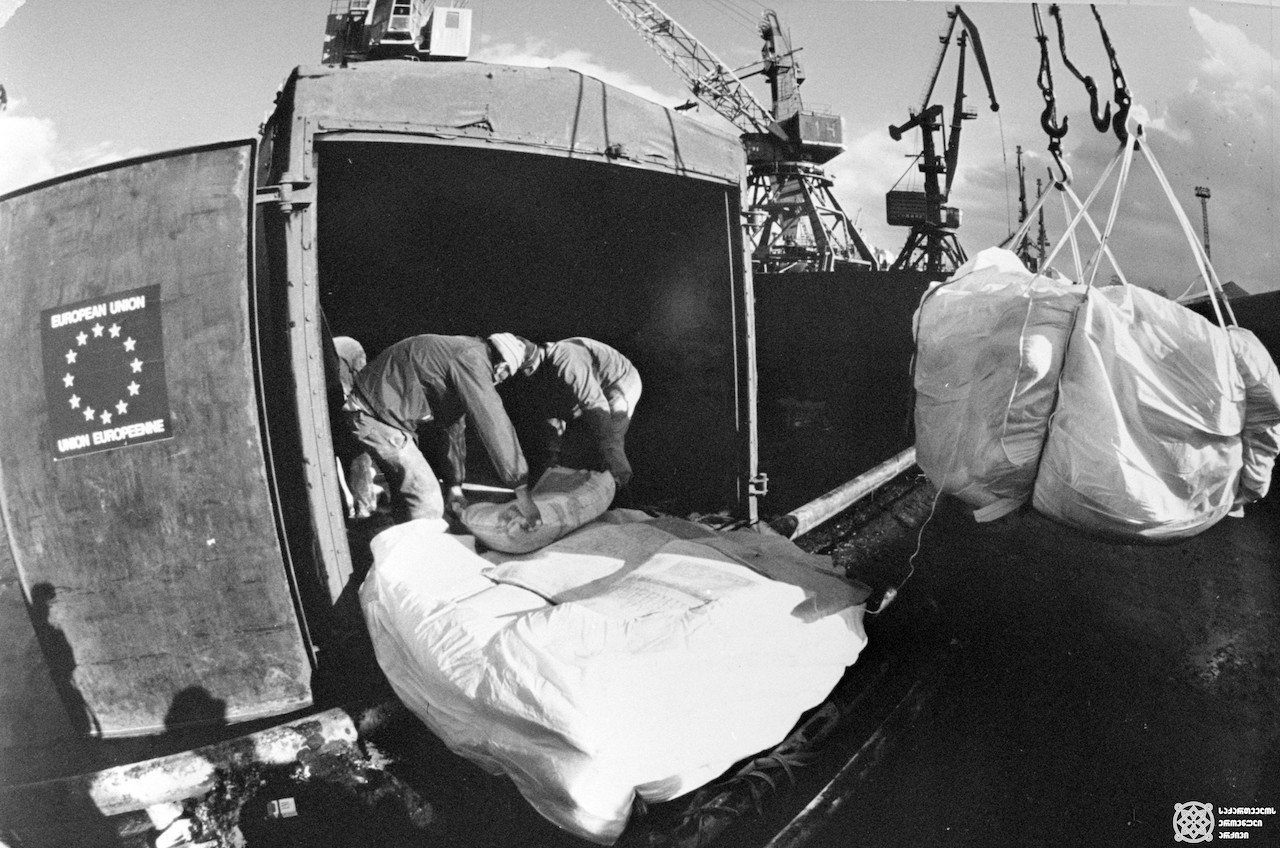
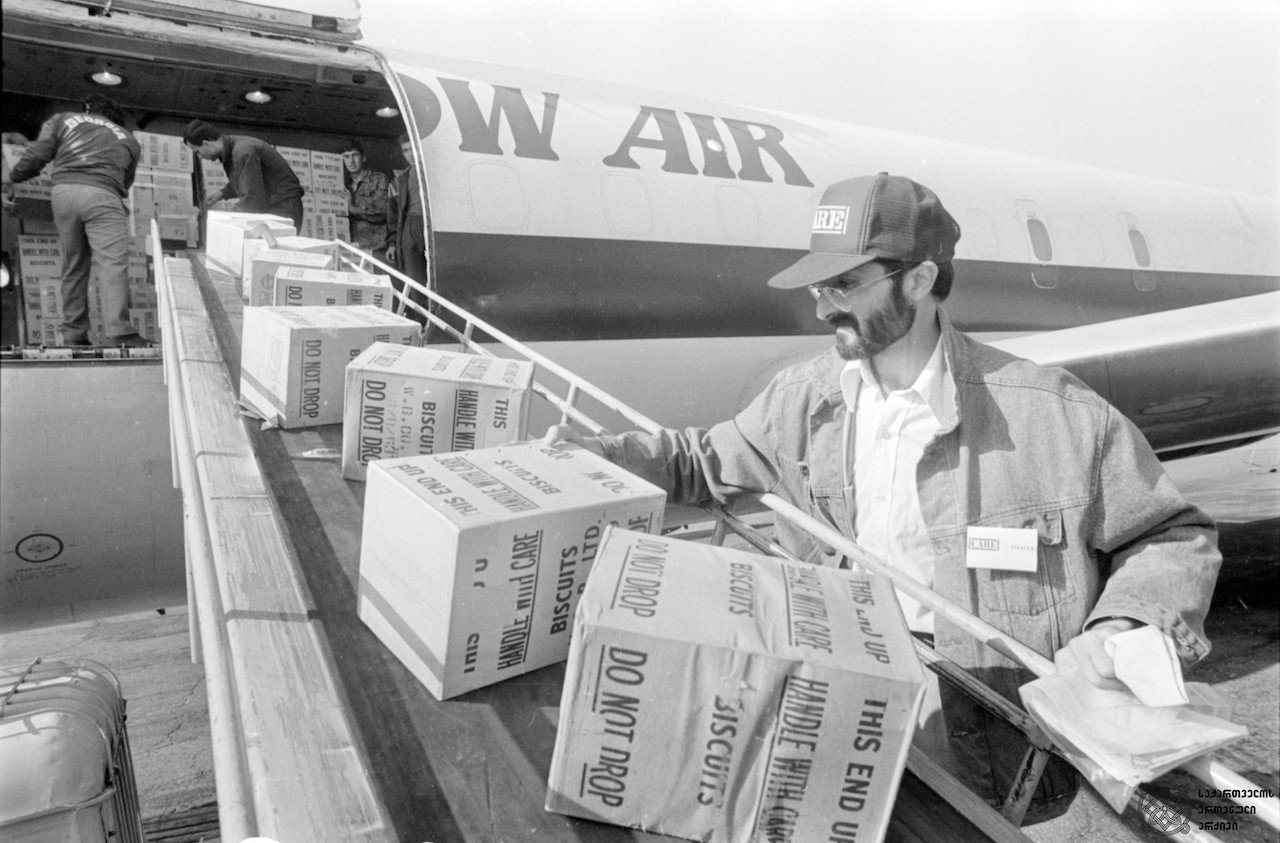
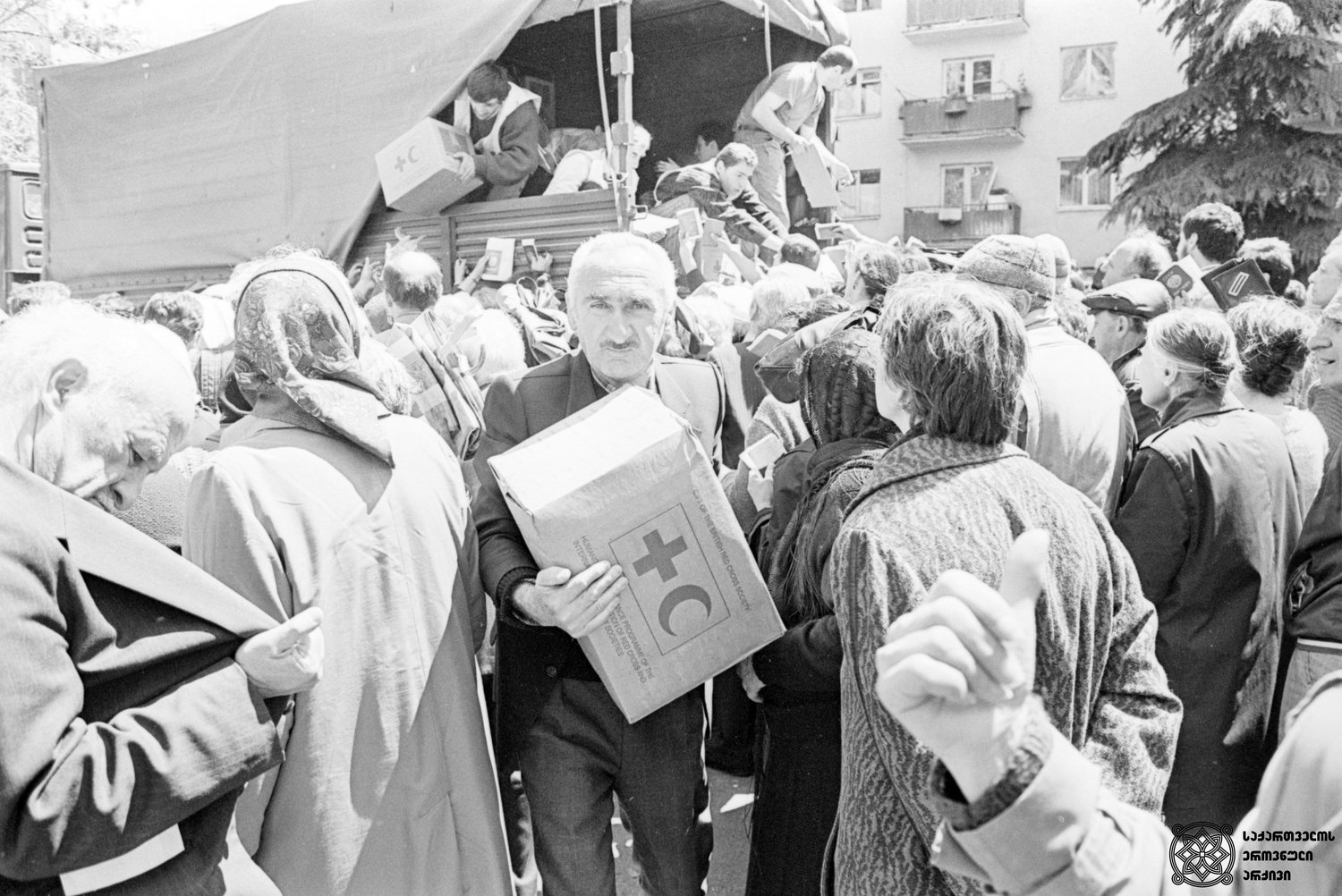
Maia Grdzelishvili still remembers, as a child in the early 1990s, waking up at 4 am to the strong scent of baking bread. It meant the electricity had returned to her family’s Tbilisi apartment for two hours, and Grdzelishvili’s mother was baking bread with hoarded supplies to avoid the need to stand in bread lines. It was a way to feel normal in an era that was anything but.
With the 1991 collapse of the Soviet Union, Georgia, like other former Soviet republics, faced economic insecurity, political chaos and rising criminality, but also a more basic challenge -- how to find food.
“The most important thing was survival,” Grdzelishvili, today a 33-year-old gender specialist in Tbilisi, says of the period.
Severe food shortages brought on by the gradual collapse of the centralized food-distribution system had forced this agriculturally rich nation -- once a cornucopia -- to start from scratch and recreate ways of supplying food.
Sometimes that meant standing in line for hours with a ration card for just 300 grams of bread. Or bartering or using connections to get your next meal.
In 1993, later American food anthropologist and social-policy advisor Mary Ellen Chatwin, author of “Socio-Cultural Transformation and Foodways in the Republic of Georgia (1989-1994),” recorded a sense of “desperateness and urgency,” with even “well-dressed people” stealing at Tbilisi’s central bazaar. Humanitarian aid was not exempt, she added.
For some Georgians, though, finding and acquiring food became a type of sport; an activity that gave them a strong sense of self-accomplishment when successful.
Fifty-nine Gia Gokieli remembers taking his backpack in the early 1990s to go foraging for bread for his wife and three young daughters. “This would sometimes take half a day,” Gokieli, a translator and philologist, recollects. He uses the term “hunting for bread” to emphasize the unpredictability of the outcome.
The verb Georgians generally use to describe such pursuits -- შოვნა (shovna) – reflects the stakes. It means both to find and to acquire, and implies both effort and luck.
Good fortune was, indeed, necessary. Only family and friends made hoarding possible. If you found eggs one day, it was considered kind to spread the word among your network. If you were lucky enough to have a personal contact whom you trusted at the market or in a village, this could be key to getting food.
Bread, a mainstay of Georgian meals, often served as a currency in these transactions. In outdoor bazaars, people traded both edible and non-edible items for bread. Those who managed to find sizeable amounts of bread sometimes stored it in freezers (when working), like cash in a bank account.
Gokieli remembers in the late ‘80s exchanging 30 dried loaves of bread -- an unusual windfall from a private bakery -- for eggs from the village of Manglisi, which, like other Georgian villages, needed bread to feed farm animals.
For greens, he would take the largest car available for a group expedition to the town of Marneuli,an agricultural hub 24 kilometers from Tbilisi. At the time, gas shortages meant that ordinary Georgians rarely used cars, except for important occasions.
Other urban dwellers walked to nearby forests and villages to pick fruit, mushrooms or edible greens. Some such sites existed on a plateau on the outskirts of Tbilisi that today is a crowded residential district.
“[A]fter these expeditions [to the plateau], we would come back and, together with a few of the neighbors, dine together in the boiler room of our apartment block [for the heat and space], each bringing along something little to share,”recalls painter Dato Gegechkori, who went on the treks as a nine-year-old.
Getting meat, though, was more of a challenge. In 1993, a kilogram could cost quadruple an average monthly salary, or about $10 in Georgia’s new currency, the kuponi (coupon), Chatwin recorded. Instead, Gokieli recalls, some vendors would simply grind up the head of a calf, which could be purchased relatively cheaply along with its tongue and brains.
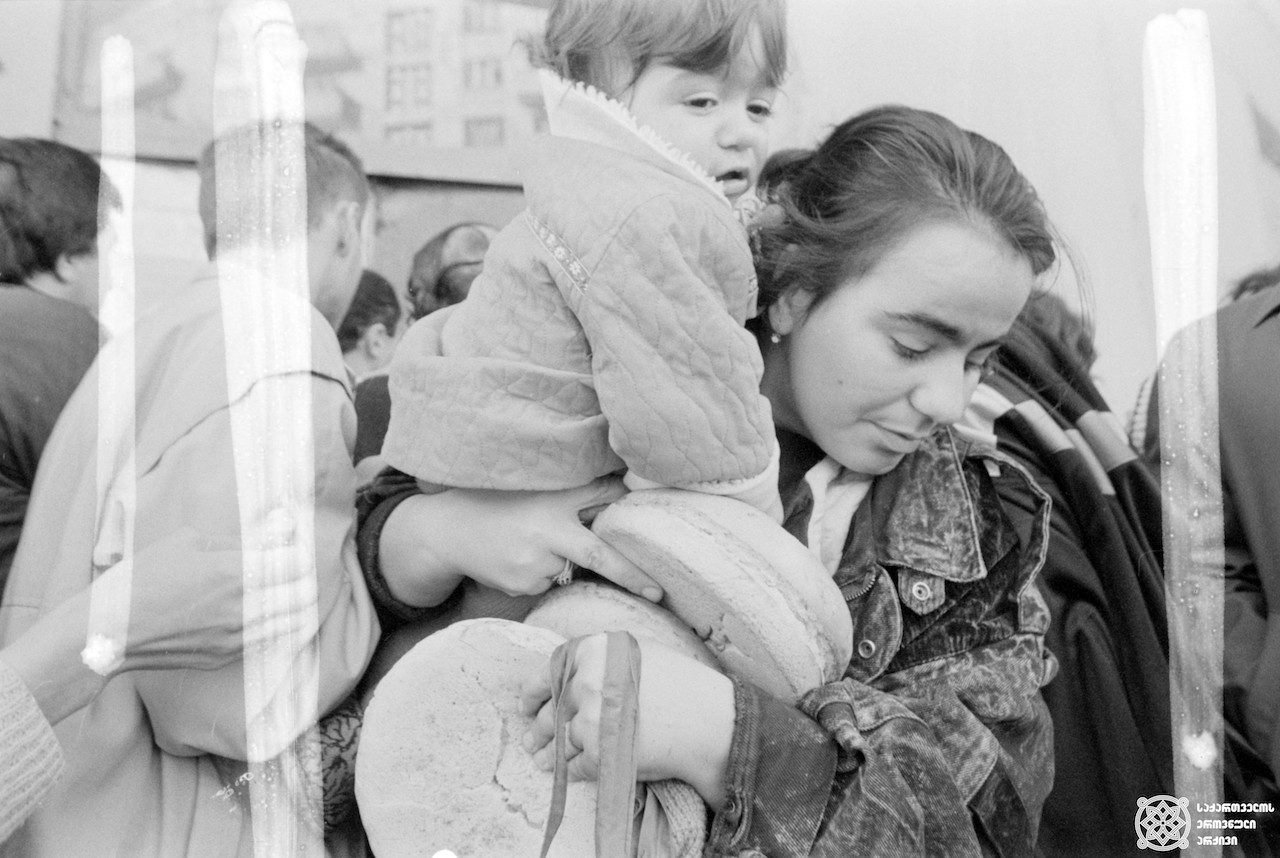
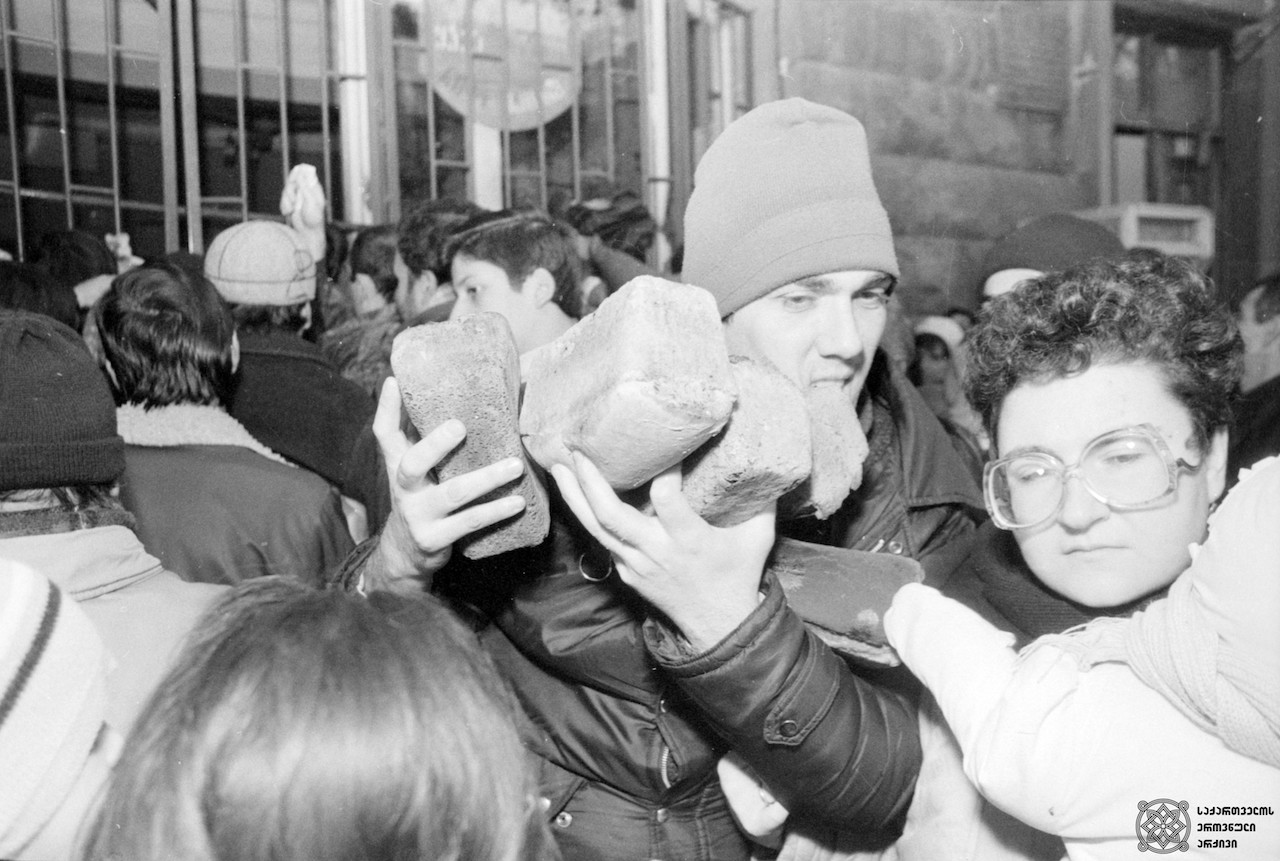

Yet despite the hardships, a sense of nostalgia persists throughout descriptions of these times. In unheated apartments, families tended to huddle together in one room. It was a time for helping each other.
One family recalls walking six kilometers through snow to a bus stop in the mountain town of Dusheti for a 5am bus ride back to Tbilisi, where they shared their finds with neighbors.
In a period with little to no electricity, heating or gas, neighbors would often cook collectively, using one stove, typically fueled by kerosene. Sometimes, several households shared the same stove.
“I left my house keys with the neighbors every day,” recollects Nino Kareli, a former humanitarian-aid worker who says she had the only kerosene stove in her Tbilisi apartment building during the early 1990s.
“The keys would change hands many time throughout the day, allowing everyone to make use of the stove,” remembers Kareli. “Eventually, my house became a constant hub for drinking tea.”
Before these stoves became available, many people came up with their own solutions. Gokieli constructed a stove out of bricks surrounding an oil lamp. The heat produced was strong enough to fry eggs, he says.
Elsewhere, fires were built in large, metal washbasins in apartment buildings’ courtyards. Some people placed the fires on their balconies. Apartment floorboards sometimes provided the kindling.
For many, especially the older generation, these experiences were a bitter experience that tested the limits of tolerance and survival. Tales of the elderly dying in bread lines were not uncommon.
By the mid-90s, the immediate severity of this crisis had eased, but some people today still bear its effects – eating only twice a day, for instance, or paying closer attention to food expenses, avoiding waste and sharing food with others.
In Grdzelishvili’s case, the effect is one of lasting gratitude to her parents. “Everything we ever achieved,” Grdzelishvili says, “I watched my parents . . . just how much effort and work it cost them.”
Thousands of other Georgians can say the same.
May 18, 2018
Memory
Chai Khana ©