

Feature Story
Archive
Dangerous dust: A hidden cost of Georgia’s construction boom
Journalist: Lana Kokaia
Edition:
2023
Topic:
Urbanization
Archive
The article you are reading is part of the Chai Khana archive. From 2015 to 2025, Chai Khana covered the South Caucasus, sharing stories from Georgia, Armenia, and Azerbaijan.
Inhaling dust — especially dust from common construction materials like cement and mortar — can kill. A study by the National Health Service in the UK found that as many as 4,000 deaths a year are linked to dust inhaled during construction work.
While Georgia has taken some steps to stymie dust pollution from construction sites, activists warn the measures are not enough.
A common culprit is cement and stone work.
Currently, the improper processing of materials that create dust is an administrative offense, punishable by a 500 GEL fine for an individual, and a 1000 GEL fine for repeat offenses. The fines are twice as high for businesses. Construction workers are supposed to cut stone and cement using what is known as the “wet” method. It reduces the amount of dust produced.
Residents complain enforcement is spotty, however.
"Wherever I see stone being dry cut, I call city hall,” notes Ana Akhaladze. “Sometimes I have to call five to six times for each active construction site. The hotline operator tells me that they will respond, but in many cases I see that the workers continue to dry cut the stone.”
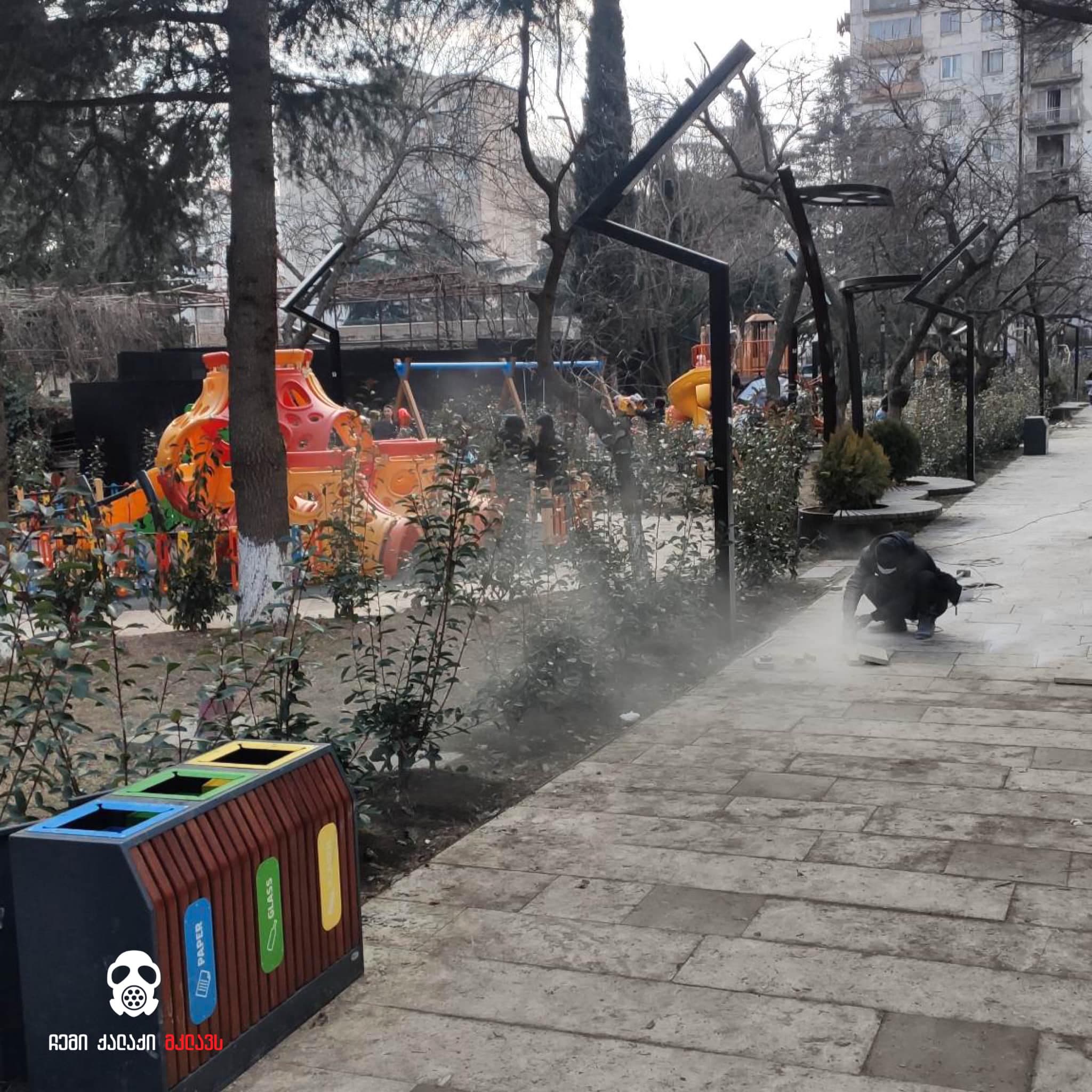
© Movement: My city kills
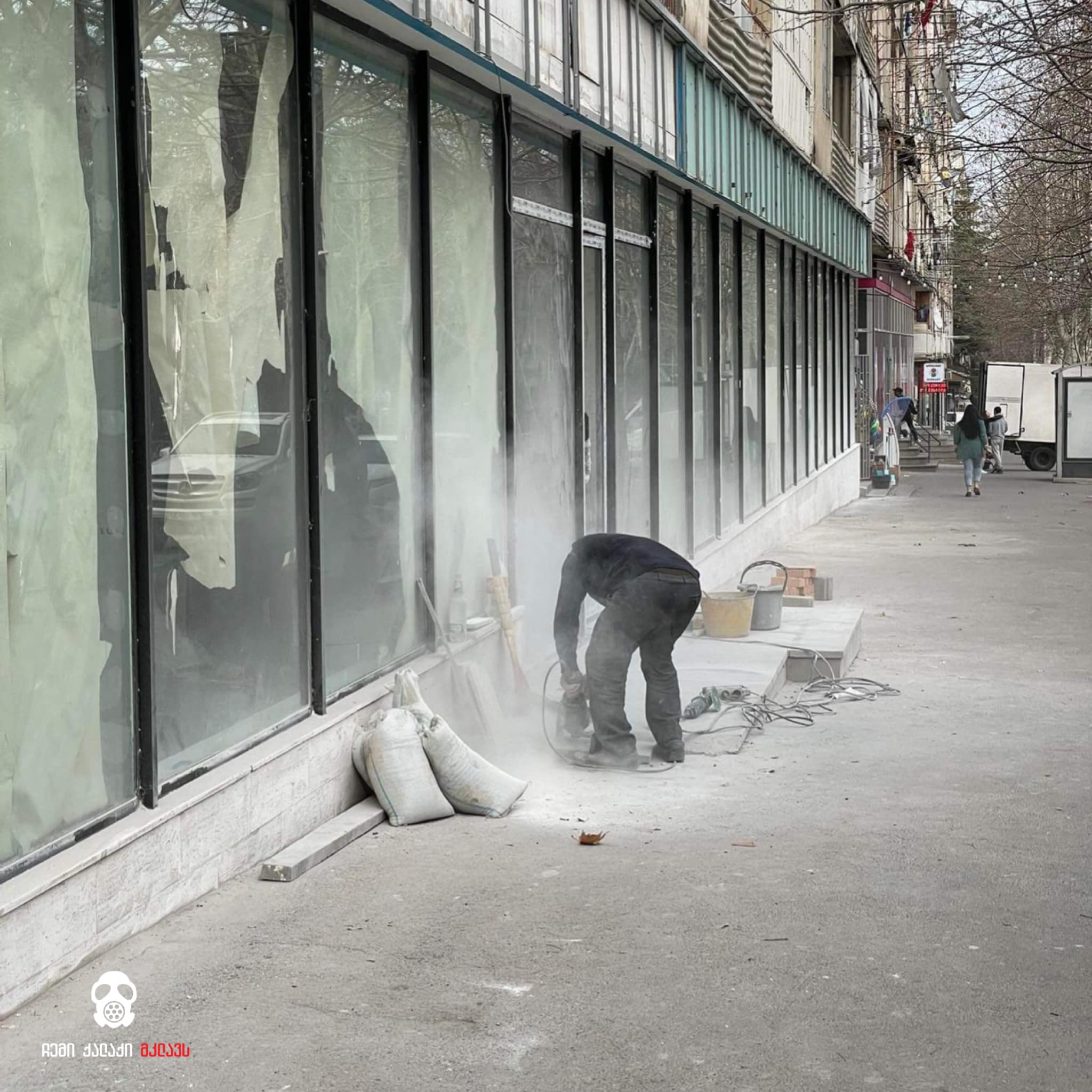
© Movement: My city kills
She says she reports violations five to ten times a month, and her friends have also started reporting construction companies that are breaking the law.
In the first year the law was in effect in the capital Tbilisi, 2022, the city fined 40 businesses and 10 individuals, according to Tbilisi City Hall.
Activists with the “My City Kills” movement argue there is not enough being done.
Citizens report violations to the movement via its Facebook page. To date, the group says its monitoring efforts have resulted in an estimated 200-300 construction sites receiving fines or official warnings.
"In these 4 months alone, we identified about 80 cases of dry method stone processing, out of which approximately 30-40 construction facilities were fined,” notes Giorgi Japaridze, a member of the movement.
“The situation is much worse in the regions, because they cannot report the violations to anyone. They don't have a local municipal inspection. When we call the hotline of the Ministry of Environment Protection, they don't do anything.”
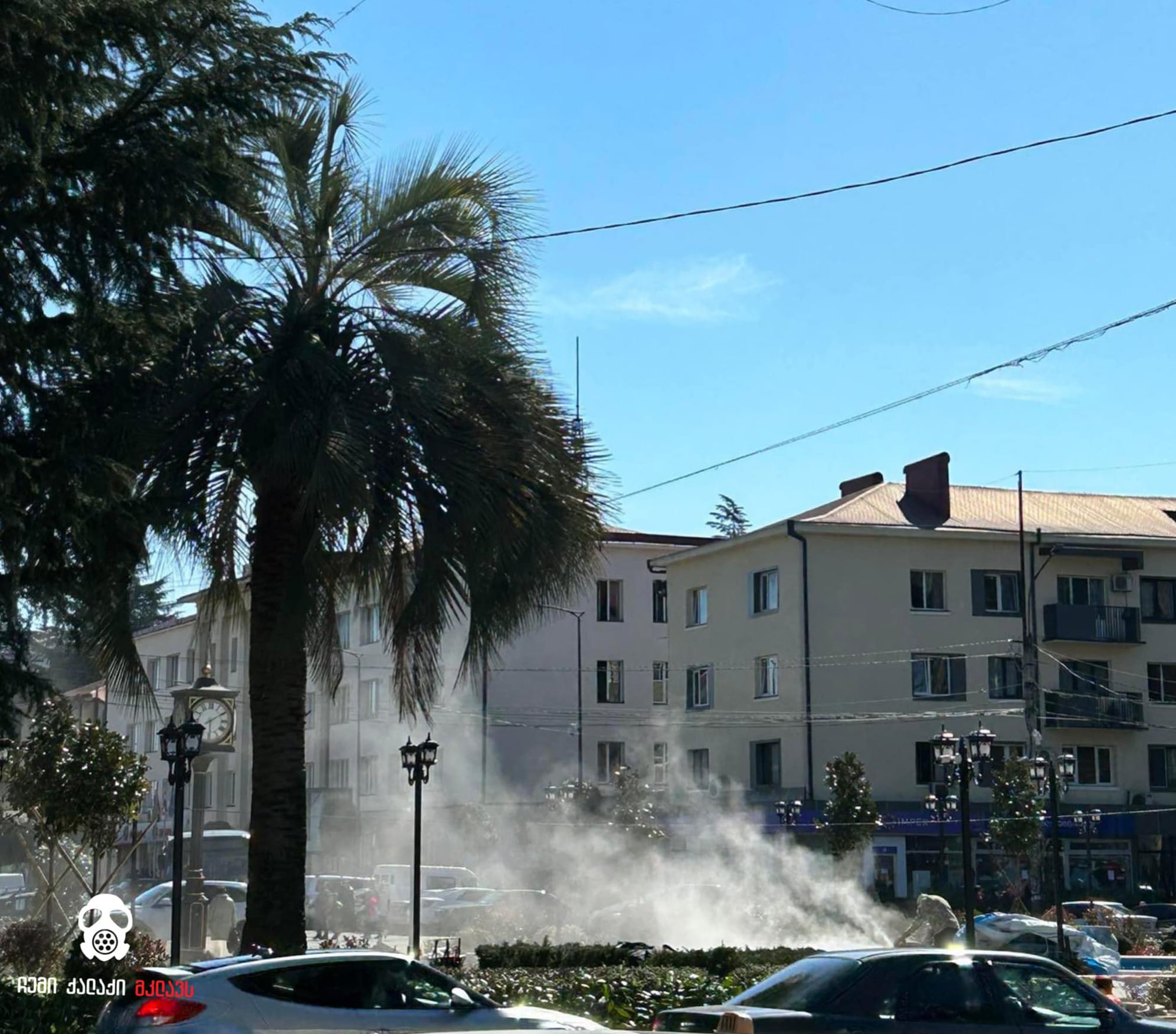
The ministry’s Environmental Supervision Department told Chia Khana that from December 31, 2022 until today, three administrative violations were written up in Tbilisi and one in Kutaisi. All the violations were reported to the courts.
Japaridze believes one of the reasons construction crews continue to use the dry cutting method is that the equipment needed to process wet stone is expensive—around ₾2,000-3,000 ($800-1000).
The human cost can be much higher, however, according to labor rights specialists and doctors.
Nika Kakashvili, the head of the technical inspection of the Georgian Trade Unions Confederation, says that if employees wear respirators during stone processing on the street, individual protective equipment will protect them.
Kakashvili’s job is to protect the rights of employees at the workplace. He stresses that when stone is being processed in a closed workspace, there should be ventilation systems, water curtains and other protective equipment in the building.
Despite the law, stone masons report that currently wet processing methods are only used in some instances.
Simon Natradze, 30, worked as a stonemason for five years on Sheshelidze Street in Tbilisi. In his workshop, large stones were cut into slabs. Simon’s job was to process the stones, and he worked with dry materials.
“Yes, I was processing stones with a dry method, but generally at a certain stage dry processing is required, because the risk of electrocution is high. At the stage of stone processing where the ‘Balgarka’ — angle grinder — is necessary, craftsmen do not use water. In other cases, the stone is processed using water,” he explains.
“My doctor forbade me to do any work that would lead to more dust exposure, but I could not leave my job for another two years.”
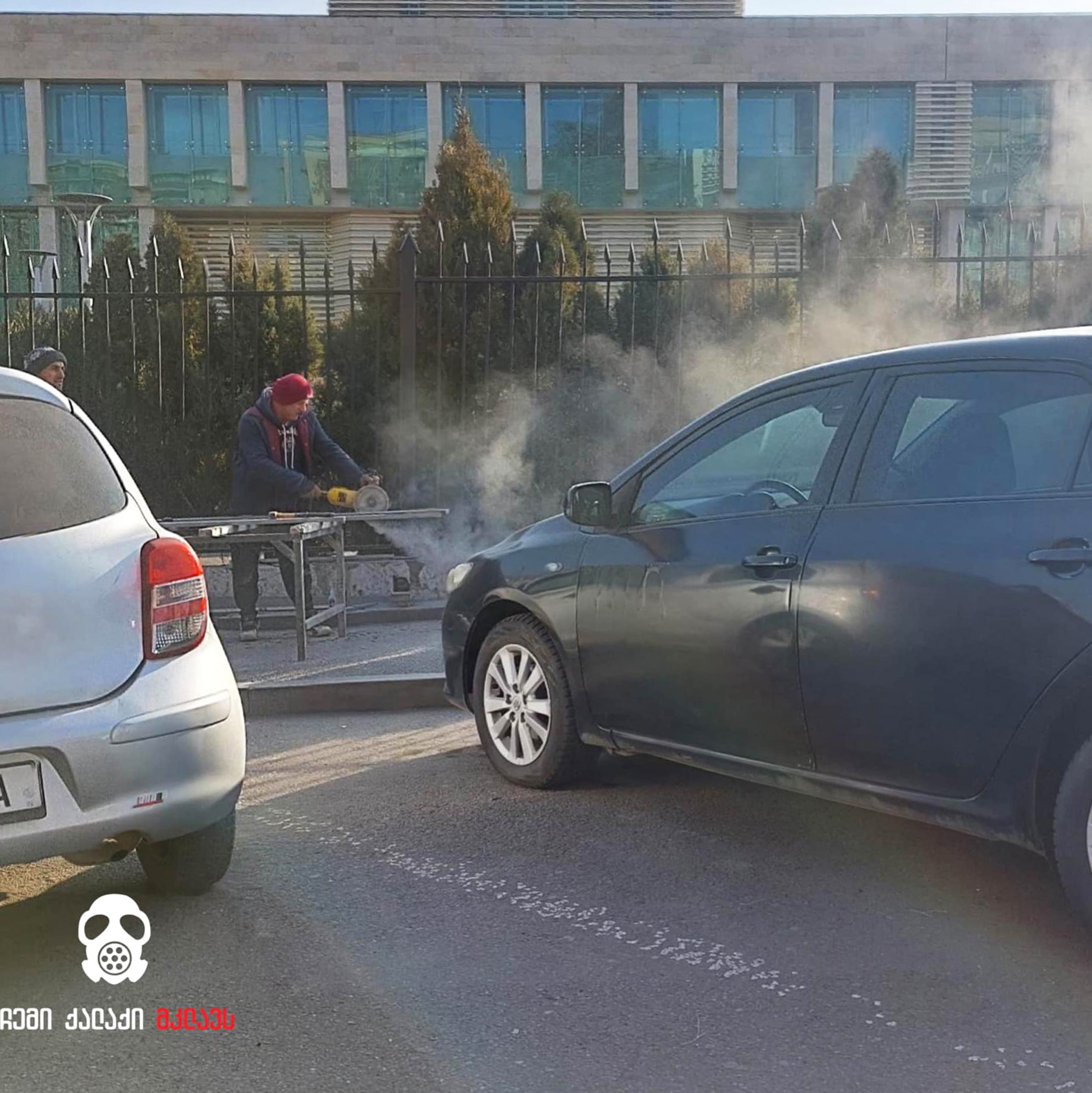
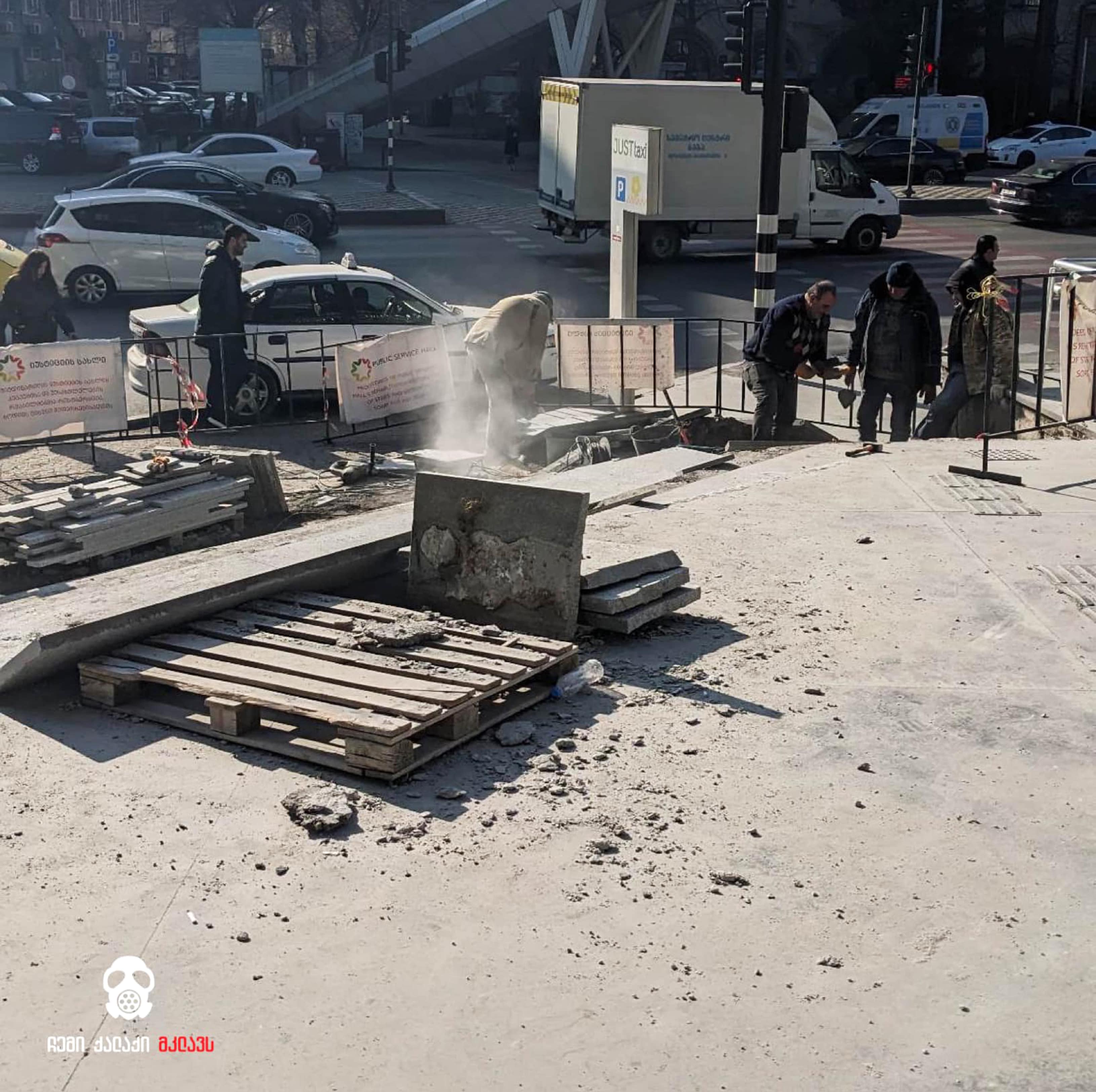
Dust particles are created by everything from burning coal to construction, says Manana Kochladze, the chair of Green Alternative, a non-governmental organization.
"The finer the dust, the easier it is to pass from the lungs to the blood, but of course, large amounts are not also good. Accordingly, when chemical substances or minerals enter in the blood of a human, they can provoke many different types of diseases, such as respiratory tract, cardiovascular diseases and others,” she explains.
My City Kills is trying to raise awareness about the health risks of dust inhalation and the laws protecting citizens through outreach and interactive exercises. Recently, it called for people working with concrete and stone cutting to report any adverse effects during a set timeframe. Out of ten volunteers, three were diagnosed with bronchitis and doctors detected the first signs of the condition in two more.
Tbilisi State Medical University Professor Kakha Vacharadze, a pulmonologist, explains that inhaling dust can cause anything from coughing to pneumonia.
"The symptoms of the disease are coughing, breathlessness and, if the process is advanced, a temperature and even pneumonia. Therefore, it is necessary to observe safety and technical norms,” he notes.
This feature story was prepared with support from the Friedrich-Ebert-Stiftung (FES) South Caucasus Regional Office. All opinions expressed are the author’s alone, and do not necessarily reflect the views of FES.