

Photo Story
Archive
The photo story you are reading is part of the Chai Khana archive. From 2015 to 2025, Chai Khana covered the South Caucasus, sharing stories from Georgia, Armenia, and Azerbaijan.
Trees have a starring role in Georgia’s Lagodekhi Nature Reserve: hornbeam, oak, oak-hornbeam and hornbeam-beech forests in the lower regions of the reserve, followed by beech forests, with hornbeam, Georgian oak, ash-tree, and lime. Towering above at 1,800 meters, there are Caucasian oak and maple, Litwinow birch, and white birch.
The reserve, which borders Azerbaijan to the east and Dagestan to the north, was the first to be established in the Caucasus. It was founded by Ludwik Młokosiewicz, an amateur preservationist and former soldier of the Polish army in 1912. It is recognized by the World Wildlife Fund (WWF) as a global ecoregions of special importance as it is a mixed forest habitat, as well as a key ornithological area for its 150 species of birds including lammergeyer, bearded vulture, golden eagle, falcon, mountain and steppe eagle, and the imperial eagle.
Serpentine trails weave through the reserve like financial charts going up and down an elevating terrain. A team of 21 rangers protect the wildlife from poachers and care for the trails that allow hikers and other nature enthusiasts to enjoy the beauty of the site.
“This is my fifth year working here,” notes ranger Mamuka Gogoladze. “The love of nature brought me here. As a child I used to roam these forests.”
In this photo essay, Chai Khana photo fellow Tornike Mermanishvili explores the life and challenges of the rangers who protect the reserves.
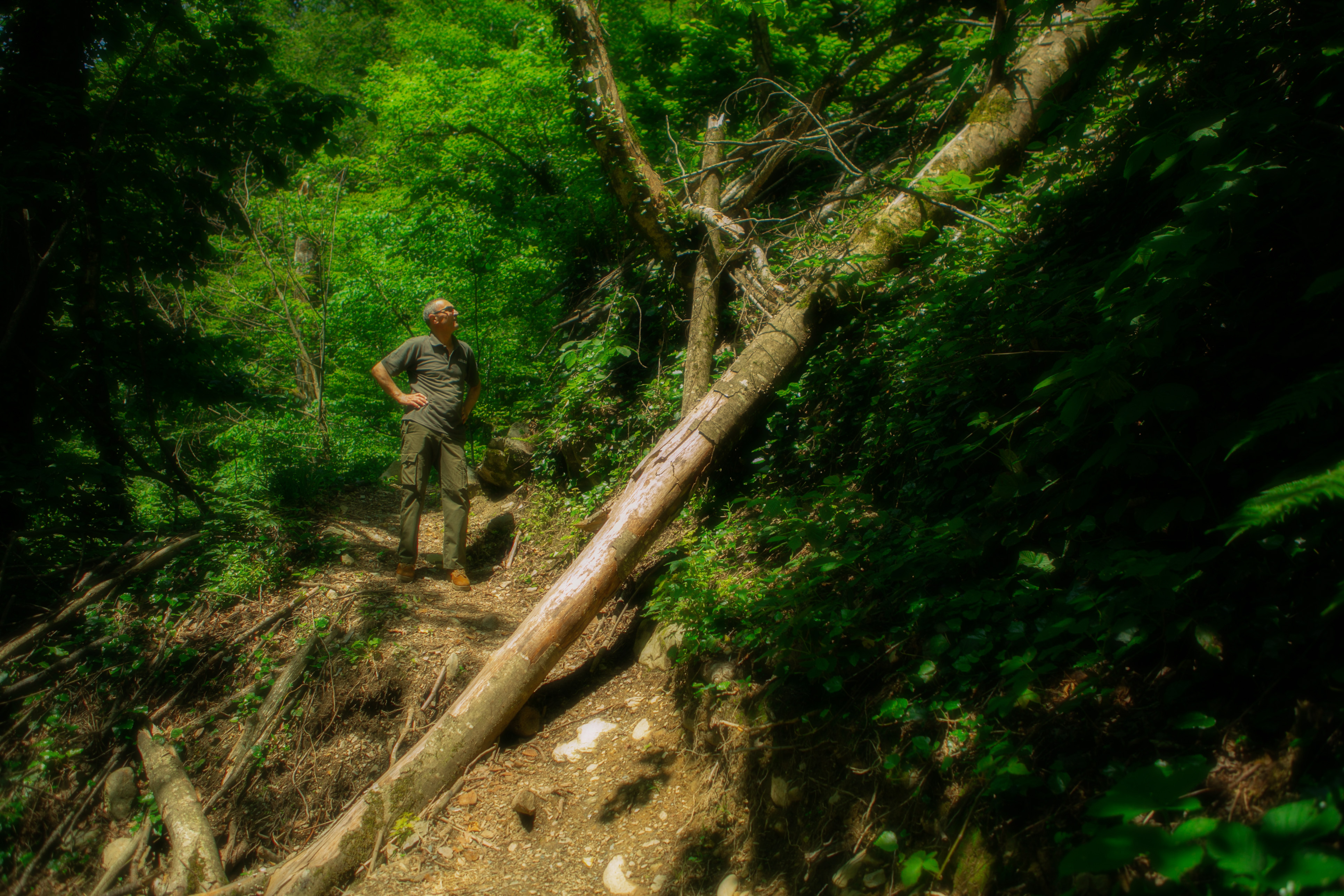
Ranger Kakha Bikashvili observes a fallen tree on the alpine path to the Black Grouse waterfall. Patrolling the trails for possible dangers is an important part of rangers’ work. Bikashvili recalls one incident after a night of heavy rain, some trees became unmoored from their roots and were a falling hazard. “We had an incident before with a couple of tourists where a tree missed them by an inch,” he says. “Tourists sometimes think we are not serious when we warn them to be careful of falling trees…when the trees fill with water they break off you couldn’t even tell as some of them look so healthy on the outside, but what is happening inside is another matter.”

Path Black Grouse Waterfall
After the Soviet Union disassembled and Georgia regained its independence, war and instability led to more poaching at the reserve, with dire consequences for the animal population, especially deer. “Back then poaching was a big issue, I recall a time when poachers were caught in the act and pursued by rangers,” recalls Aleksandre Shavershadze, who has been a ranger for the last fifteen years in the reserve. “It’s different now, the resources are better, we are provided with trail cameras, so the poaching issue became much easier to solve.” Every day, rangers check the cameras and if they find evidence of a poacher, they report it to the authorities. Today, the deer population regained its strength and now the rangers recall how common it is for them to pop up on the trail cameras even in the ones that are not technically in the deer zones.
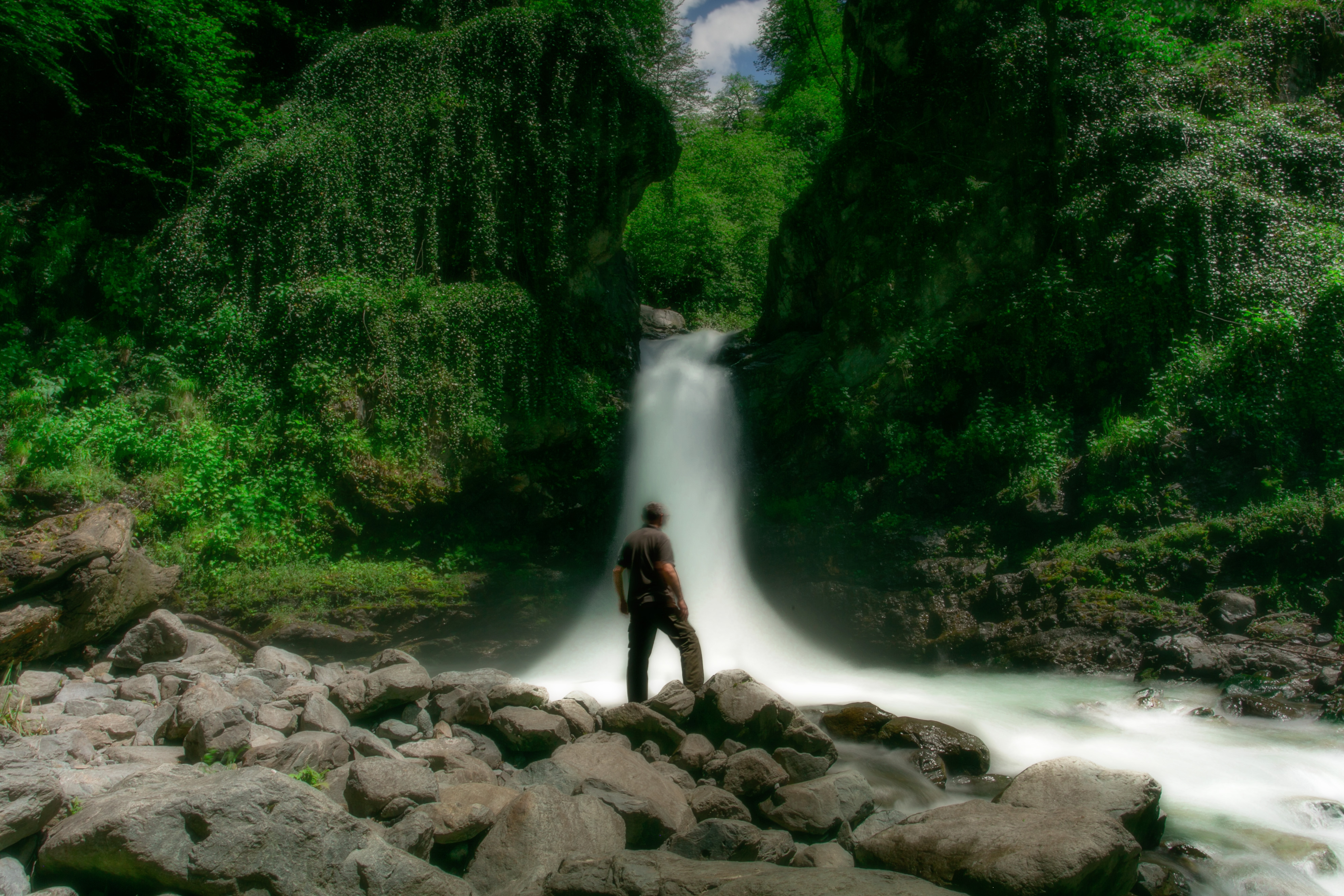

Trail signs indicating the difficulty of the path: yellow for easy, blue is medium and red difficult. “The trails are safer now, the addition of metal bridges we crossed today were not there in the past and it really helps,” notes ranger Akaki Modebadze.

Black Grouse Waterfall
Ranger Zaqaria Toroshelidze underscores that the rangers were not always so well equipped as today.
“If someone needed a chainsaw they had to get it from home, the financing was not good. But now it’s different, we have more resources to ensure our main goal of making sure the visitors and inhabitants of the park are safe and comfortable.” Toroshelidze has been a ranger in the park since 1999. He recalls a time where it felt more like volunteer work than an actual job. “You have to love nature, without that you won't make it in this job.”
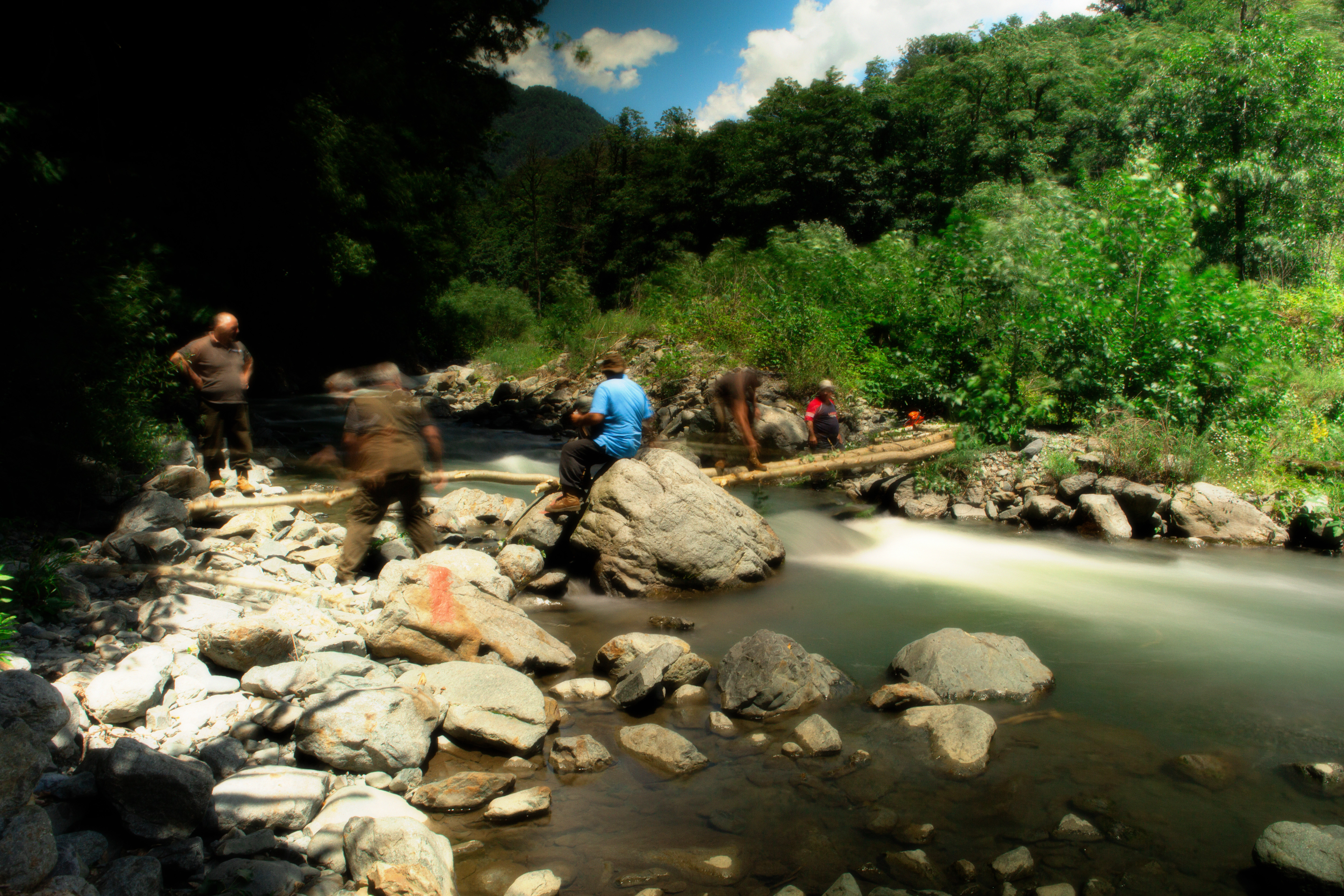
On a routine bridging assignment across the Ninoskhevi River in the Gurgeniani segment of the reserve, ranger Zaqaria Toroshelidze says that “sometimes we have to make these types of bridges three to four times a season, since the water levels fluctuate according to the weather and rain, a lengthy bridge today might not be sufficient tomorrow.”
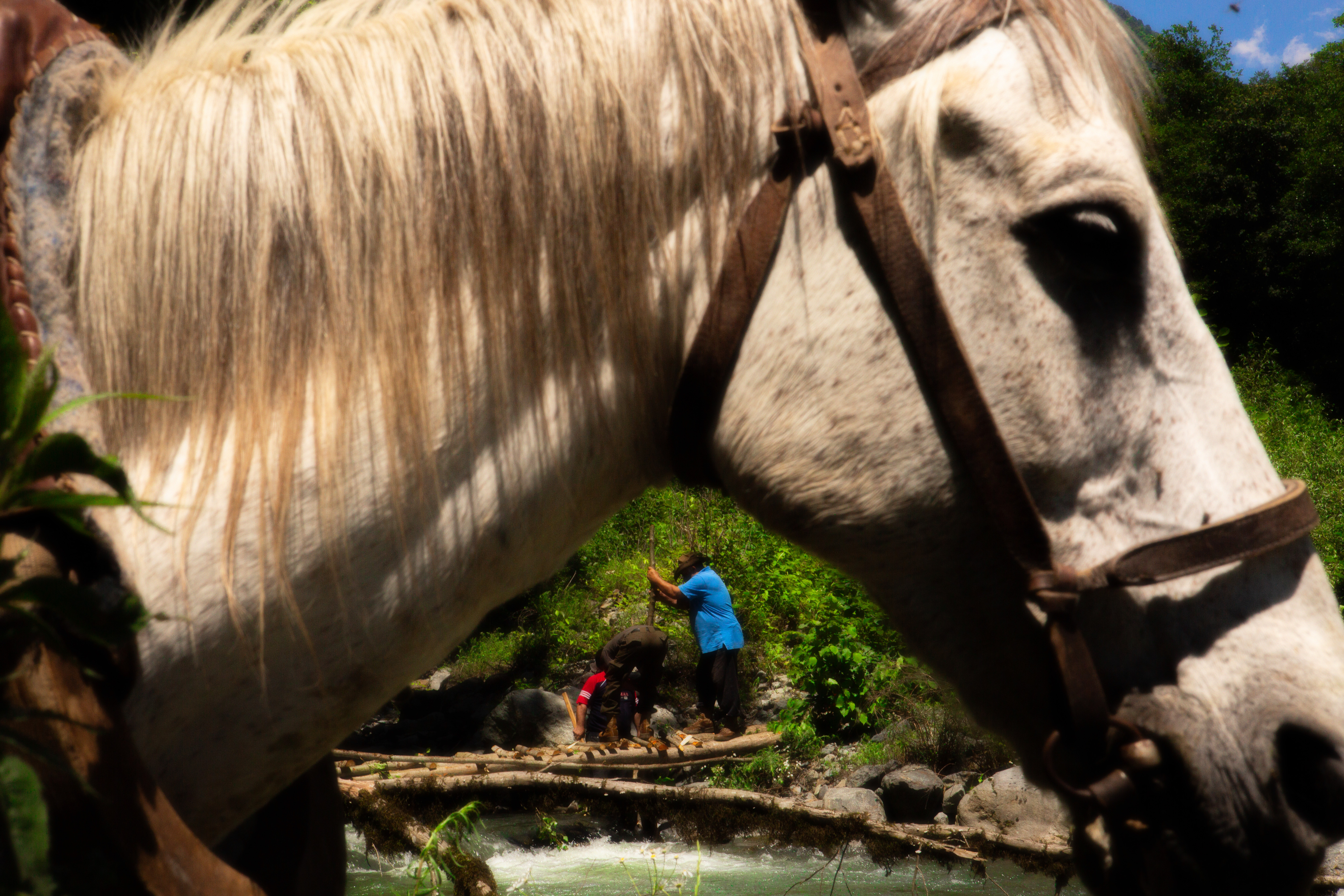
Rangers depend on horses for patrols. “We have horses and all the equipment needed, and accordingly we attentively fulfill our duties,” notes ranger Zaqaria Toroshelidze. “There is no other way for someone to work here if they do not love nature. When the sun rises, it's as though this place calls you.”
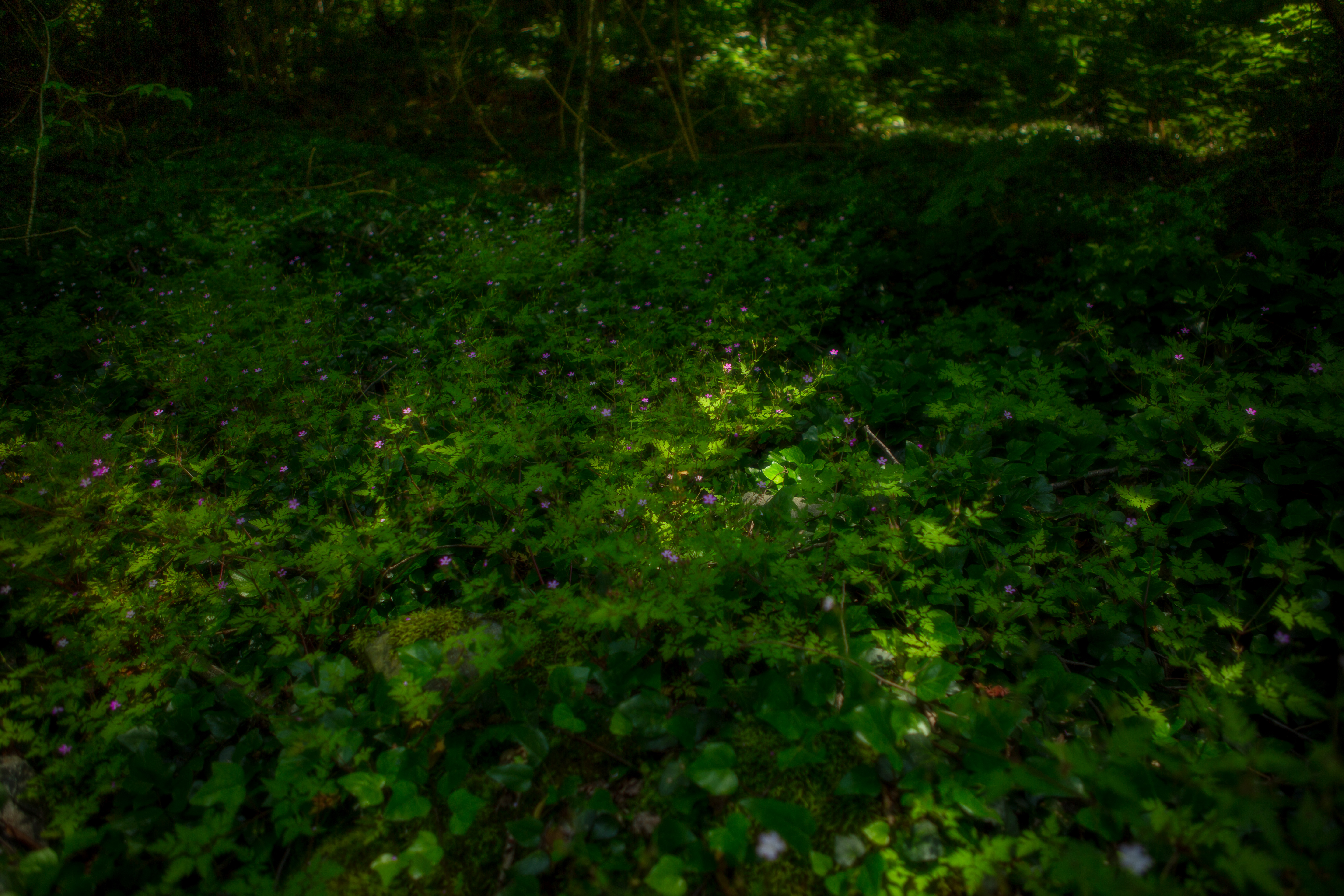

Ranger Kakha Bikashvili collects oyster mushrooms, an occasional treat on a routine patrol.

Ranger Akaki Modebadze notes that looking out for hazards and ensuring there are safe conditions for visitors is a daily challenge.
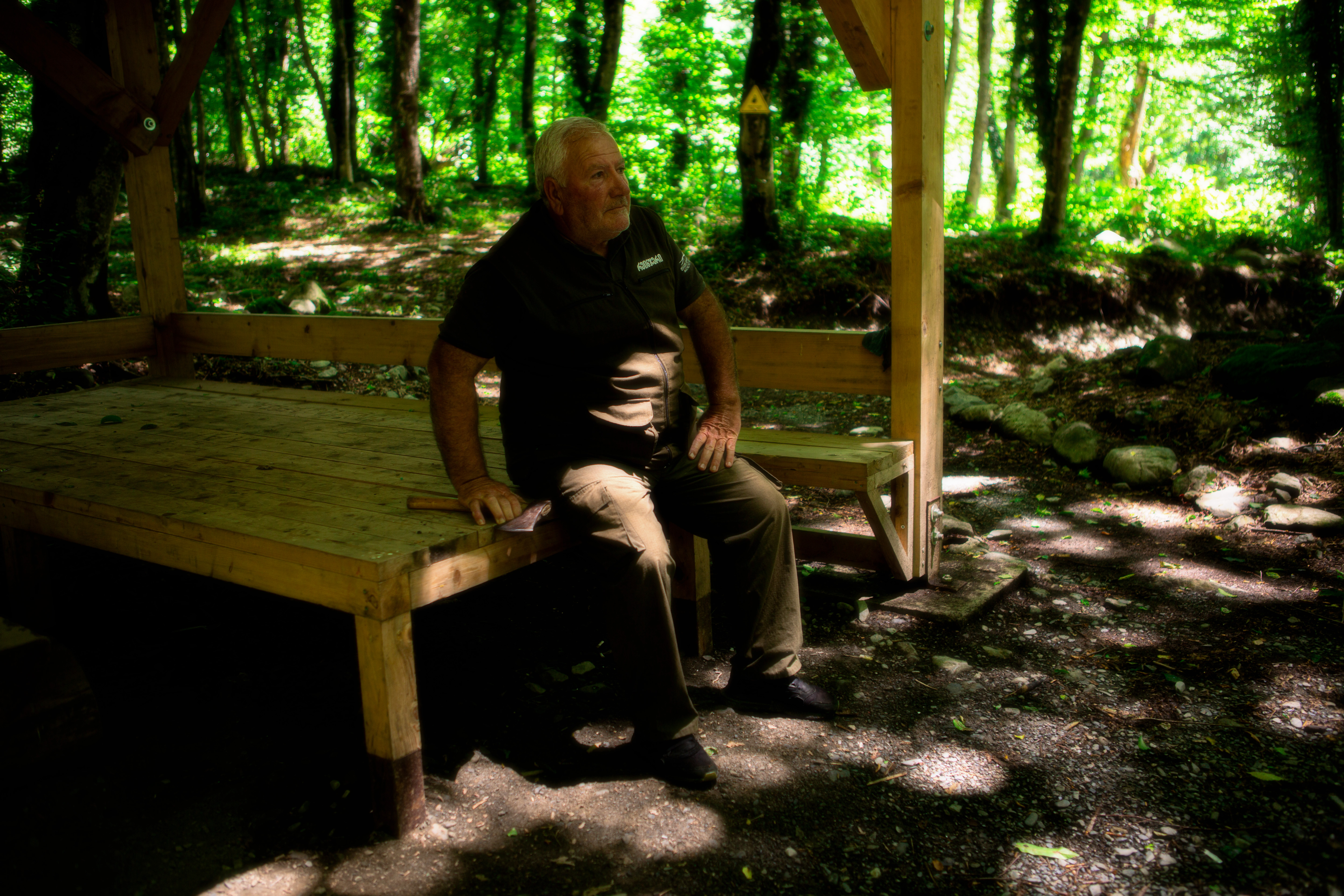
Zaqaria Toroshelidze has seen the reserve change and develop since he started working as a ranger in 1999.
“For 13 years I have been the head of the Gurgeniani district of the reserve. There is no comparison on how things used to be, everything is more sophisticated now and improved. We used to have a lot of poaching, now it’s very few in between, and we deal with them according to the law when they show up.”
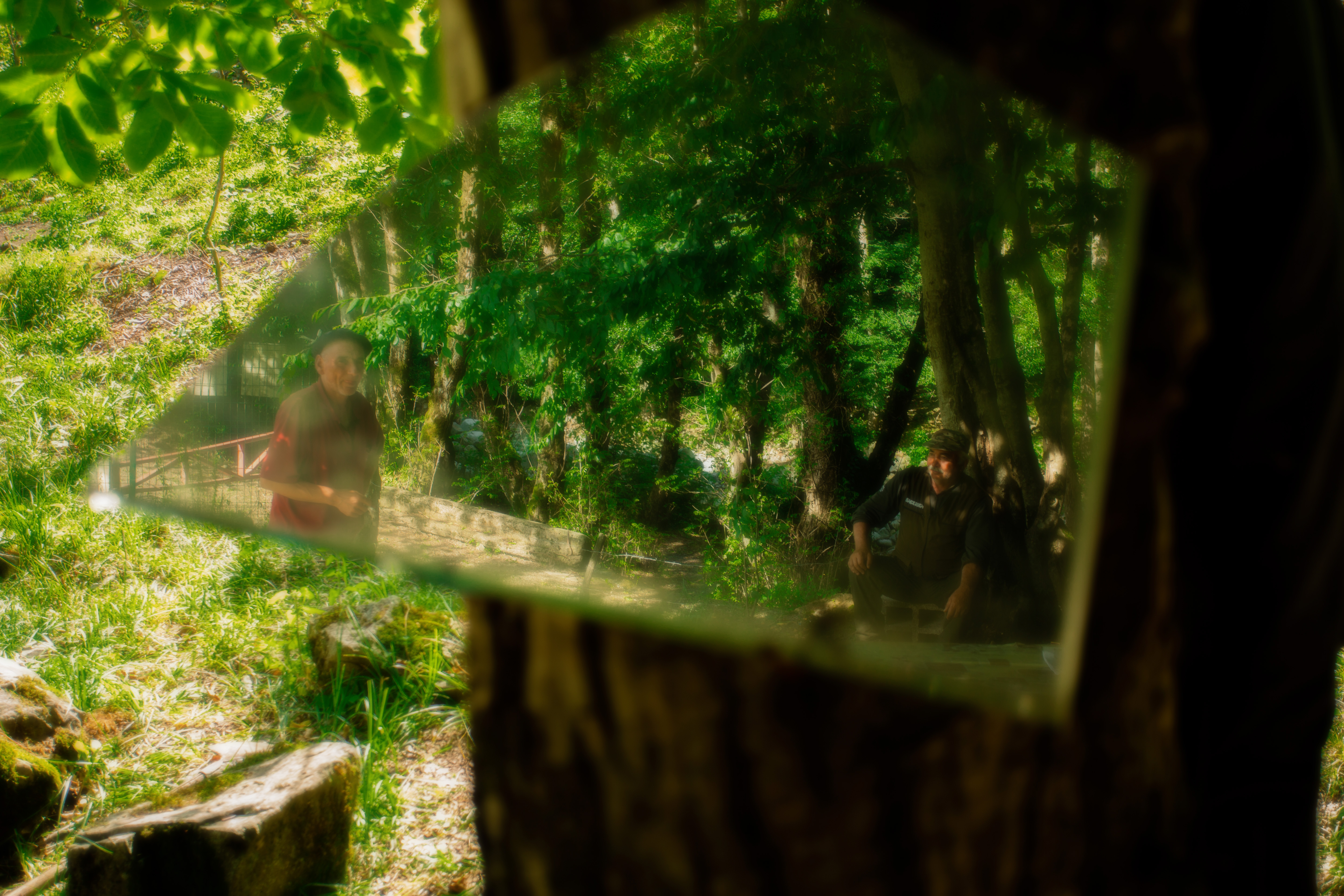
Ranger Aleksandre Shaorshadze waits for visitors at the entrance of the Gurgenia part of the reserve. He says that today, visitors to the reserve can enjoy more biodiversity than in the past, due to the anti-poaching measures in place. “The population of the species we thought would be rare to find, started to multiply and pop up regularly on our trail cams.”

Ranger Mamuka Gogoladze crosses the river to help build a bridge crossing for the Gurgeniani Trail.
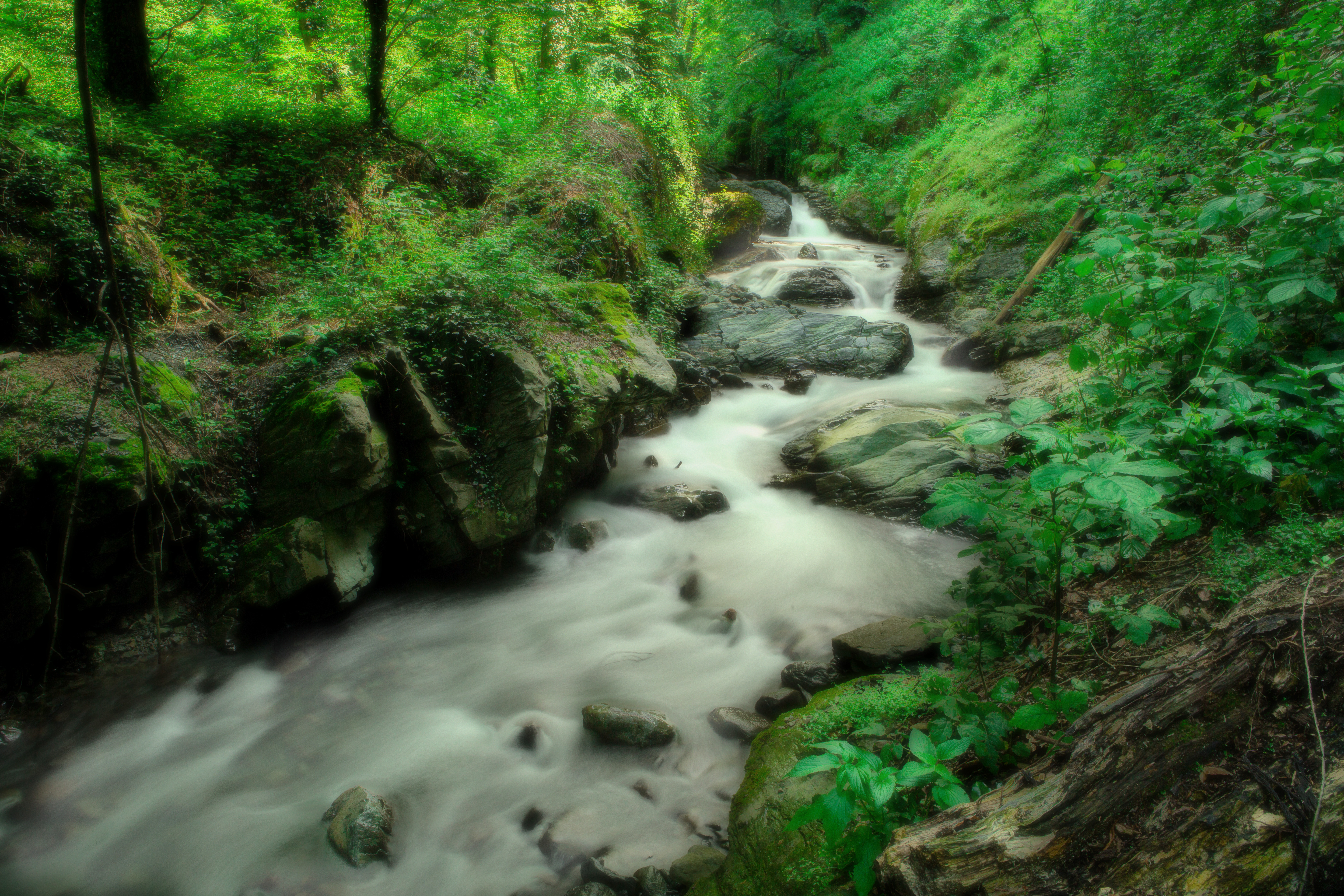
Shromiskhevi River
This Photo story was produced in the framework of Chai Khana Fellowship program - Spring 2023
This photo story was prepared with support from the Friedrich-Ebert-Stiftung (FES) South Caucasus Regional Office. All opinions expressed are the author’s alone, and do not necessarily reflect the views of FES.