
Feature Story
Archive
The photo story you are reading is part of the Chai Khana archive. From 2015 to 2025, Chai Khana covered the South Caucasus, sharing stories from Georgia, Armenia, and Azerbaijan.
Last year, in June, I accidentally learned that my mother Mahizer Kazimova had breast cancer.
A nurse for 35 years, my mother discovered lumps in her breast during a self-examination but didn’t want to burden us with her fears. She went to the doctor to confirm her suspicions. When finally I found out, I got so upset that, in the end, it was she who comforted me. “I am still alive,” she told me. “There is hope.”
My mother’s instinct, her immediate response to care for me even as she faced a terrible diagnosis, was not surprising. My whole life, my mother has willingly devoted her life, energy and time to her family and children—just like most women in patriarchal societies like Azerbaijan.
Over the past year, however, the situation in our family has slowly changed. We have finally learned to take care of her.

My mother has breast cancer, the most common type of cancer in women. In Azerbaijan, 20 percent of all cancer diagnoses in 2022 (2,638 people) was for breast cancer. Although my mother had stage one, the rate of spread was moderate. That is, neither fast nor slow. For our family, it has meant a sea change as it slowly emerged how much we depended on my mother to take care of us.

In patriarchal societies, women are expected to devote their entire lives to their families. My mother is one of those women who willingly devoted her life, energy and time to her family and children. But when you take care of everyone but yourself, your body can't stand it anymore. After a certain time, it can no longer withstand the load and becomes ill. Of course, this situation is not unique to my mother.

Since the first days of the disease, my mother was worried about her hair falling out. However, my brave mother found it within herself to overcome this fear: she cut her own hair before the chemotherapy could take it.

My mother said that she agreed to have her breast amputated so that this disease does not happen again. Even though it was her choice, the decision was still traumatic for her.
After her emergency operation to remove her breast and the start of chemotherapy, a new division of labor has been created in our home. Instead of my mother begging us to eat, it is us urging her to eat when nausea and chemotherapy drugs rob her of her appetite.
Even though she had nursed cancer patients through the same symptoms during her career, she often struggled to eat or drink.
“Heavy chemotherapy drugs change the taste in the mouth of cancer patients, making it difficult for them to eat,” my mother explains. “That's why every time I went to a cancer patient's house to hang a system, I would prepare dovğa (a yogurt soup) for them, so that both the yogurt would remove the poison from their body and they would eat it so that they would recover a bit.”
But as I found myself urging her to eat or drink, I remembered how she used to beg us to eat when we were unwell.
When we got sick, my mother did everything in her power to make us well. In general, my mother's illness brought back many memories from the past. My mother couldn't sleep at night due to the pain so my brother and I used to wake up at night to check on her.
When we would ask why she couldn't sleep, my mother would say “I slept during the day and now I can't sleep” so that we don't have to worry. But I remember that my mother would not sleep when one of us was sick until we recovered.
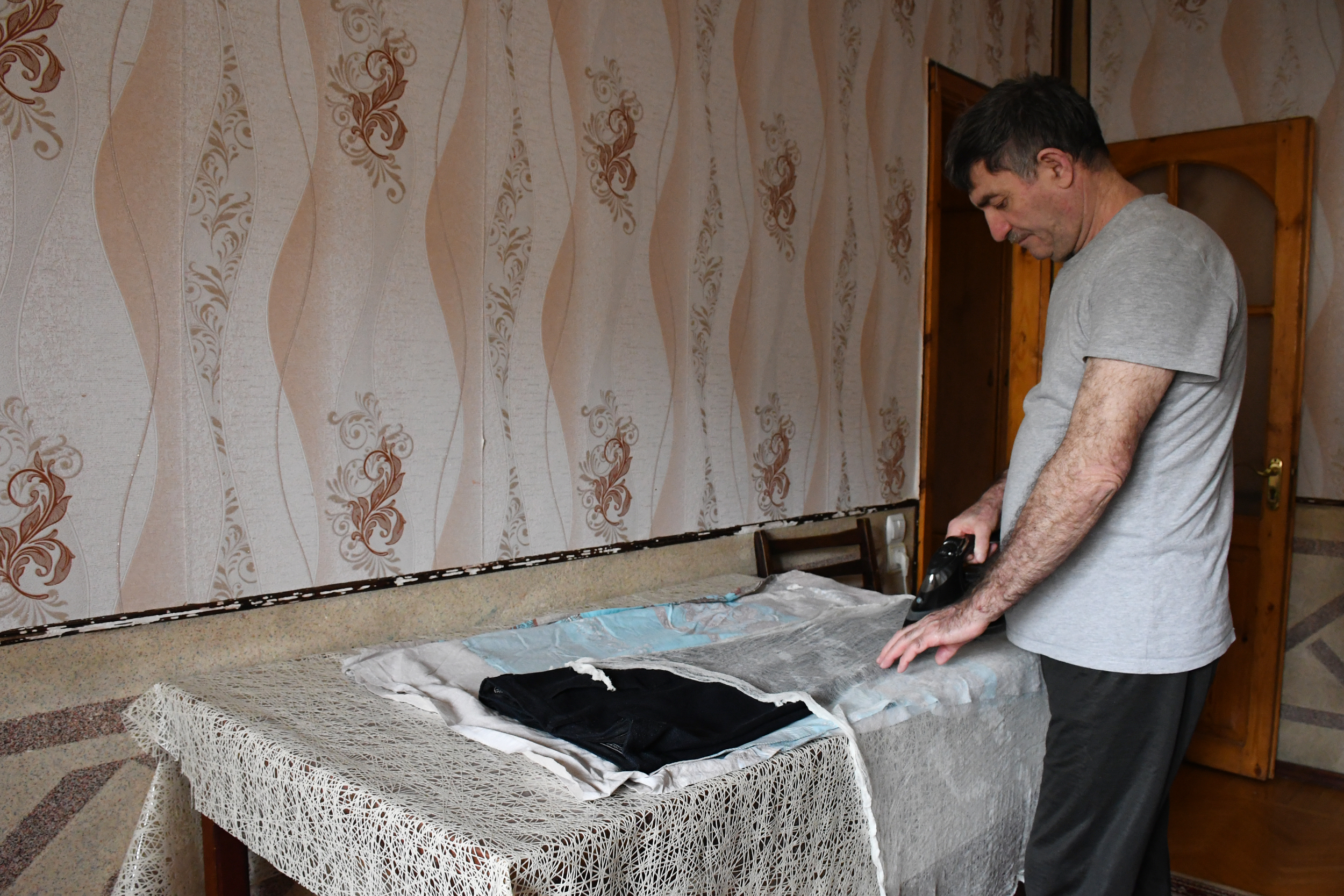
After her emergency operation to remove her breast and the start of chemotherapy, a new division of labor has been created in our home.

There were days when my mother could not eat a single morsel because of nausea. Several times, when her pain and nausea were very bad, we gave her a cocktail of medicine prescribed by the doctor. In reality, my mother used to tell us how to mix the medicines. Then I squeezed it with a tourniquet band so that the vein was clearly visible. When I told her to open it, I opened it, but she inserted the needle into her vein. After that, she started to improve.
My mother, who used to take care of cancer patients, has been receiving treatment for this disease for almost a year now. "The pain caused by chemotherapy was very intense,” she says. “I was hurting everywhere, especially my legs.”
It was torture for me to see her in pain, unable to eat anything because of her nausea. Imagine how the person you love the most in the world is suffering and you can't do anything but watch.

Chemotherapy not only caused pain, it also changed the taste in my mother's mouth. She found it difficult to eat or drink anything. Although the doctor specifically instructed my mother to drink a lot of water, she could not manage it. I used to buy her expensive drinking water and add mint or lemon to the water to give it a different taste. I used to say that water is necessary to wash away toxic substances from the body. Sometimes I begged her to drink the water. And then I remembered my mother who begged us to eat when we were sick.


The doctor advises my mother not to get upset, to rest and go for walks. My niece, her granddaughter Ayla, keeps her company.


Despite her pain and suffering, every time we went to the oncology hospital, my mother shared her positive energy, which she gained through these challenges, with the rest of her group. She shared her knowledge about the disease with them and gave them hope. As my mother is a nurse, it was easier for other patients to believe in this hope.

My mother is not fighting her illness alone. As a family, we fight it together.
This photo story was prepared with support from the Friedrich-Ebert-Stiftung (FES) South Caucasus Regional Office. Opinions expressed do not necessarily reflect the views of FES.