

Photo Story
Edition:
Spaces
Archive
The photo story you are reading is part of the Chai Khana archive. From 2015 to 2025, Chai Khana covered the South Caucasus, sharing stories from Georgia, Armenia, and Azerbaijan.
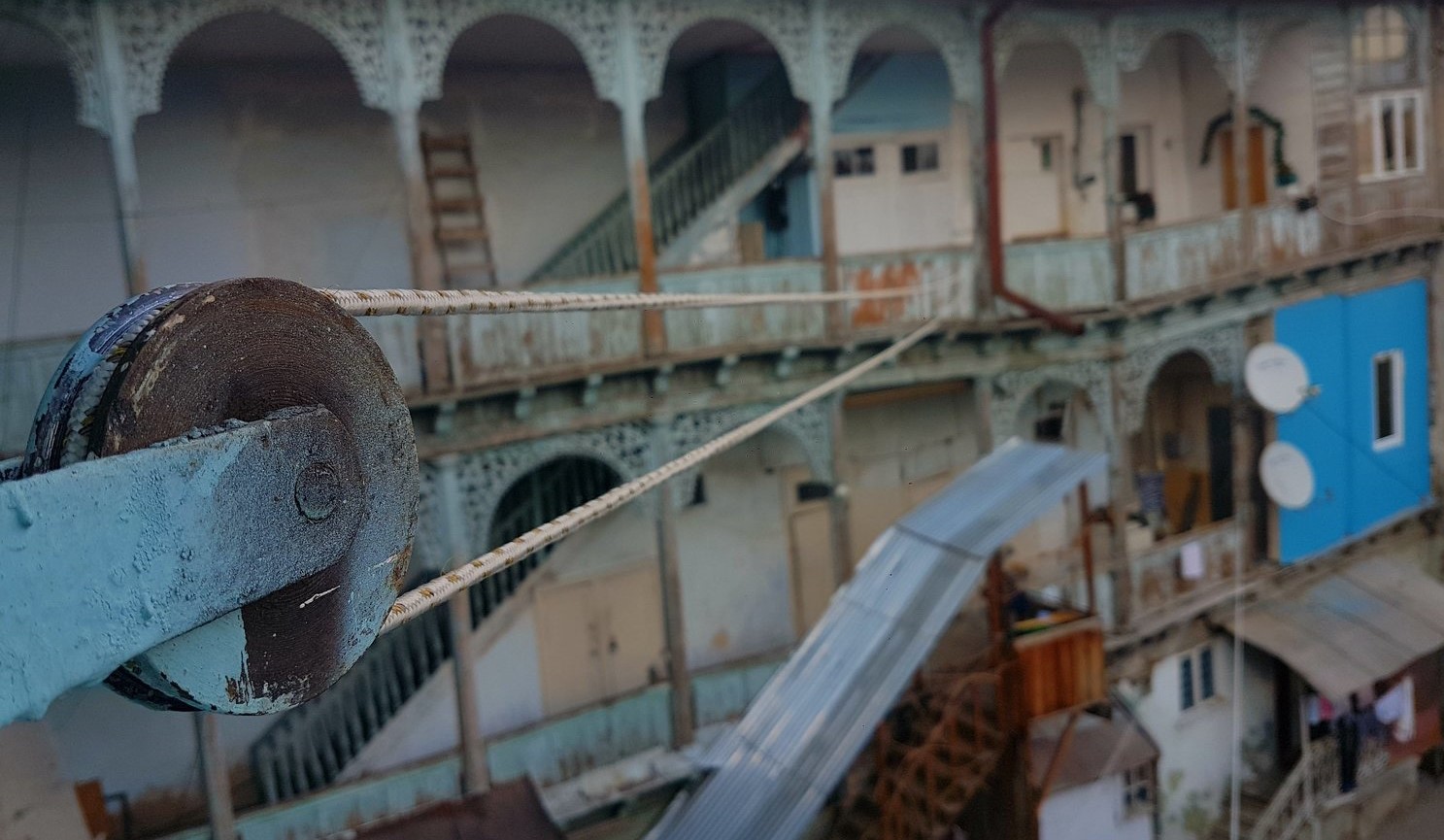
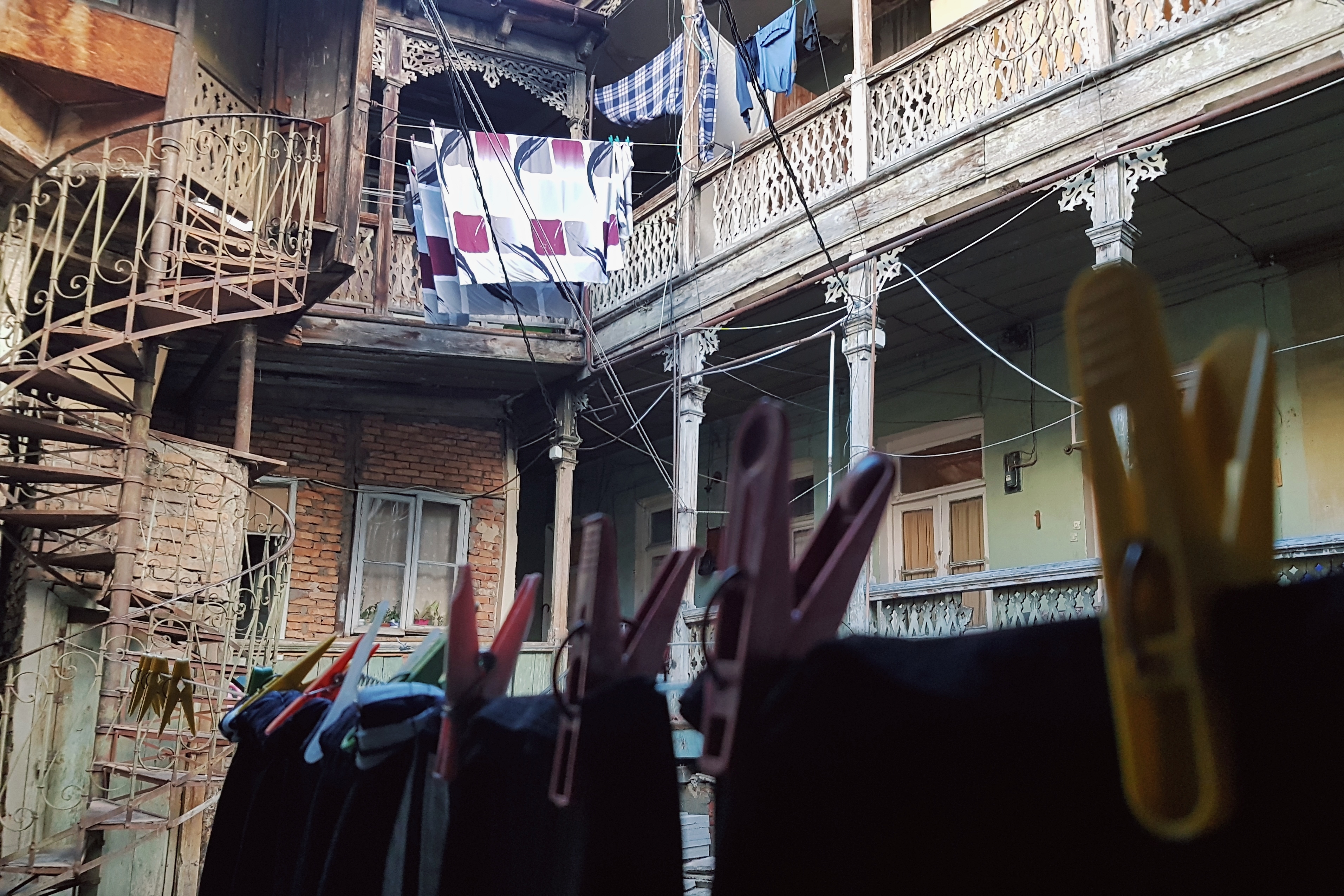
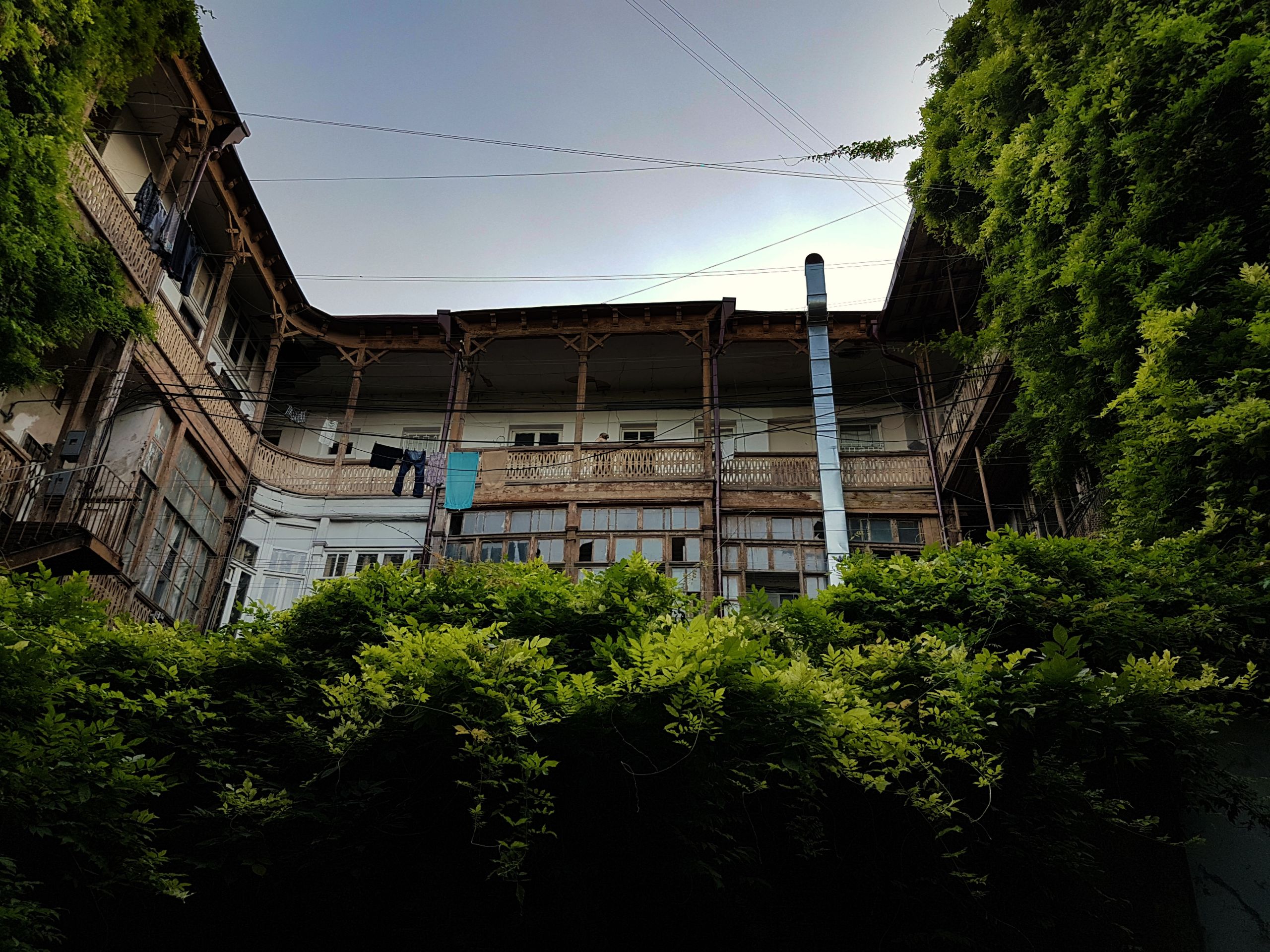
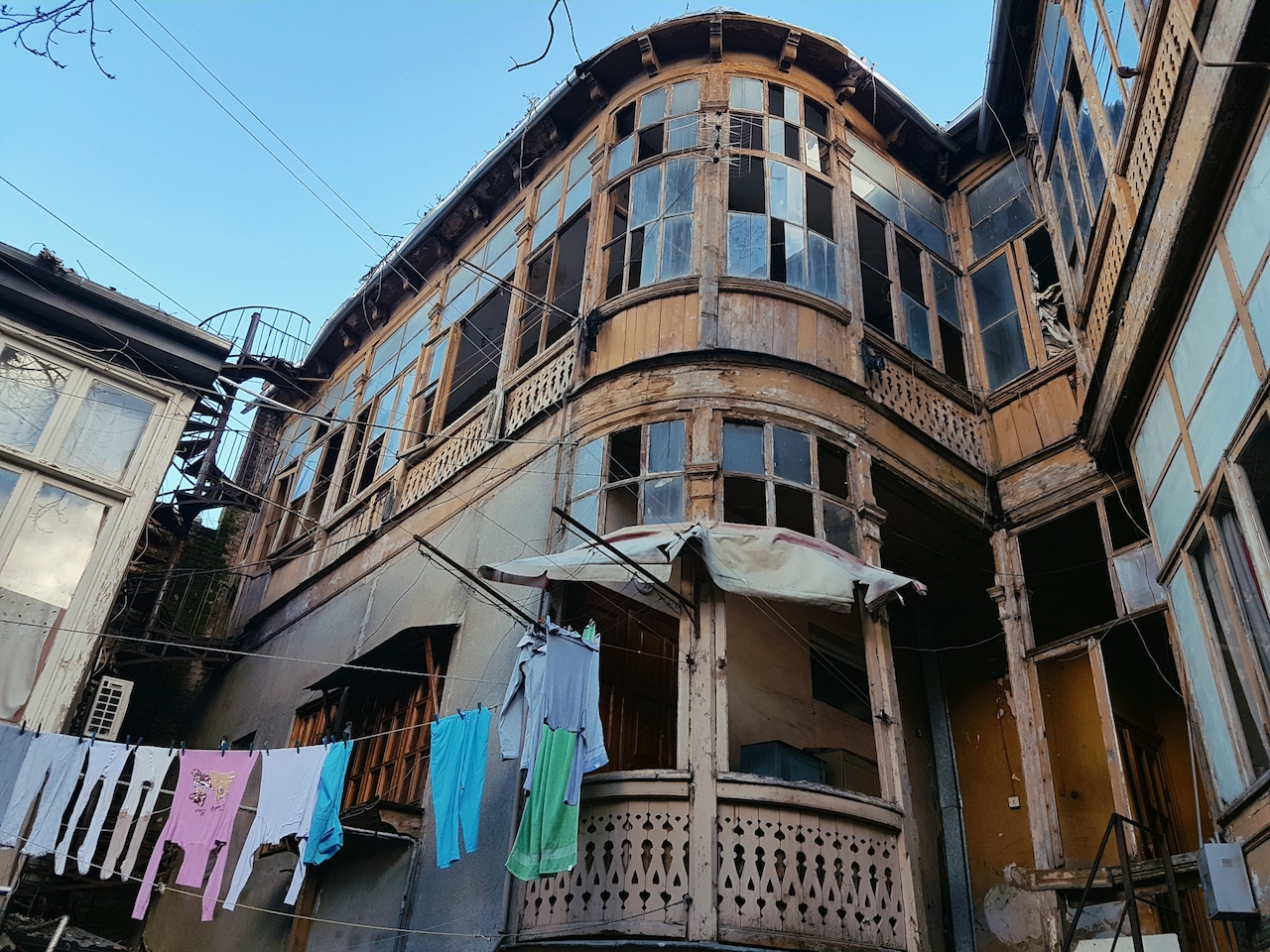
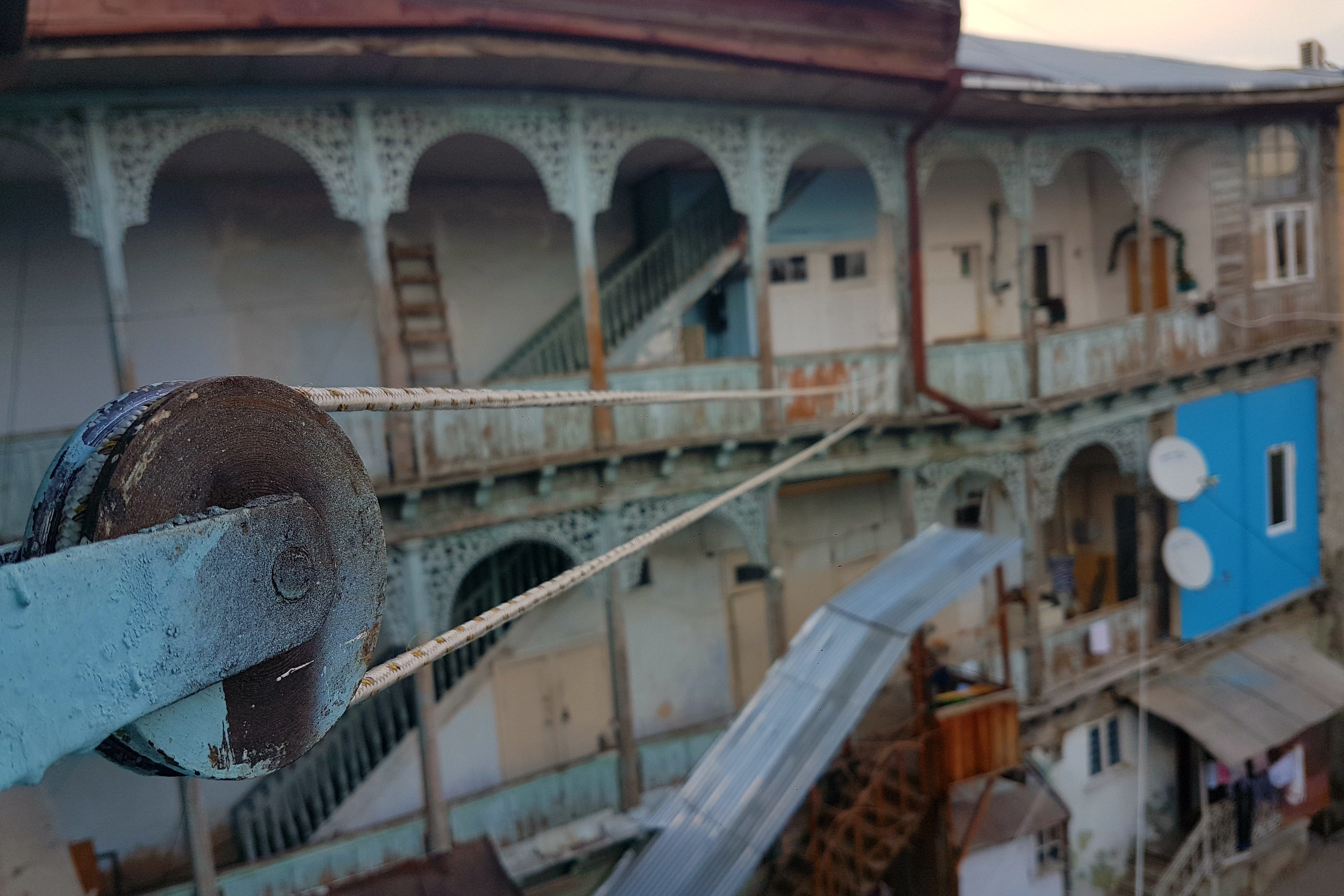
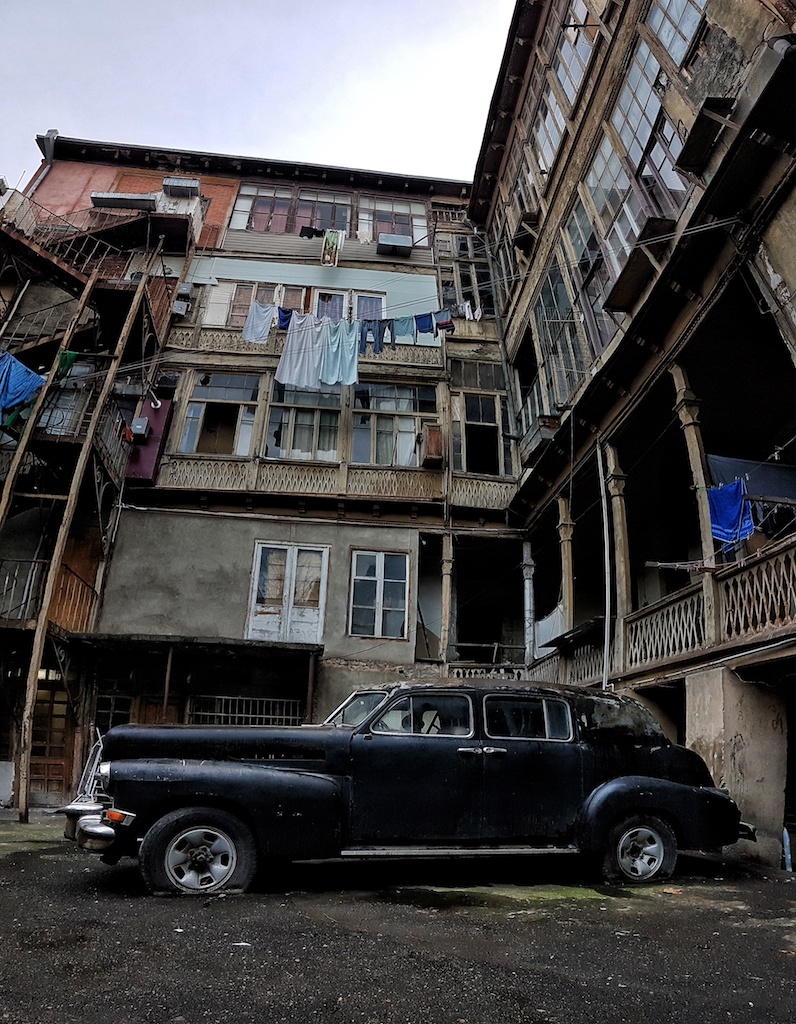
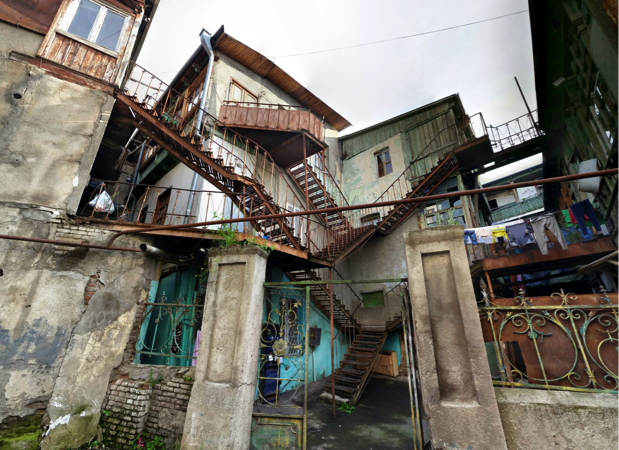
The unassuming front gate at 4 Ietim-Gurji Street opens up on a kaleidoscope of wooden balconies, carved arcades, spiral staircases and atangleofloose electric wires. Depending on the day, a babel of voices adds to the atmosphere.
Welcome to the ezo, the Georgian courtyard. The word for neighbors in Georgian is mezobeliwhich literally translates as “persons who share a yard,”an ezo. Walking into 4 Ietim-Gurji, the visitor enters what resembles an outdoor, communal living room for numerous families.
Home to 18 families, this 19th-century complex is one of 1,600 sites listed as historical heritage sites in Tbilisi’s Old Town. The area combines historic districts on both sides of the Mktvari River -- Abanotubani, Ortachala, Avlabari, Kala Ubani and Sololaki.
Once the property of a businessman and philanthropist, the house, along with many others, was expropriated by the Soviet government and turned into an apartment building. Some of today’s residences once housed servants; others served as a stable.
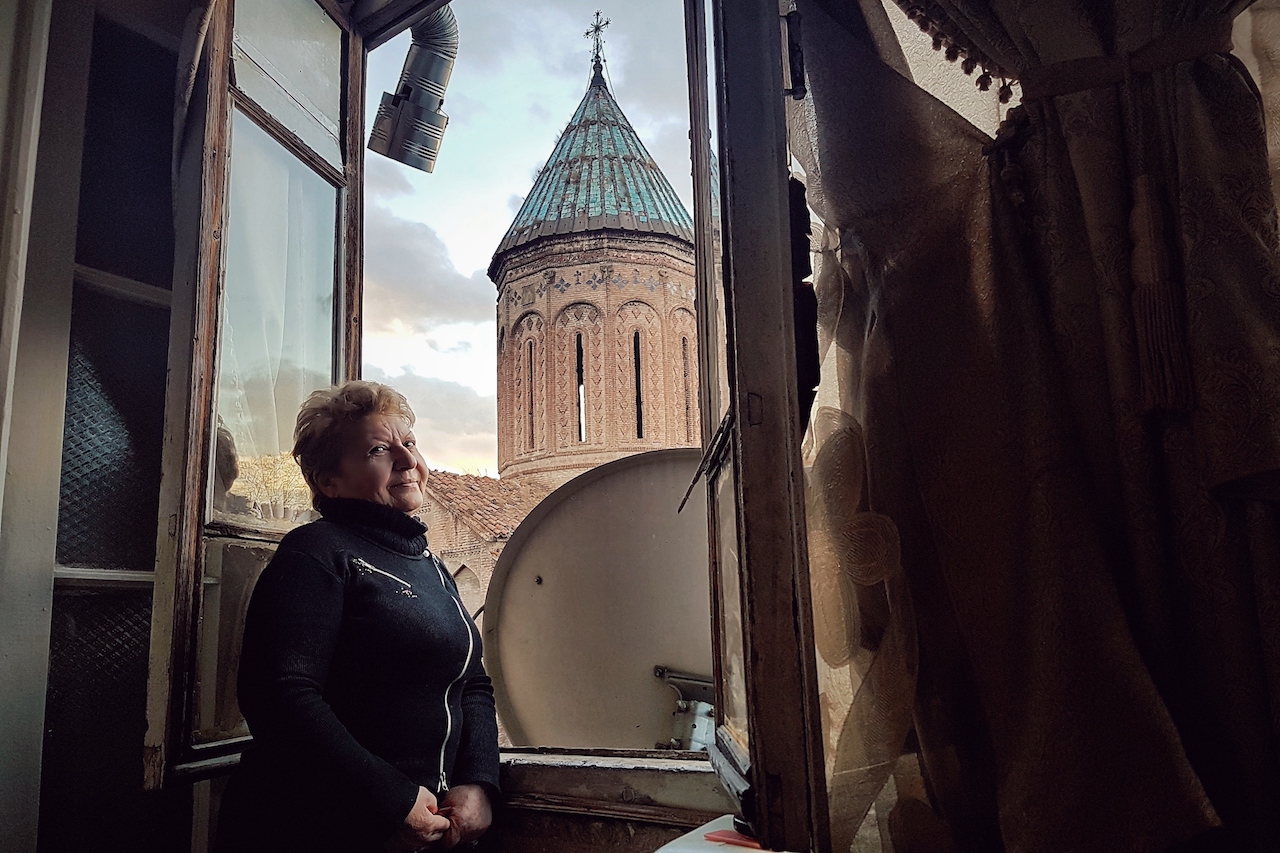
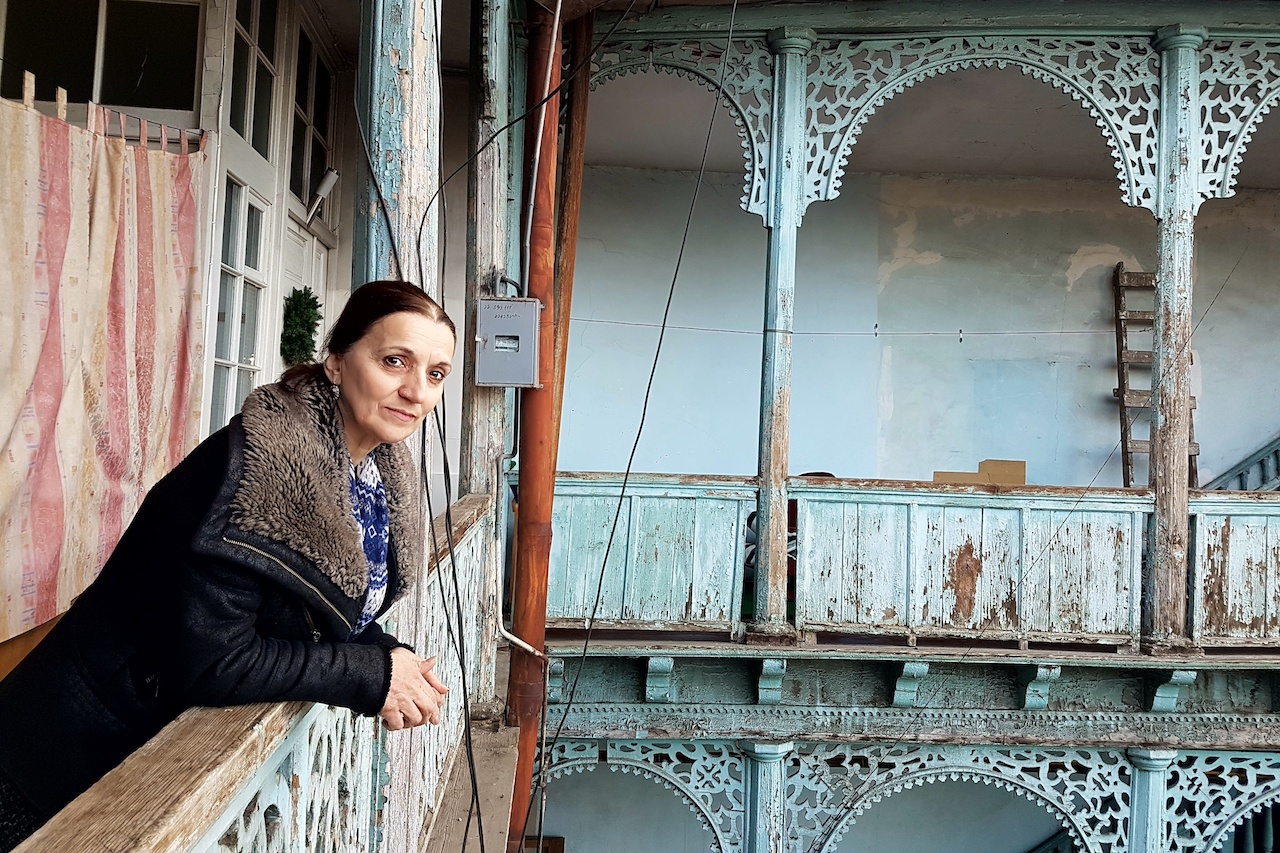
Seventy-year-old Nora Chichakyan, whose glazed loggia overlooks the ezo and the abandoned 18th-century Armenian church of Surb Nshan, remembers the building’s Soviet era. She has been living here for half a century with neighbors of various ethnicities, speaking a plethora of languages.
“At first, there were only three Georgian families in this house. All the rest were Armenians. Our kids would play together in the same yard,” Chichakyan recalls. “Back in those times, we were all so united that any kind of ethnic difference didn’t matter. If one had a guest and didn’t have proper food in the family, the whole neighborhood would step in and help.”
Georgia’s location astride East-West trading routes turned Tbilisi, the country’s capital since 458, into a unique melting pot. Synagogues look out onto churches and mosques in a clear testament to the country’s religious pluralism.
Its location, however, meant that the city was repeatedly the target of invaders; Arabs, Persians, Mongols and Turks destroyed it several times. The 1795 Battle of Krtsanisi with Persia marked the end of the independent Kingdom of Kartli and Kakheti and led to Russian domination of Georgia.
Hence, most of the Old Town’s buildings date from the 18th century onwards. Yet its pattern of narrow streets is ancient. The cramped maze of buildings has created shared spaces that facilitate urban socialization.
For Tsira Elisashvili, the ezos epitomize the city’s multicultural past and present and reflect its social fabric.
“They are mistakenly called ‘Italian yards,’ but [such a space] does not exist in Italy. They are, in fact, the organic product of this city’s urban life,” explains the 40-year-old artist. Elisashvili is a co-founder of the association Tiflis Hamkari, which aims to preserve Tbilisi’s historic and cultural heritage.
The label of an “Italian yard “dates back to the Soviet occupation,” she says, referring to Georgia’s 69 years as part of the Soviet Union. “The government pushed people of all walks of life, ethnically and linguistically different, to live together in this communal space. Somehow Georgians identified that ‘chaos’of languages with speaking in Italian.”
Some architects, though, consider the ezo more an evolution of the Persian caravanserai. An irregular shape ringed by numerous layers of wood, iron, and glass simply replaced the carvanserai’s geometrically exact square surrounded by a brick structure, they explain.
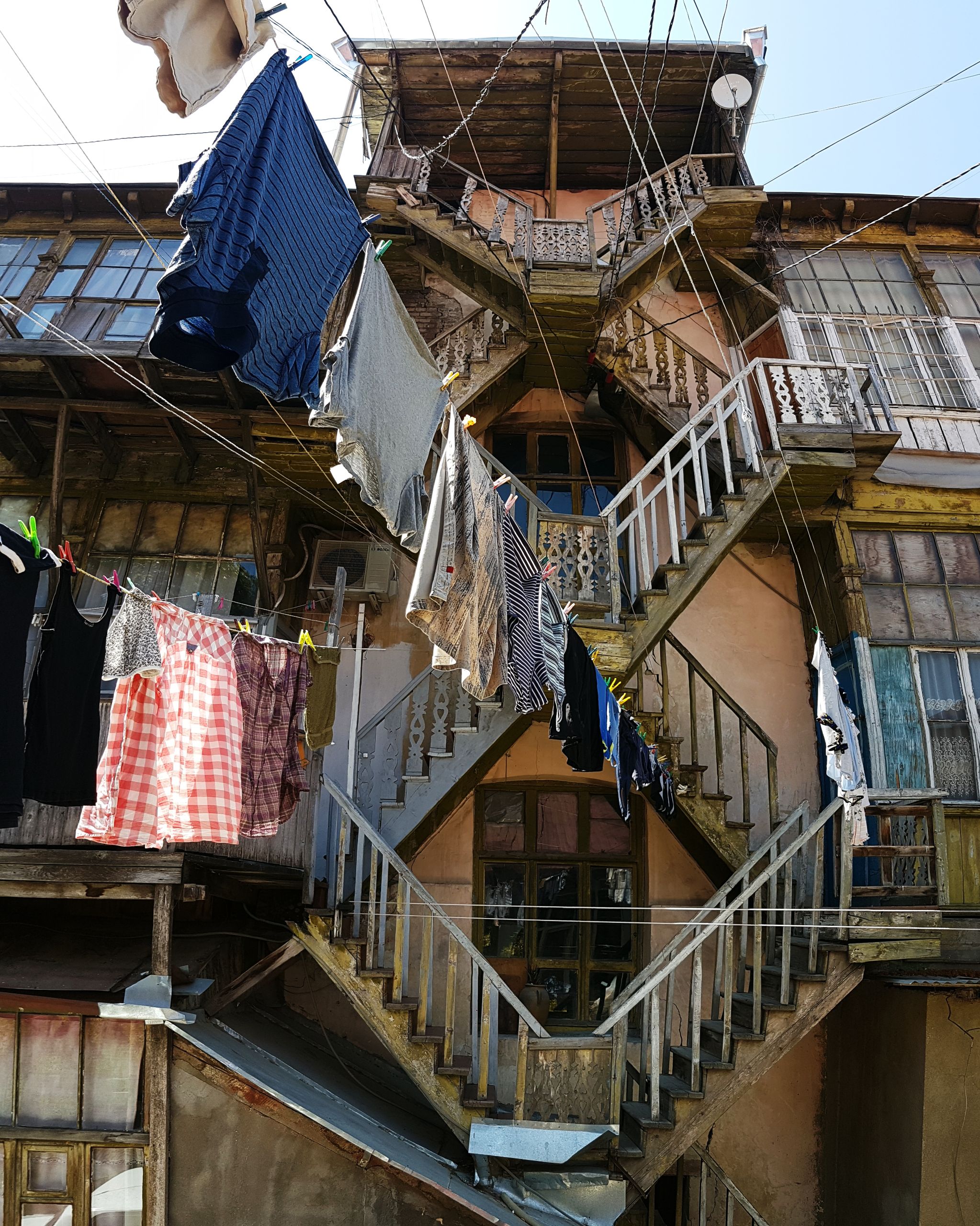
Geography is destiny and it influences architecture and urban space, believes architect and city planner Irakli Zhvania. Buildings reflect not just culture, but climate.
“[In many areas of the world,] people living in the north spend most of their time indoors because of the cold weather, whereas warmer, sunnier climates, like in the Mediterranean countries, mean that people tend to spend more time outside and communicate with others.”
That can make for unique structures.In Tbilisi’s case, its generally mild weather influenced its outdoor courtyards, shared spaces where private and public easily blend.
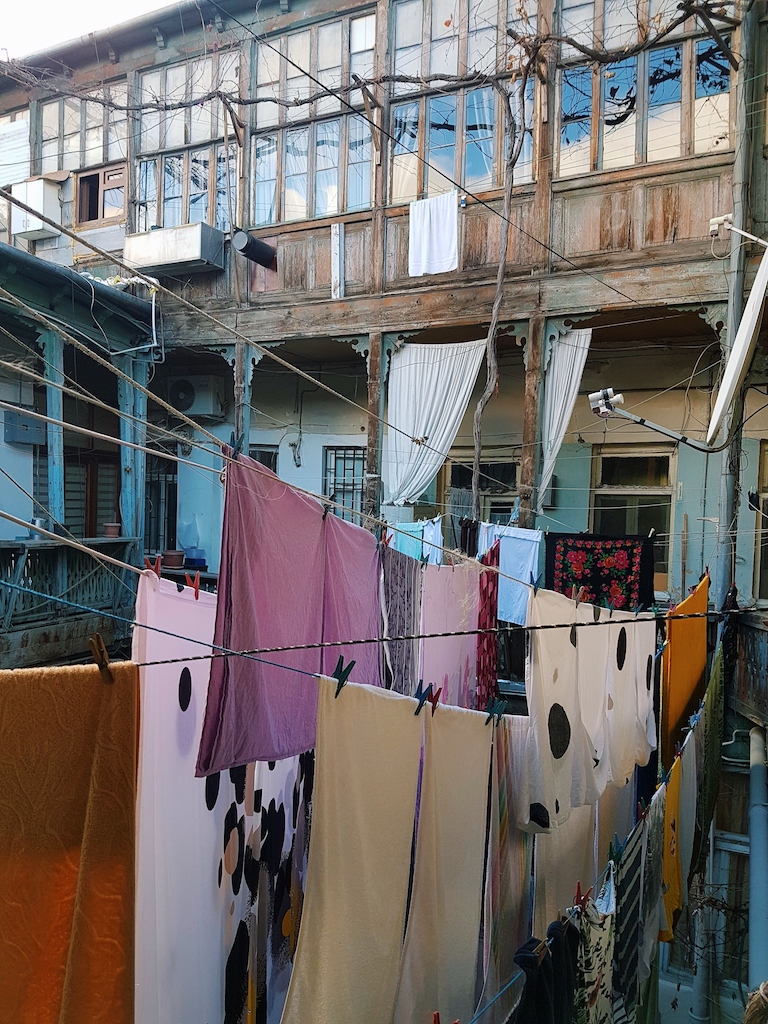
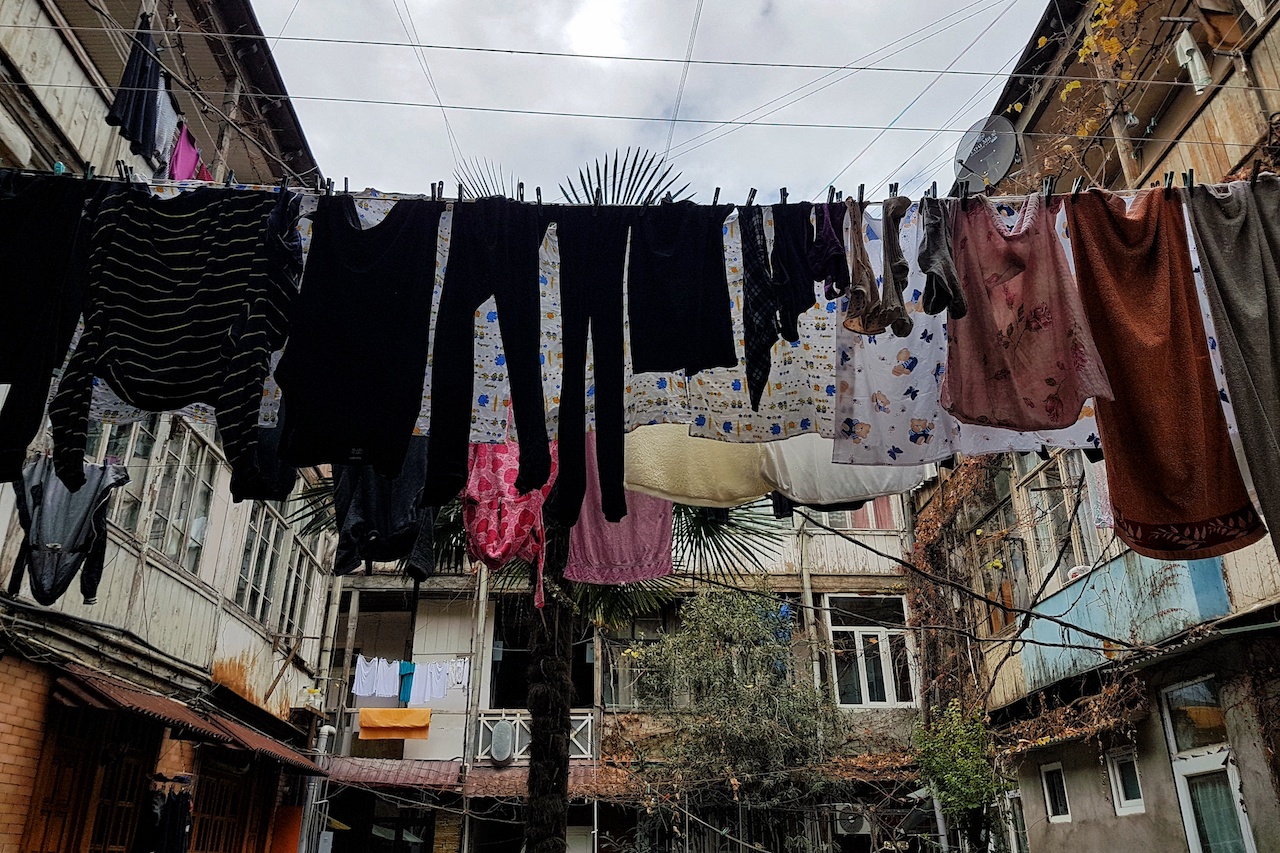
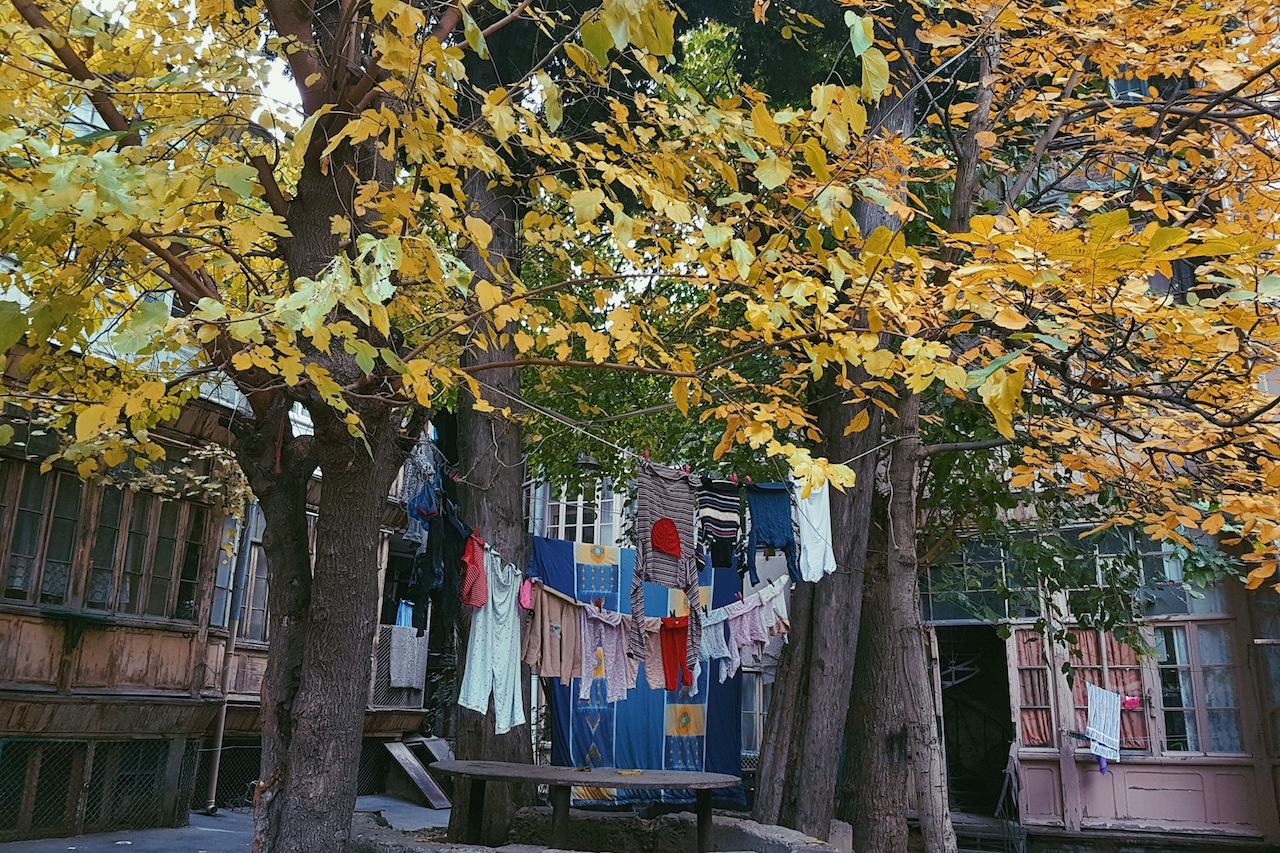
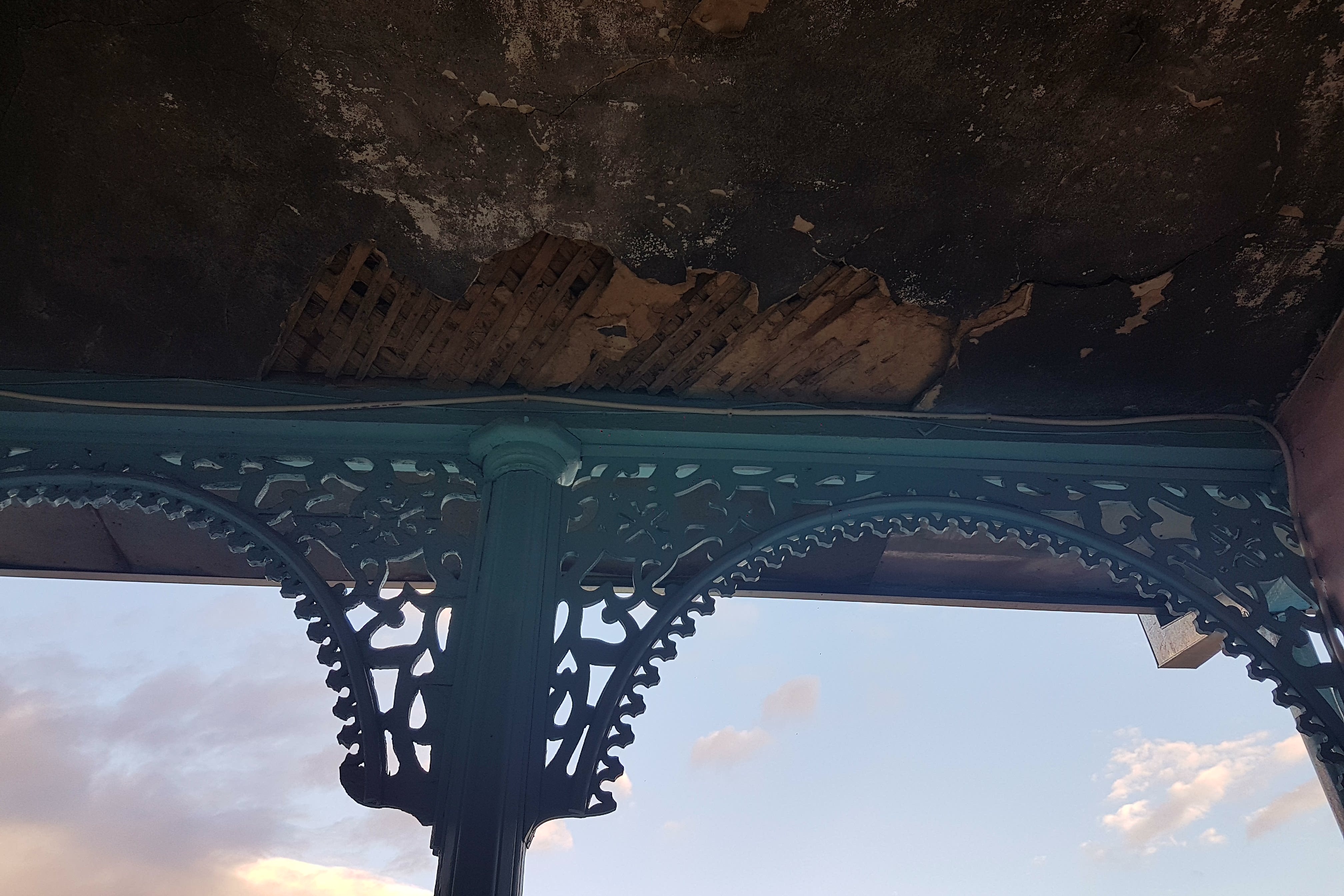
The charm of these courtyards, though, is slowly crumbling. In 1975, the then-Soviet authorities declared much of the Old Town an historical district, but failed to develop a conservation plan for it. Today, many buildings are at risk of collapse. Decades of neglect have piled up and left thousands of balconies, staircases and facades in decay.
“Are there actually people living here?” is a question that tour guide Levan Giorgadze is frequently asked. The 30-year-old says he’s often ashamed to admit that the government, as he puts it, is not interested in preserving these buildings.
“Sometimes I say that public officials regularly check the houses, the conditions. I explain that the rehabilitation process needs time and money,” he says.
City Hall told Chai Khana that the rehabilitation of listed sites is the responsibility of the Tbilisi Development Fund. The latter rejected an interview request from Chai Khana for a response to criticism of its work.
Causes for the buildings’ decay lies elsewere as well, however. The 1990s shattered both Georgian society and its buildings. As the Soviet Union collapsed, the country slipped into civil war. Corruption and crime ran rife, poverty grew and residences that required careful preservation bore the effects.
The magnitude-6 earthquake that hit Tbilisi in April 2002 dealt a further blow. It destroyed scores of buildings and damaged hundreds.
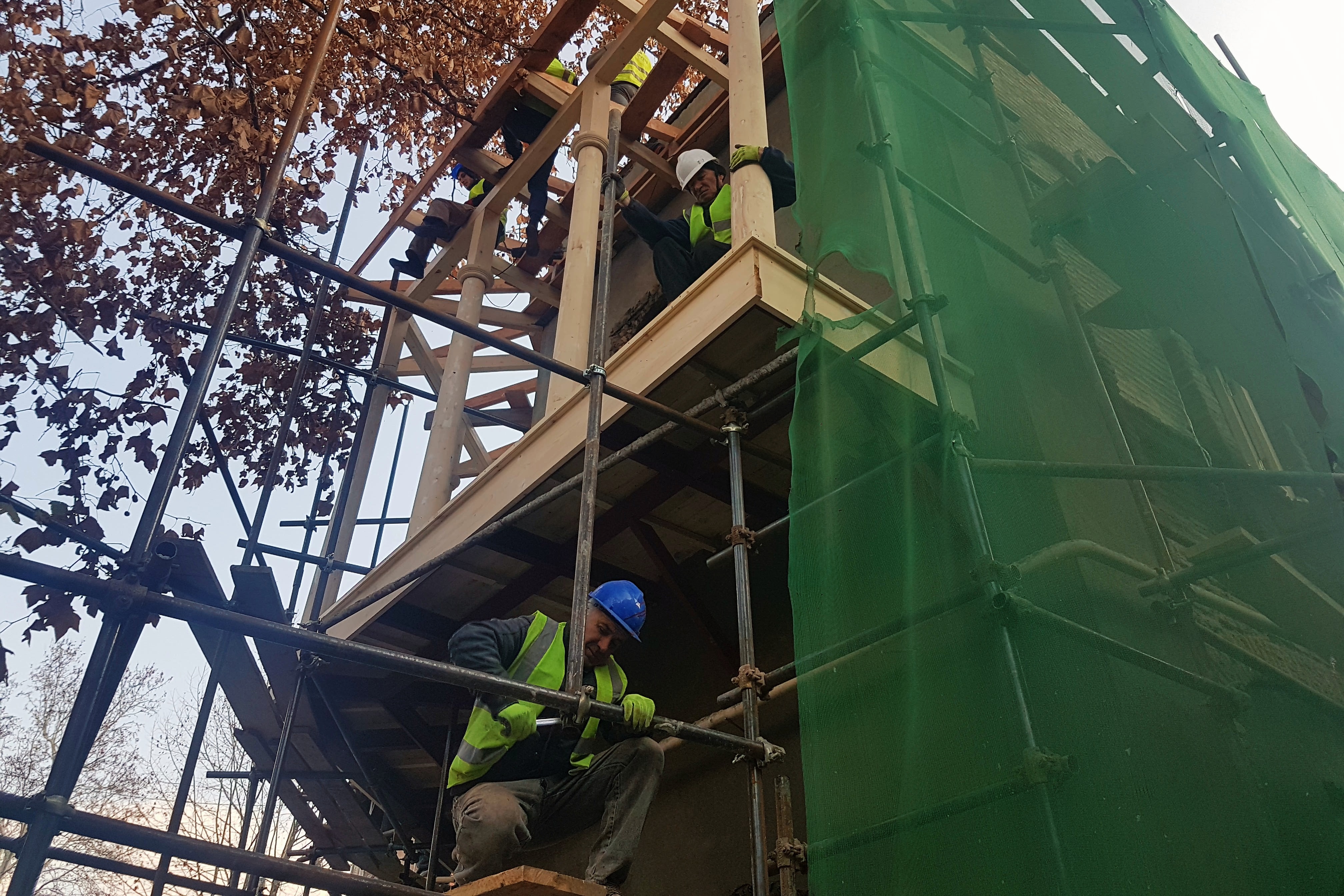
The rehabilitation of the Old Town and other sites of historical architectural interest never made it onto the political agenda until 2010, when the national government set up the Tbilisi Development Fund, a public body tasked with preserving and restoring Tbilisi’s historic sites. Since then, districts like Kldisubani, Abanotubani, Rike, and Aghmashenebeli Avenue have had large-scale makeovers with mixed results.
Architects, urban planners and artists have criticized the Tbilisi Development Fund’s restoration methods, claiming they resulted largely in disfiguring many buildings.
“They think that restoration means ‘nice,’ but rehabilitation can only be either high-grade or low-grade,” laments guide Elisashvili. “There are procedures to be followed to get a valuable result, but the city authorities mostly don’t care about it.”
While some experts claim that these spaces lost their historic features during the rehabilitation process, residents are still eagerly waiting to receive help before their houses collapse.
“The balcony is slowly falling apart, but City Hall forbids us from doing anything. They say [the building] is a piece of cultural heritage. Yet nobody has come to repair it,” laments Chichakyan. She claims she was told that the house ranks in the second-to-worst category for hazardous buildings.
Indifference has also taken a toll on the very communal essence of the courtyards. Many of the longtime residents at 4 Ietim-Gurji Street are poor and poverty has pushed out others, who sold their properties, recalls Eliso Gegechkori.
Like those Georgians who lived through the rough-and-tumble 1990s, the 58-year-old is not short of stories.
“[Back then,] when people literally were shooting in the streets, we even would make a bonfire on the balcony in order not to freeze in winter.”
Despite the building’s decay, such memories, and the life found within its ezo, are part of the reason why she, like many others, intends to stay put.
Disclaimer: Zura Balanchivadze works as a tour guide in Old Tbilisi.